When people hear the term restaurant robot, they often imagine a humanoid machine with arms and legs, walking between tables and taking orders. That vision belongs more to science fiction than to today’s hospitality industry.
Modern service robots are less theatrical – and far more practical. A restaurant robot is not designed to look human. It is designed to perform a specific operational task: transporting items efficiently inside a restaurant, hotel, or commercial venue. It focuses on function. And that is exactly why it works.
What Is a Restaurant Robot?
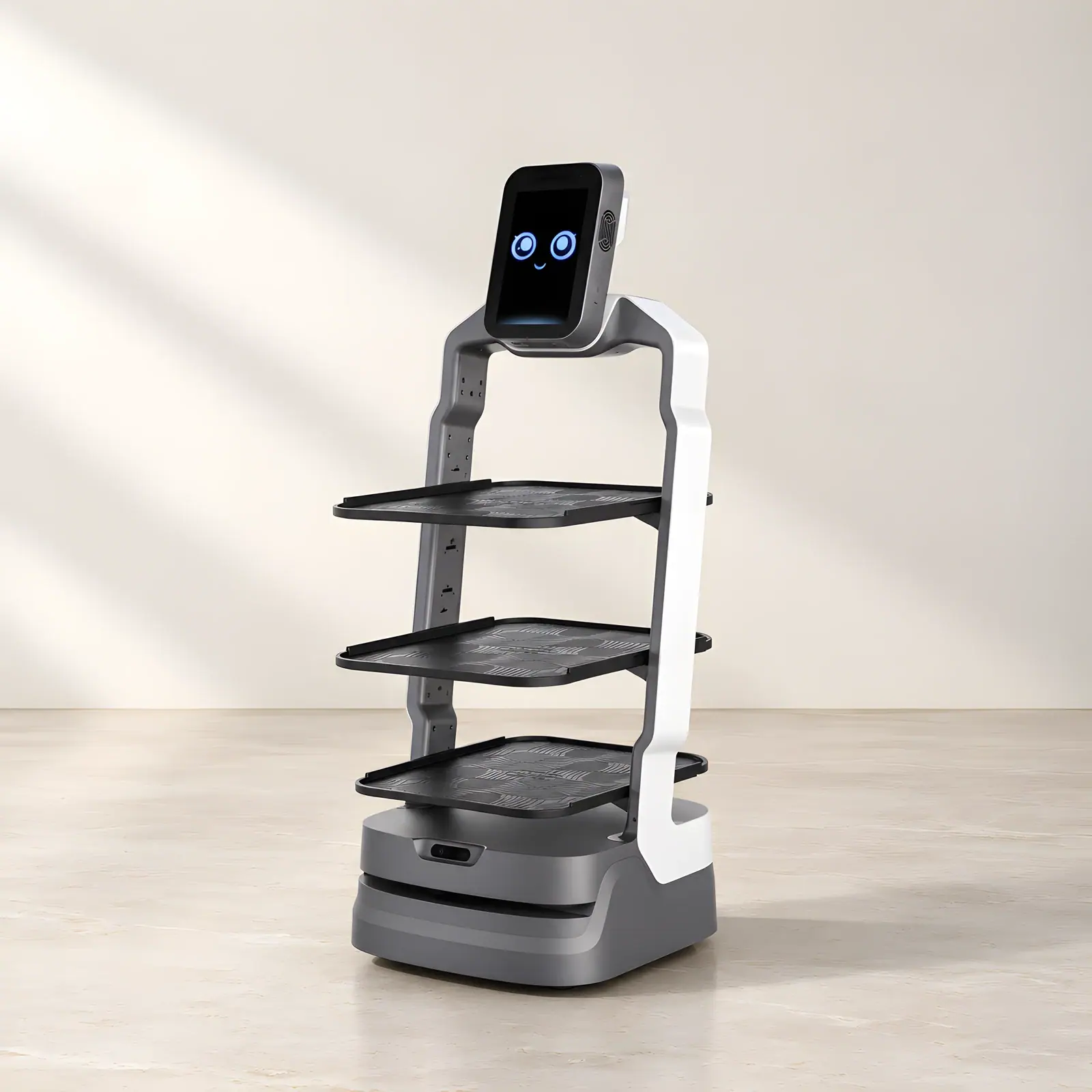
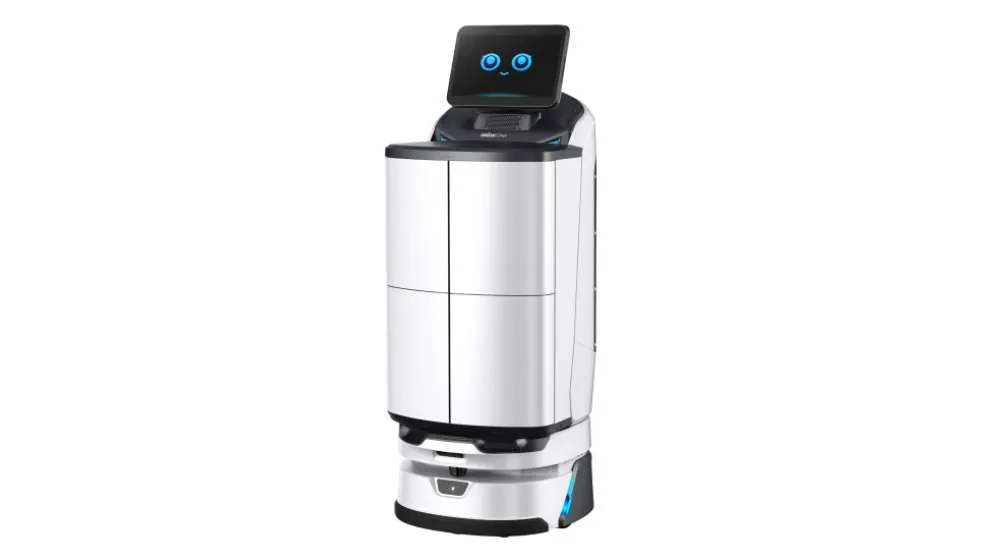
A restaurant robot is a mobile service device built to carry food, drinks, and other items between defined points inside a venue. Its construction is typically similar across models.
At the base, there is a stable wheeled platform. This allows smooth and precise movement across different floor types. The structure is durable and built for continuous operation. These machines are not lightweight gadgets – they are engineered to handle daily workload.
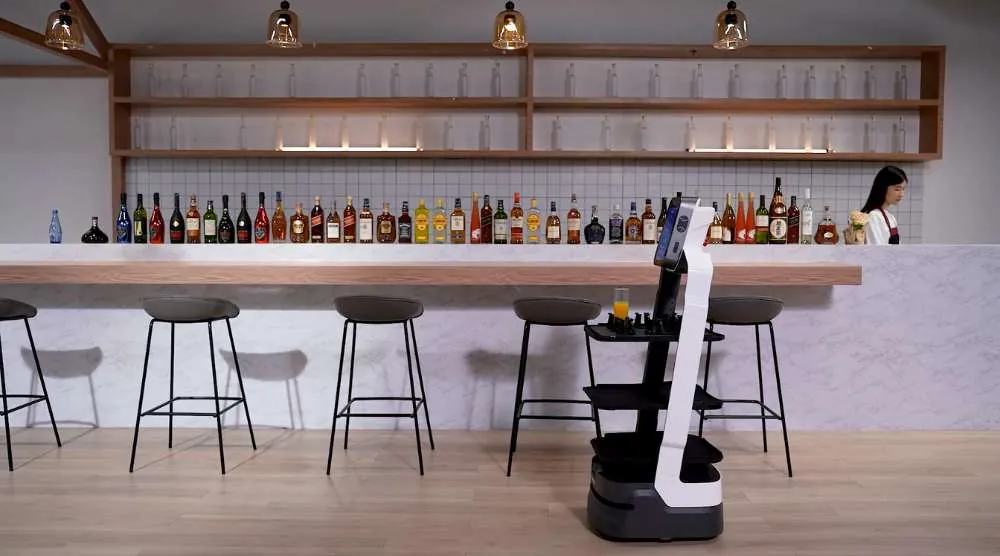
Most restaurant robots feature multiple trays. Each tray can usually carry up to 10 kg, with total capacity reaching 40 kg depending on the model. That means several full orders can be transported at once.
The robot also includes a built-in display, usually a touchscreen. Staff use it to select destinations, assign tasks, and control functions. The screen can also display messages to guests. The design is simple and functional. The goal is operational support, not visual spectacle.
How Does a Restaurant Robot Work?
In practical terms, a restaurant robot helps move items from one point to another inside your venue.
Before it begins operating, the space must be mapped. This is a crucial step. The restaurant interior is digitally scanned, and key points are defined. These can include:
- Kitchen
- Bar
- Service station
- Individual tables
Once the map is created, the robot understands where it can move and which routes are optimal.
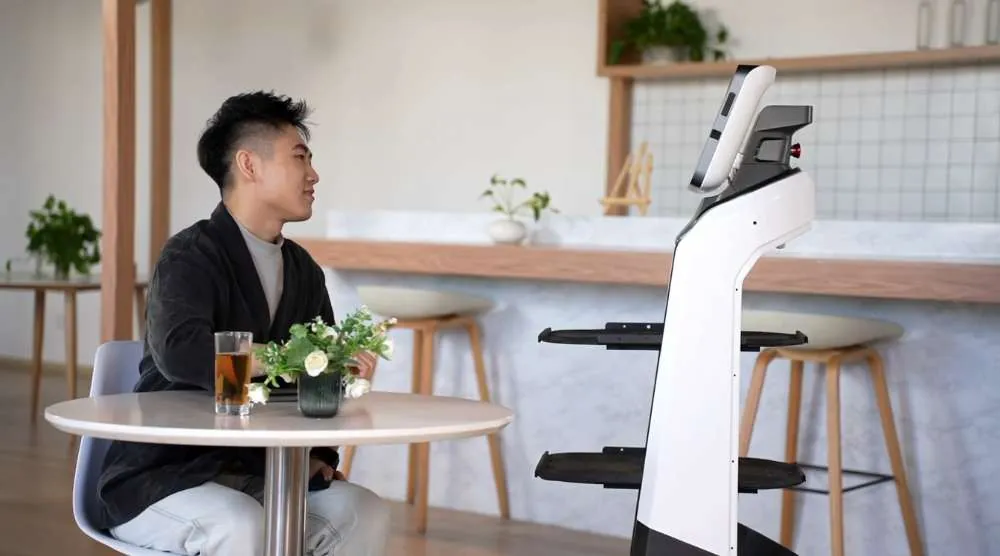
Modern restaurant robots are equipped with cameras, sensors, and LiDAR systems. These technologies allow them to detect obstacles in real time. If a guest steps into the path, the robot slows down or navigates around them. Movement is smooth and controlled.
The operational workflow is straightforward:
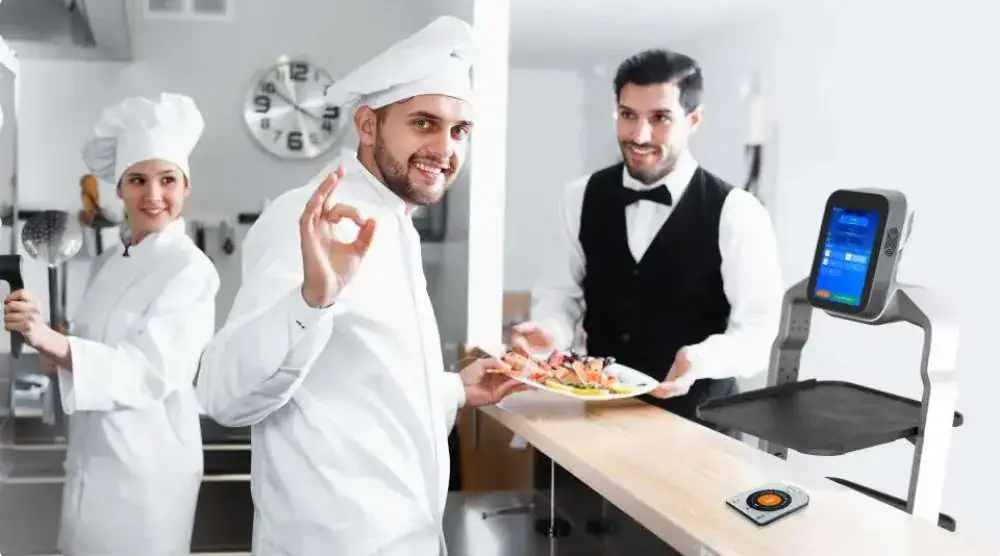
- Kitchen staff place the prepared order on the trays.
- A destination is selected on the screen.
- The robot travels to the assigned table.
- Upon arrival, it announces the delivery.
At that point, guests can collect their order directly. In some restaurants, a waiter takes the items from the tray and completes the service. The procedure depends on the restaurant’s internal system.
A restaurant robot does not replace your team. It reduces unnecessary walking and repetitive transport tasks. This allows staff to focus more on guest interaction and service quality.
Types of Restaurant Robots
There are many companies manufacturing service robots. However, only a few have established a strong reputation for reliability, navigation accuracy, and long-term durability. One of the leading manufacturers is OrionStar.
Reef Robotics works directly with OrionStar and selected partners. After evaluating different solutions on the market, these models stand out for their build quality, performance stability, and balanced price-to-performance ratio.
Below are three restaurant robot models available through Reef Robotics in Cyprus.
LuckiBot – The Core Restaurant Robot
LuckiBot is the standard model for restaurants that want dependable automation.
Key specifications include:
- 10-inch touchscreen
- Four trays with 10 kg capacity each (up to 40 kg total)
- Battery life exceeding 10 hours
- Control via touchscreen, mobile app, or web platform
The interface is intuitive. Staff select the table or destination and send the robot.
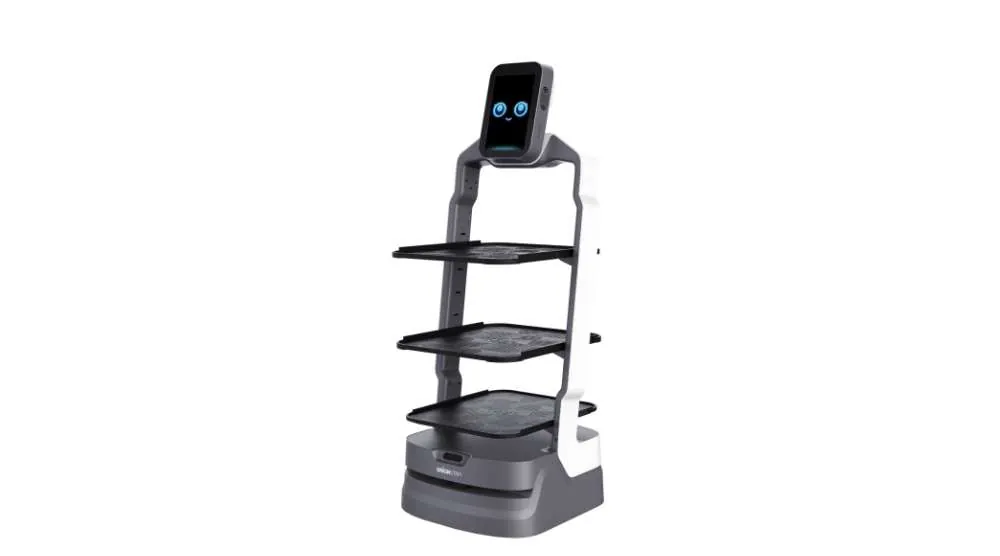
With multiple radar systems and obstacle detection sensors, LuckiBot navigates safely even in narrower spaces. It delivers orders quickly and consistently, particularly during peak service hours.
For many venues, this model offers the right balance between capability and investment.
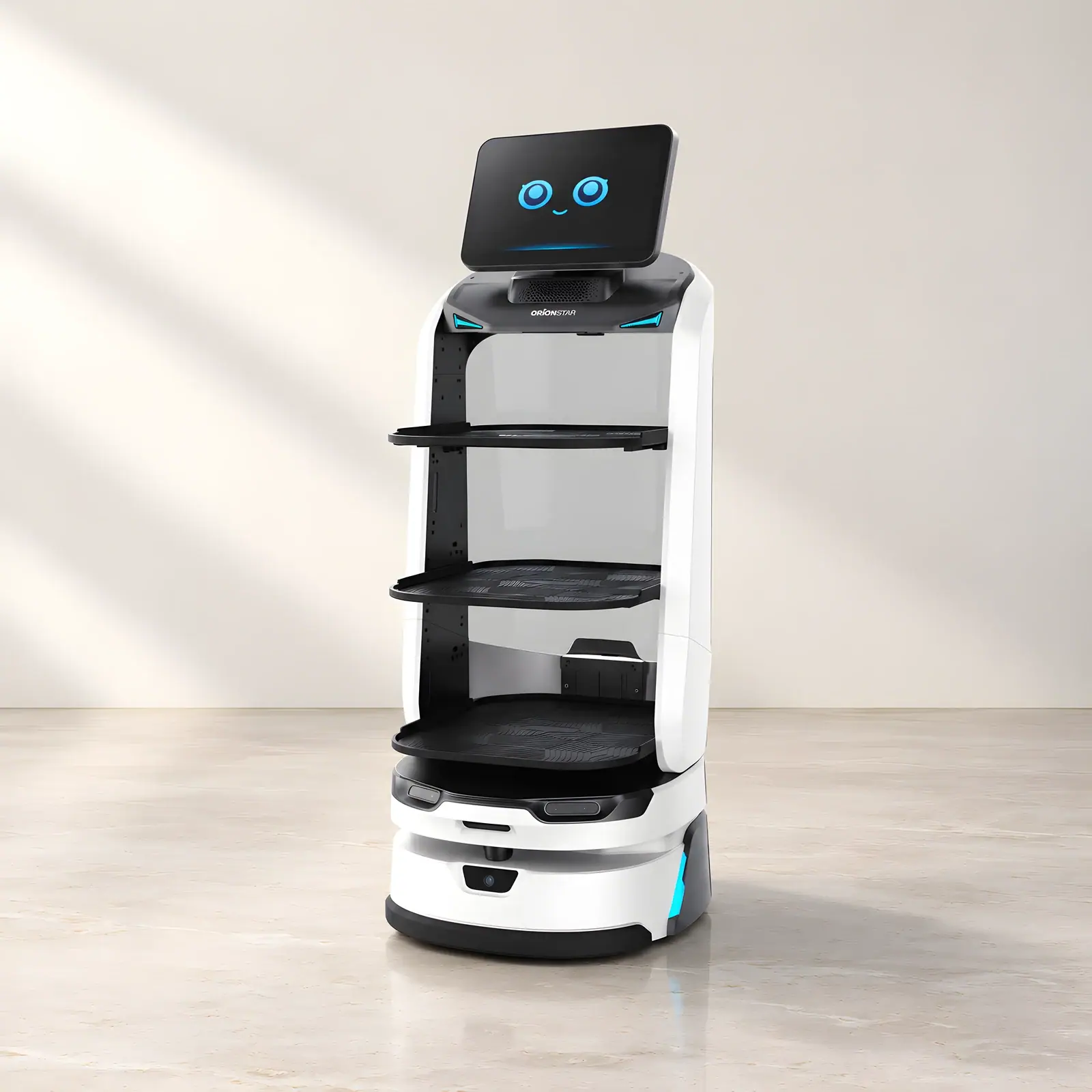
LuckiBot Pro – Enhanced Performance
LuckiBot Pro is an upgraded version designed for higher-demand environments.
Its key features include:
- Battery life exceeding 12 hours
- Automatic return-to-charging function
- Larger 14-inch touchscreen
- Advanced suspension system for smooth transport
- 240-degree LiDAR field of view
- Camera system detecting whether items have been removed
- Adjustable speed between 0.5 and 1.2 m/s
- Ability to define speed limits in specific mapped areas
The suspension system ensures stable transport of drinks, soups, and delicate items. Even in busy restaurants, movement remains controlled.
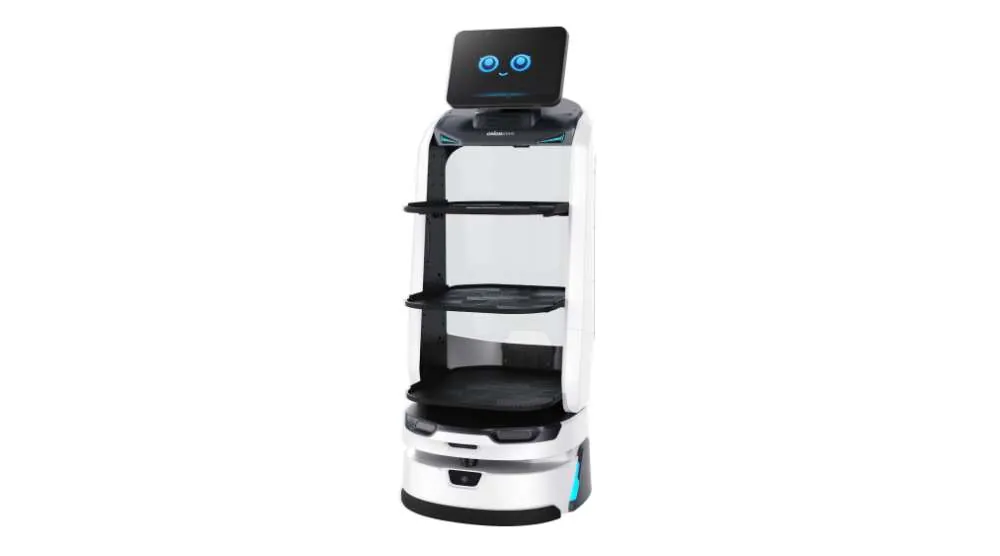
Thanks to automatic charging, the robot can operate almost continuously. It returns to its charging station when needed and resumes work without manual intervention.
This model is well suited for high-volume restaurants and hotels.
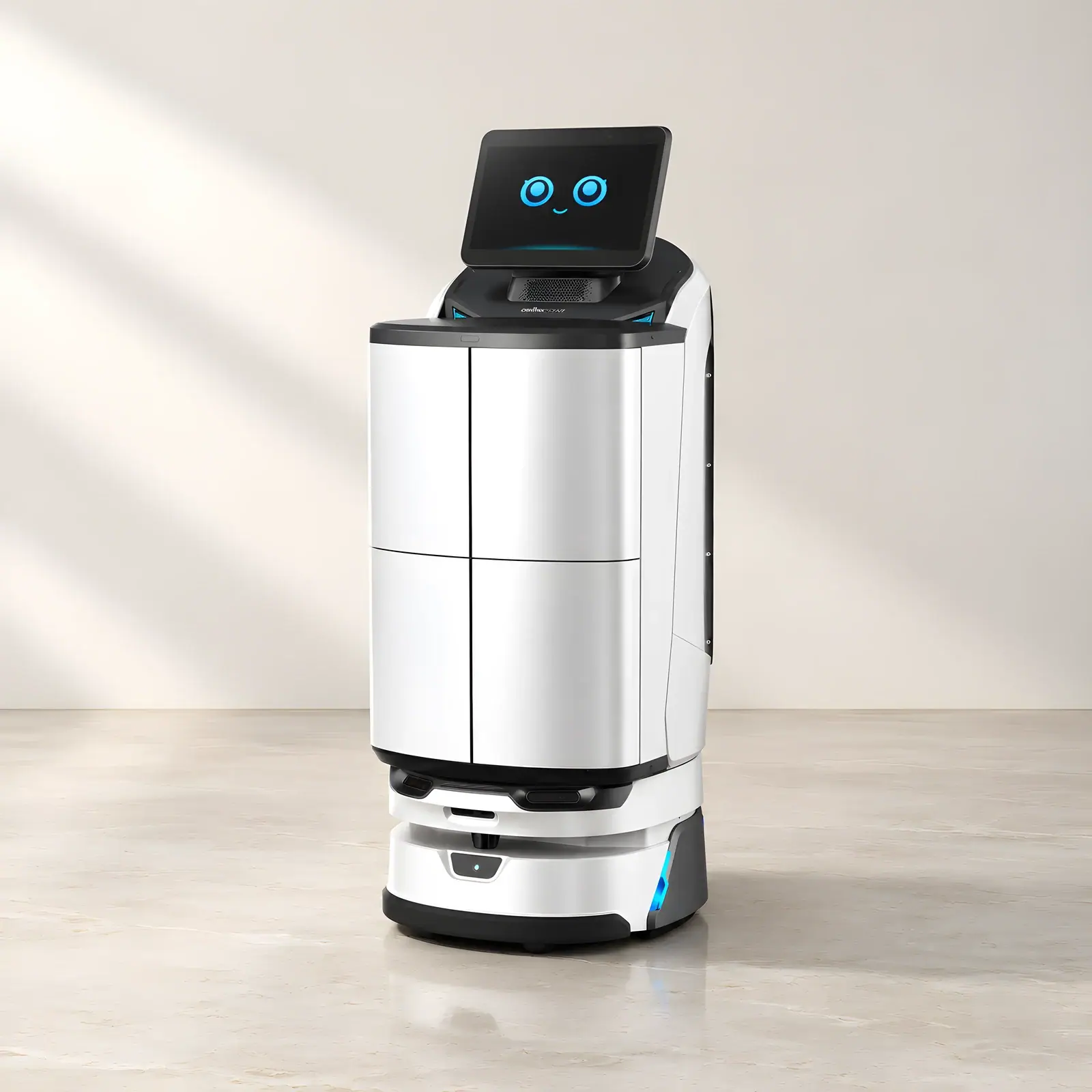
LuckiBot Pro Autodoor – Added Privacy and Control
LuckiBot Pro Autodoor introduces secure compartments. The transported items are enclosed behind doors. To access the contents, a code must be entered. This provides an additional layer of privacy and security.
This solution is particularly useful in:
- Hotels
- Private events
- VIP service areas
It ensures that only the intended recipient can access the delivered items.
Is a Restaurant Robot Right for Your Business?
A restaurant robot is not about replacing people. It is about optimizing movement inside your venue. It helps reduce walking distance for staff, improves delivery consistency, and supports operations during peak hours. In environments facing staff shortages or high labor costs, it can be a practical efficiency tool.
In Cyprus, businesses can either purchase or rent a restaurant robot depending on their needs. Buying may suit long-term, high-volume operations. Renting can be ideal for seasonal businesses or those testing automation.
Reef Robotics provides full setup, space mapping, staff training, and local support.
If you want to evaluate how a restaurant robot could work in your venue, the next step is simple: review your workflow and identify where transport tasks slow your team down. Automation often starts there.
Contact Us and Request a Demo