
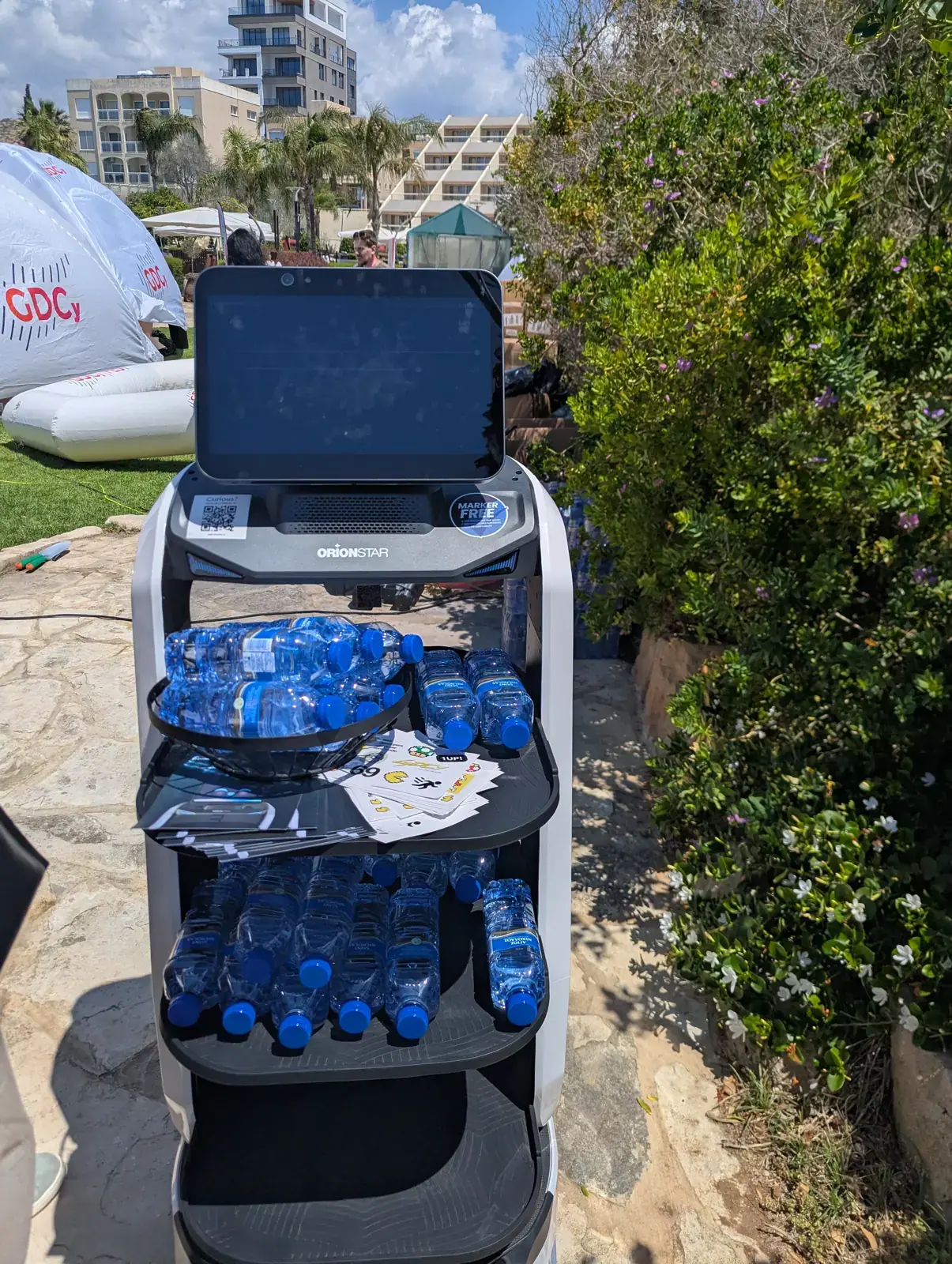
Outdoor dining is a major part of hospitality in Cyprus. Terraces, hotel gardens, beach bars, courtyards, and open-air restaurants are part of the island’s character. Naturally, many owners ask whether a restaurant robot can work outside.
The answer is: sometimes yes, but outdoor use needs proper assessment. A robot can support outdoor dining very effectively when the surface, route, weather conditions, and operating area are suitable. It should not be treated the same way as a fully indoor deployment.
Surface Type Comes First
The most important factor is the floor. A restaurant robot works best on smooth, stable, and predictable surfaces. Tiles, polished concrete, flat stone, and well-maintained outdoor flooring are usually much easier than gravel, sand, grass, or uneven pavement.
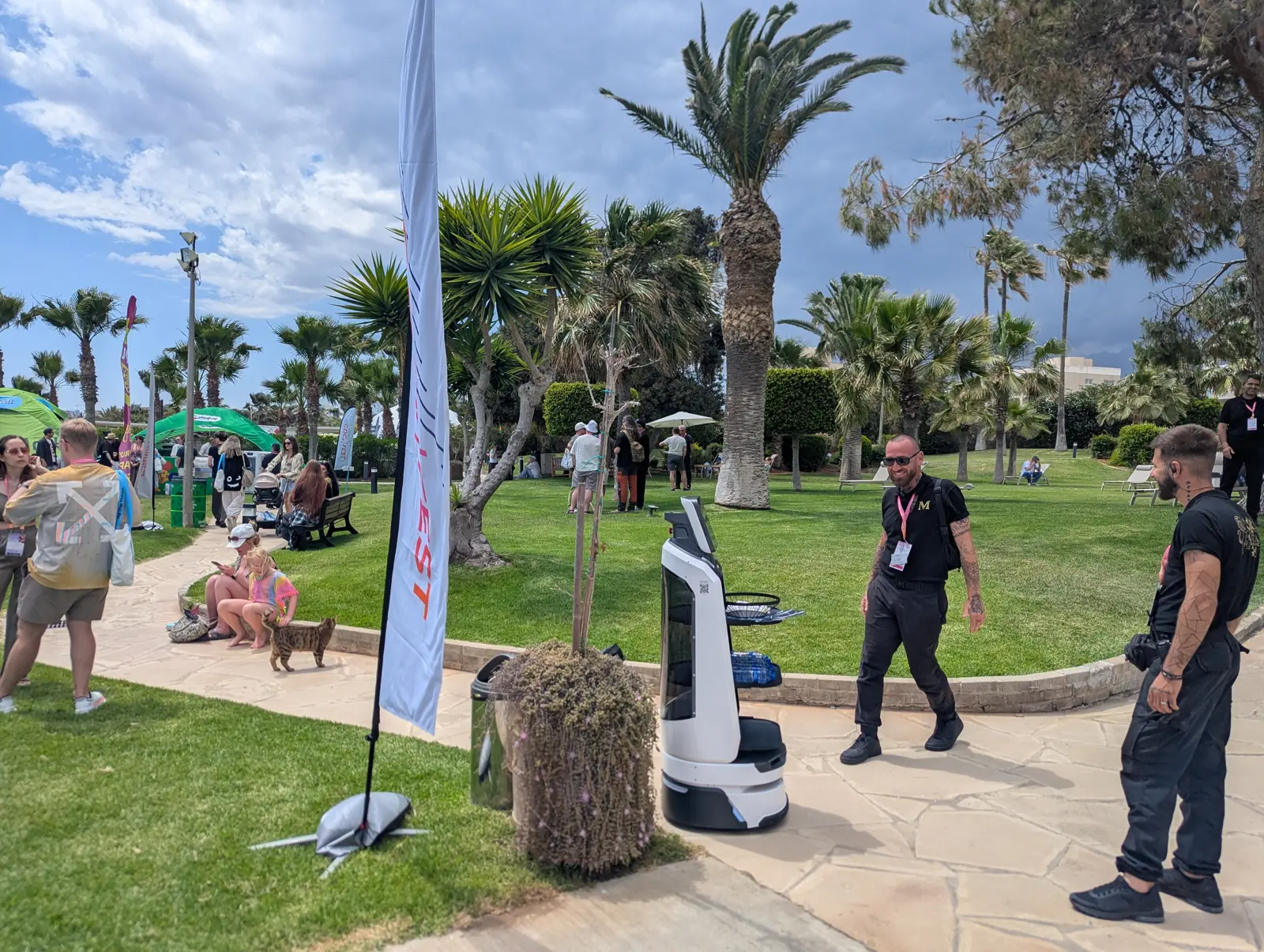
Small bumps may not be a problem, but repeated uneven areas can affect movement and stability. This matters especially when the robot carries drinks, soups, or delicate plates. Before outdoor deployment, the route should be tested with real loads, not only empty trays.
For many venues, the solution is simple: define a safe outdoor route between the kitchen, terrace, and service points. The robot does not need to go everywhere. It only needs to cover the routes where it creates real value.
Weather and Temperature
Cyprus weather is generally good for outdoor hospitality, but heat, direct sunlight, wind, and occasional rain still matter. A robot should not be exposed to unsuitable conditions unless the model and setup allow it.
Direct sunlight may affect sensors in some environments. Wind can make light items unstable. Rain or wet surfaces may create safety and technical risks. For this reason, outdoor robot use should be planned around covered areas, shaded routes, and controlled service zones whenever possible.
In practice, terraces, covered patios, hotel pool-adjacent areas, and semi-outdoor event spaces are often better candidates than fully exposed open areas.
Connectivity and Mapping
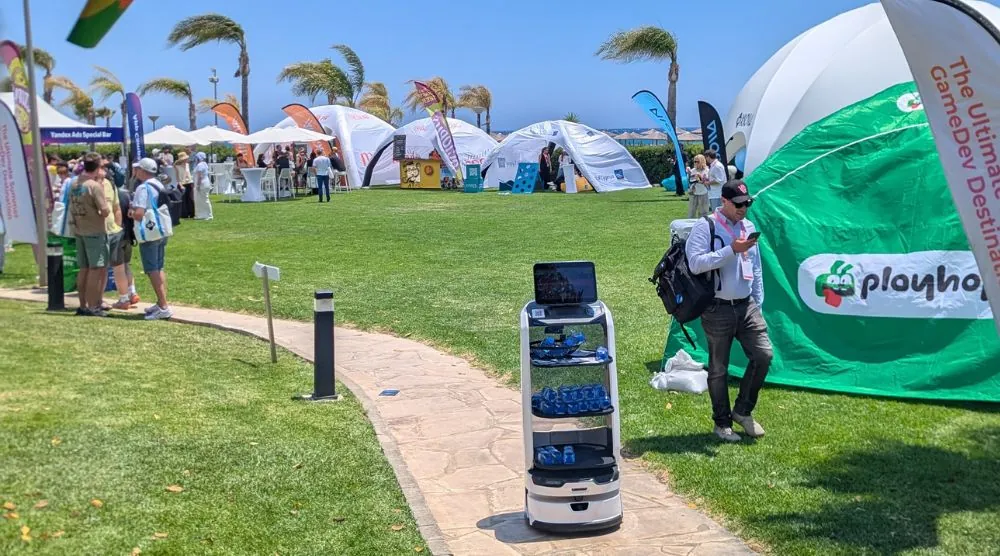
Outdoor spaces can be more dynamic than indoor spaces. Tables move, guests walk unpredictably, and temporary furniture may change from day to day. This makes mapping and route planning especially important.
The robot should operate inside a defined map with clear service points and no-go zones. Areas near stairs, drops, pools, traffic lanes, or uneven edges should be blocked. If the layout changes often, the map should be reviewed and updated.
Connectivity may also matter if the robot is controlled through a phone, tablet, or web platform. Before live use, test control range and signal strength in the exact operating area.
Safety in Guest Areas
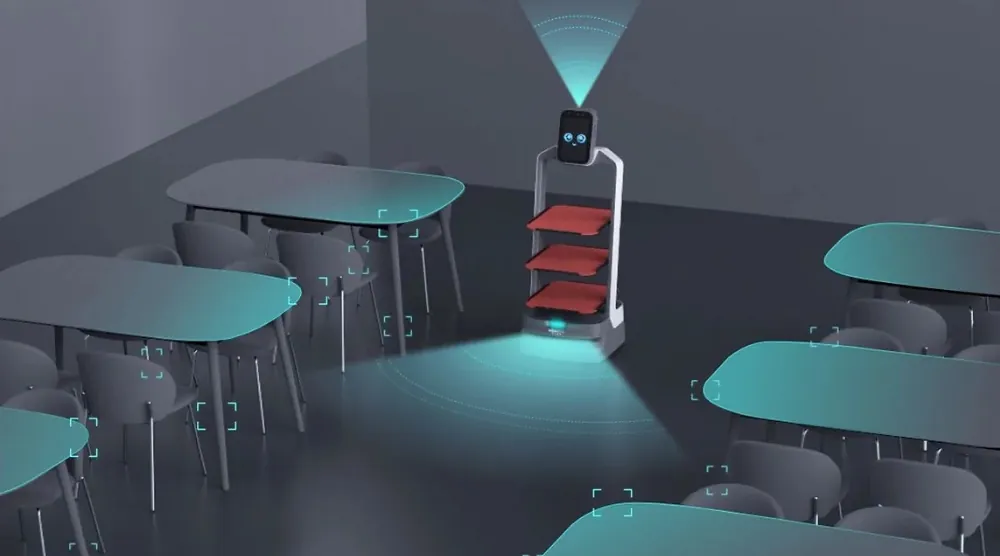
An outdoor robot must move predictably. Slower speed may be better in crowded spaces, especially in family restaurants, hotel terraces, or event environments. Staff should know where the robot moves, and guests should understand that it is part of the service.
A few mitigation tips help a lot: keep routes simple, avoid narrow paths, use stable table stops, reduce speed in crowded zones, and do not overload trays outdoors. The goal is smooth support, not forcing the robot into every corner of the venue.
Outdoor Dining Can Be a Strong Use Case
When the environment is suitable, a restaurant robot can reduce long walks between kitchen and terrace, support drink and food delivery, and help staff stay closer to guests. In Cyprus, where outdoor hospitality is central to the experience, this can be a practical advantage.
You can see Reef Robotics robots working in real local conditions at Doers Summit, AI Cyprus Expo, and GDCy Fest 2026.
Contact Reef Robotics to request an outdoor assessment for your restaurant, hotel, terrace, or event space.
