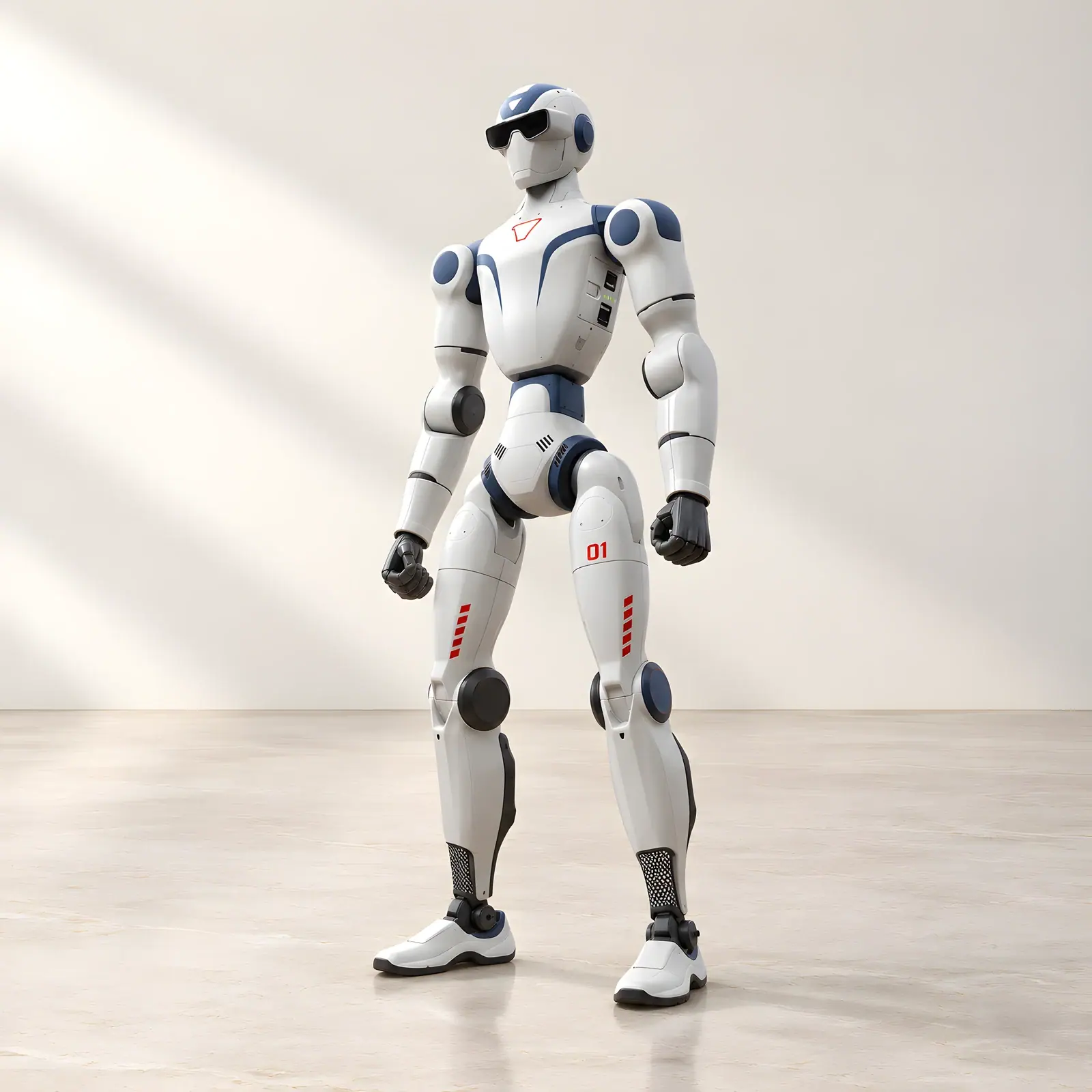
Not every organisation needs a robot that can be extensively reprogrammed. Sometimes the brief is much simpler: bring something unusual to an exhibition, make a company launch more memorable or give people their first close look at a walking humanoid.
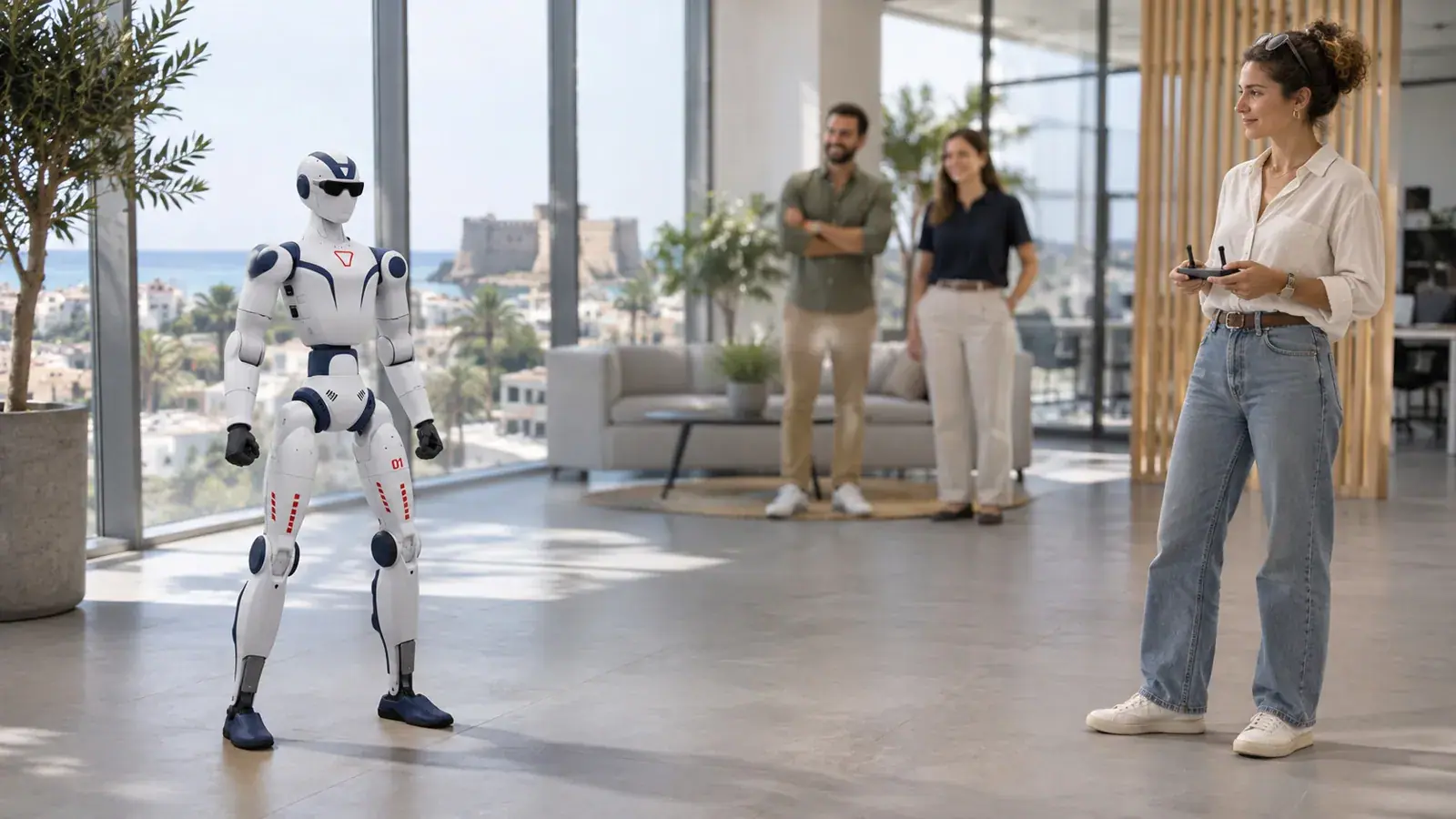
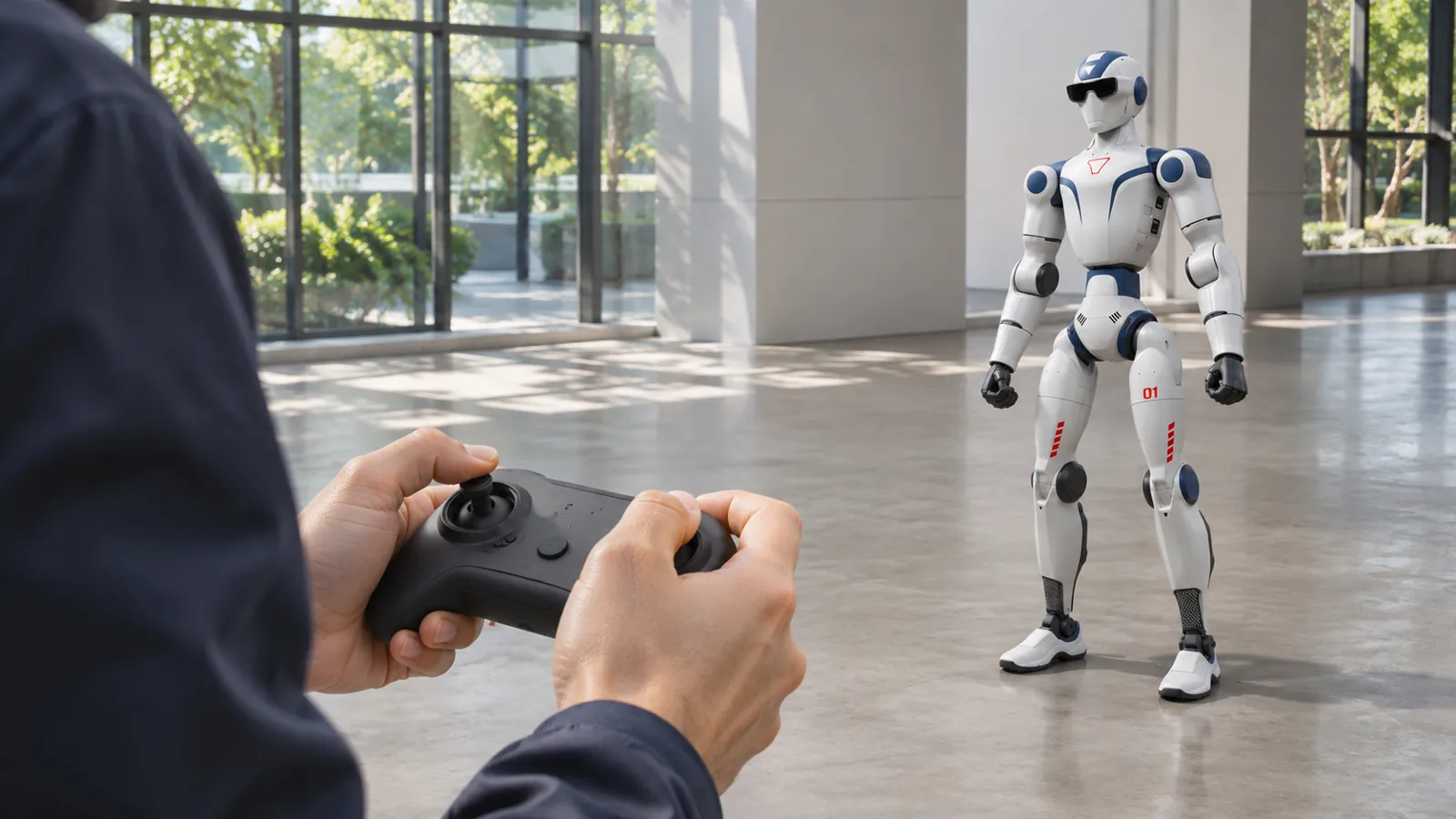
For that kind of project, complexity can become an unnecessary expense. The Unitree R1 Air is the lowest-priced model in the R1 family, designed around a more straightforward introduction to humanoid robotics. Its movement is controlled by an operator using a remote controller; it does not provide autonomous navigation.
That limitation can fit the job surprisingly well.
Why remote control makes sense at an event
At a launch or exhibition, the organiser usually wants the robot to appear in a particular place at a particular time. A person managing its movement can coordinate that appearance with the presenter, photographer and visitors.
Consider a showroom opening. The operator brings the robot into the demonstration area, carries out a rehearsed sequence using supported functions, and finishes when the host is ready to speak. There is no need for the robot to independently decide where to go next.
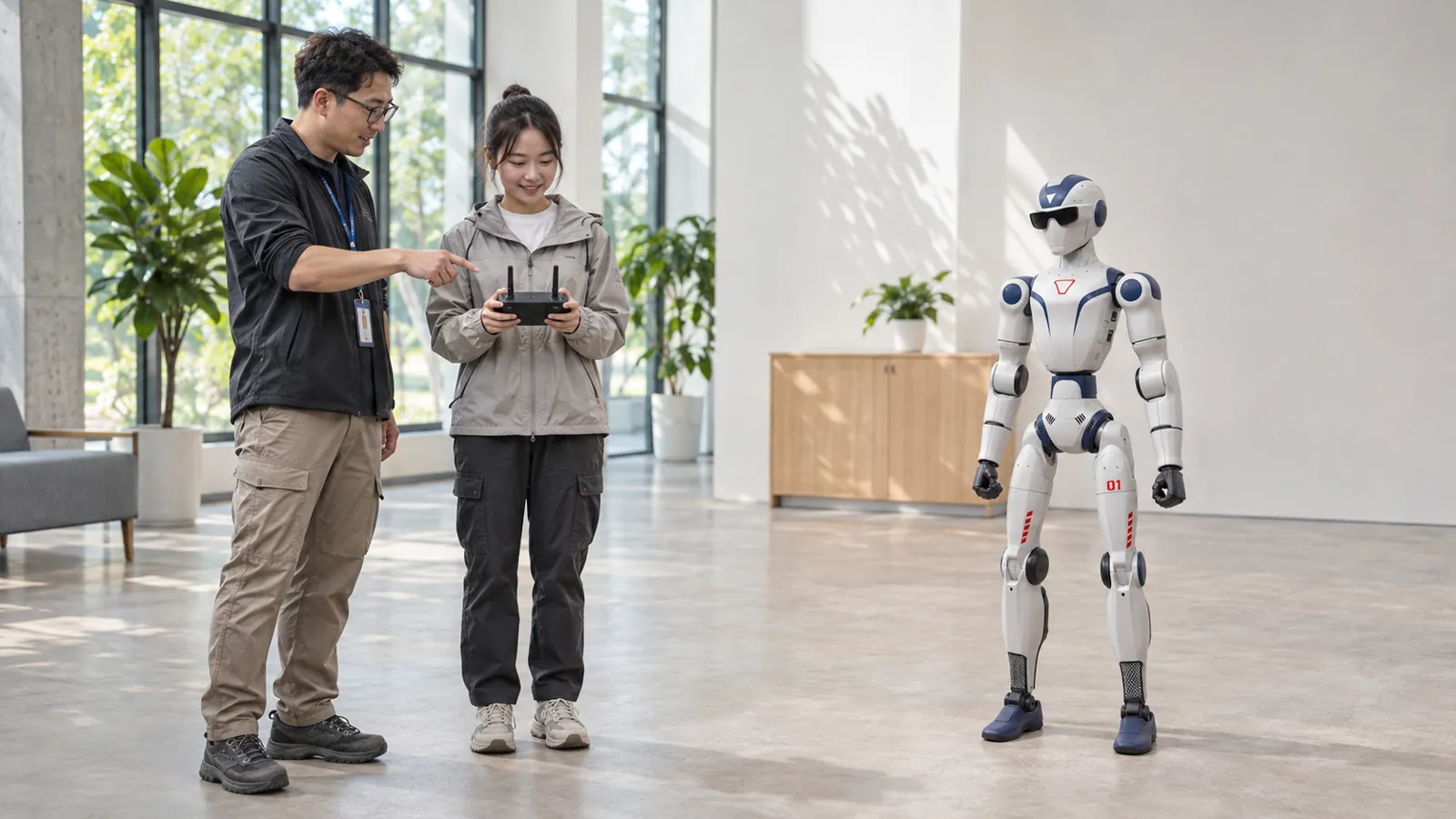
Remote control also gives a newcomer a clear way to understand the experience: the person chooses the movement, while the robot's control system coordinates its joints. The operator is not manually balancing every motor. With instruction and practice, a non-specialist can learn routine operation, although this remains powerful robotic equipment rather than a casual children's toy.
What the entry-level model includes
R1 Air is 123 cm tall, weighs around 27 kg with its battery and has 20 degrees of freedom. Each leg has six, and each arm has four. Unlike Basic, it does not have an articulated head or waist.
It also includes a camera, microphones, a speaker and wireless connectivity. These are hardware components, not a promise that every imagined interaction is available as a ready-made feature. If you want a particular spoken exchange or demonstration sequence, have that function confirmed on the supplied version.
The practical attraction is that Air still has the physical presence of a humanoid. Visitors can see its shape, movement and coordination without needing a technical explanation first. That makes it an accessible starting point for demonstrations and conversations about robotics.
Three buyers who should put Air on their shortlist
A marketing team is the first. If the purpose is to create a focal point at occasional events, Air may provide the required visual impact without paying for development features the team will never use. Budget can then go towards a good event setting, operator training and supporting content.
An educator running introductory demonstrations is another. Showing students how a biped moves can lead into discussions about balance, mechanics and control. If students will later write software for the physical robot, however, the project needs a different specification.
A technically curious adult may also enjoy Air as a recreational introduction to humanoids. The appeal is hands-on exploration and supervised demonstrations. A suitable operating space and a willingness to learn the procedures are part of ownership.
When to move up the range
Choose the Unitree R1 Basic when the additional head, waist and arm articulation matters to the experience you want to create. Look at the Unitree R1 EDU when your goal is software development, research or a teaching programme involving programming the robot.
Air's roughly one-hour battery rating also deserves a place in the event plan. Short sessions with planned breaks are more realistic than expecting one battery to cover an entire exhibition day.
The right entry point depends on the task
If your restaurant mainly needs help moving dishes between the kitchen and dining area, a humanoid appearance is a separate benefit. Reef Robotics' waiter and service robots are designed for those repeated journeys and can support the team during service.
For a Cyprus business seeking an engaging first humanoid, Air offers a clear proposition: accessible positioning, direct operator control and a compact physical presence. Reef Robotics can help assess whether those strengths match the experience you want to deliver.