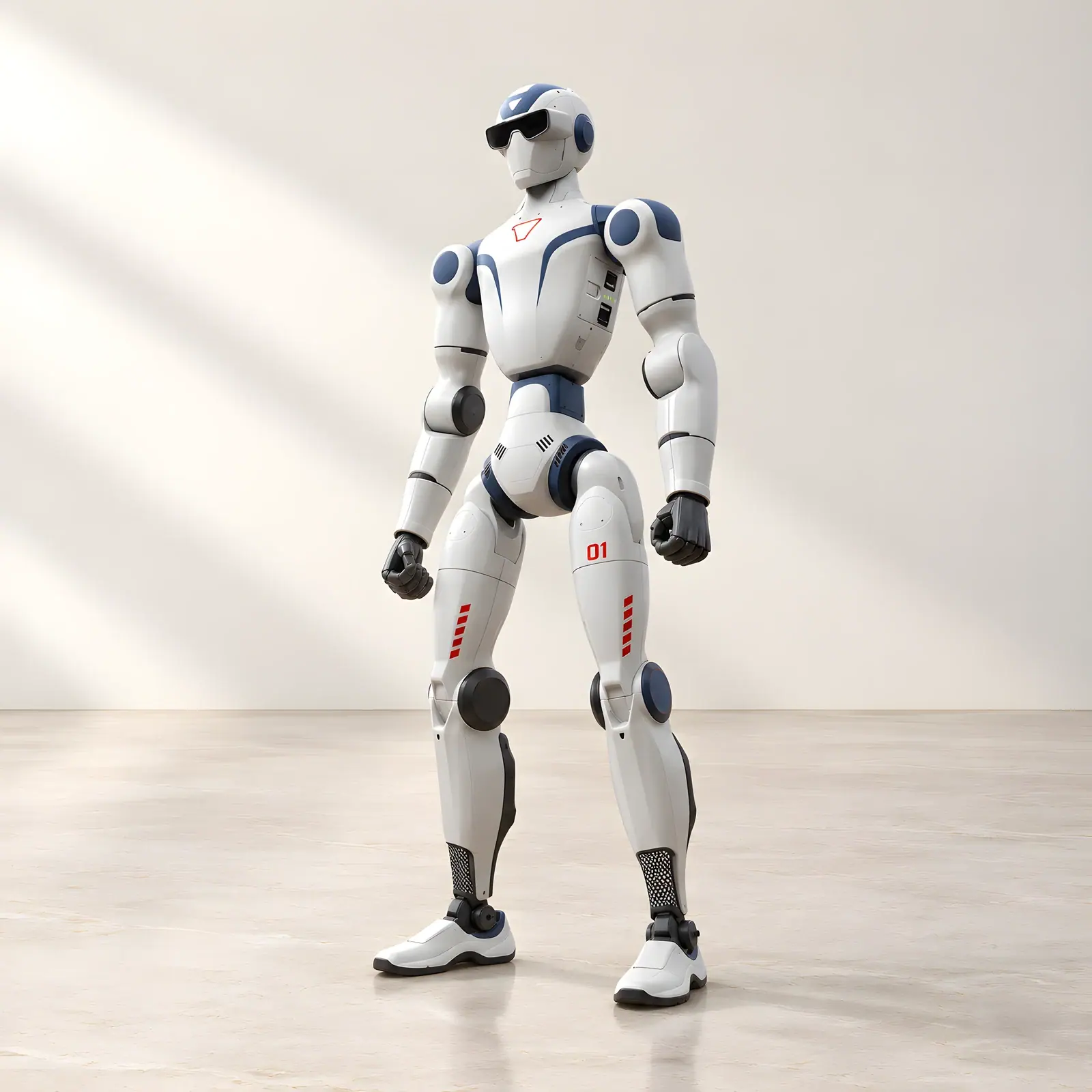
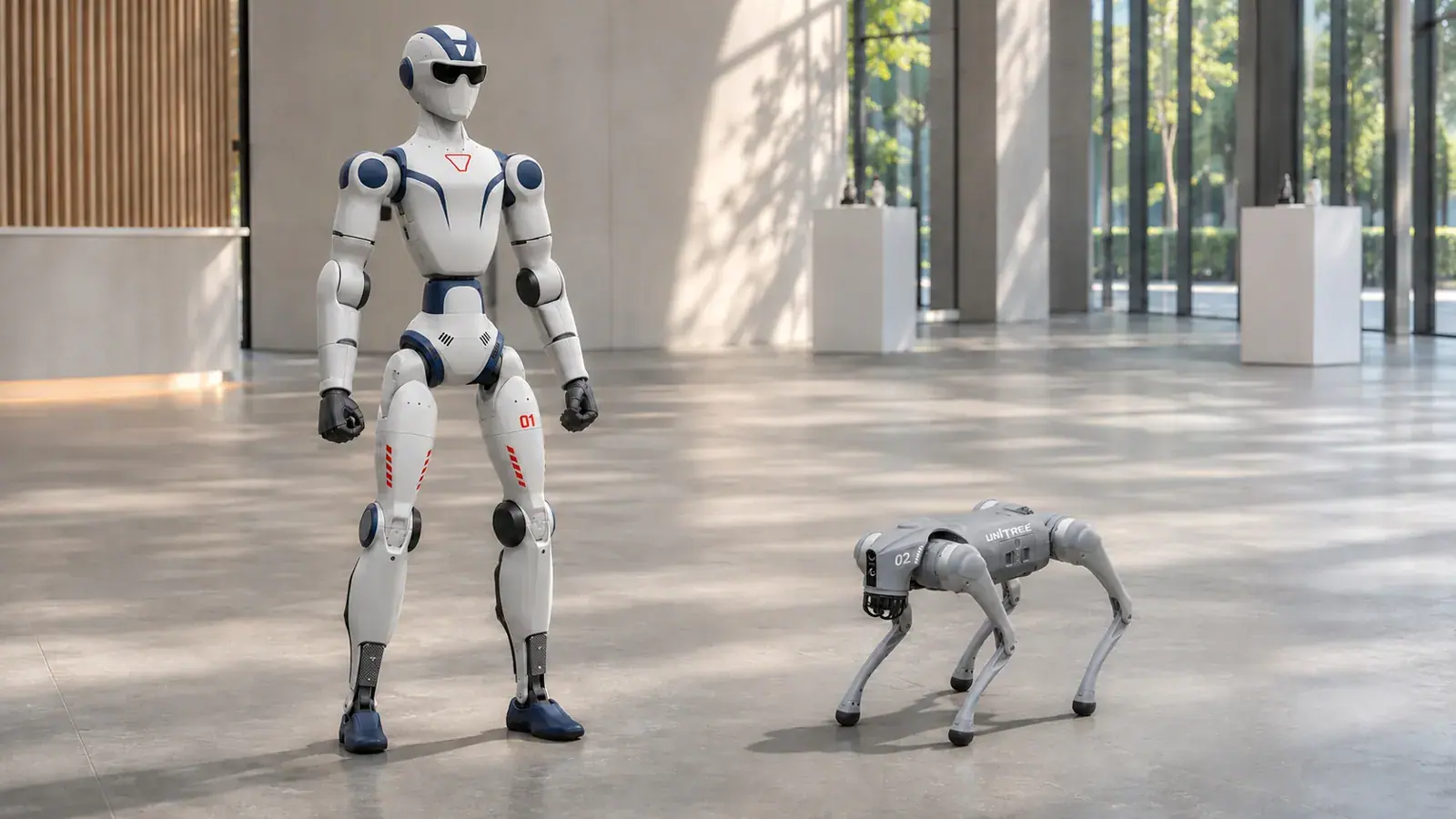
A humanoid and a robot dog create different kinds of curiosity. One invites comparison with human movement. The other surprises people by putting familiar four-legged motion into a clearly mechanical body.
Either can become a memorable event attraction. The choice depends on the experience you want guests to have, the setting and the functions available on the exact model. There is no single winner for every exhibition, launch or company celebration.
Choose the character that suits the occasion
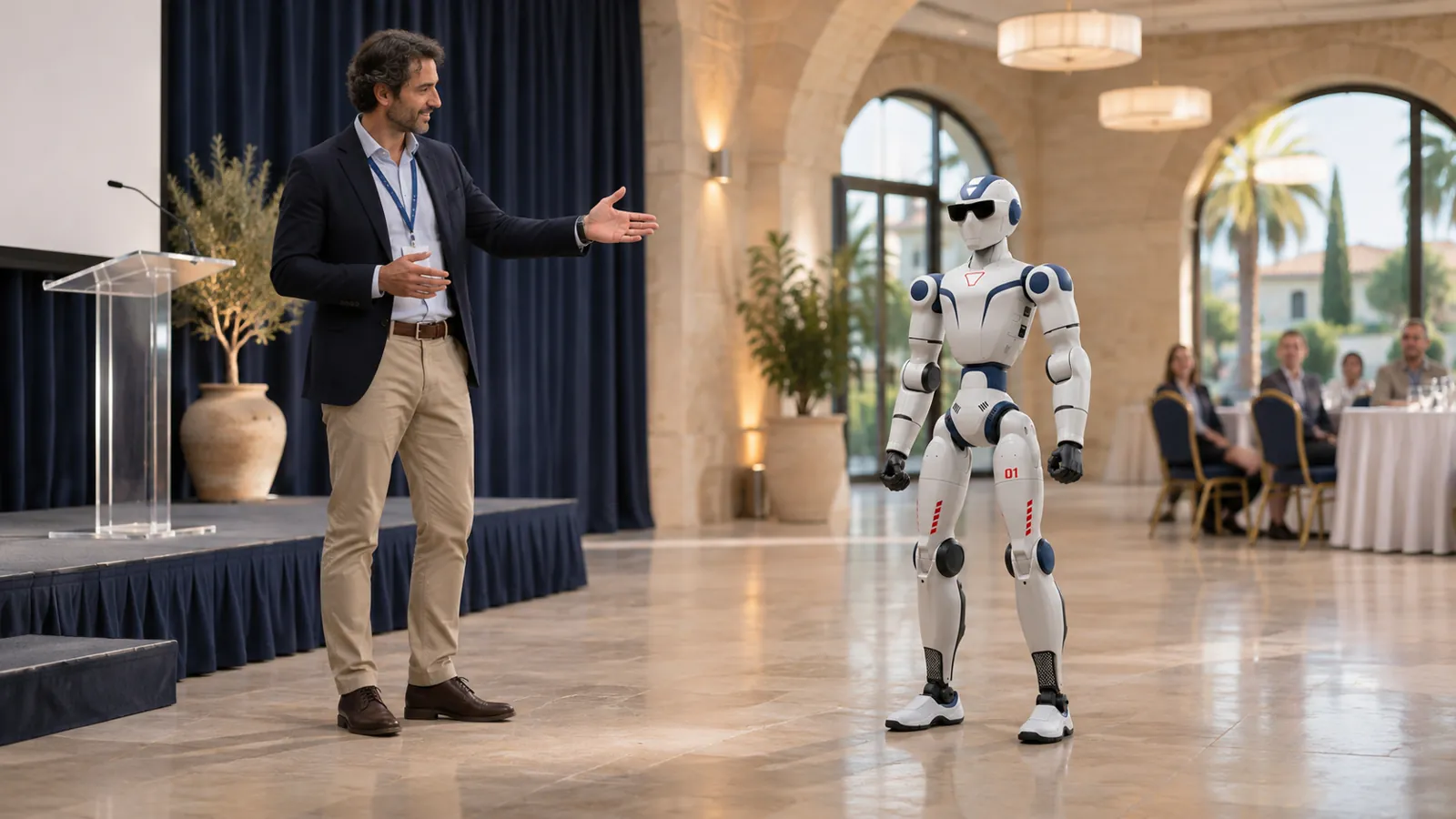
A humanoid naturally fits a presentation built around people and technology. Its upright shape can work well beside a host, product display or branded backdrop. If your message concerns the future of work, engineering or human interaction, that shape gives the audience an immediate visual reference.
A robot dog can suit a more playful demonstration of movement. Its lower stance changes how people gather around it and how a camera frames the scene. The mechanical contrast with a living animal can also prompt useful questions about balance, sensing and control.
Neither reaction is guaranteed. A strong demonstration gives guests a little context rather than relying entirely on novelty.
What the R1 family offers
The Unitree R1 Air is worth considering for a straightforward, remotely controlled humanoid appearance. It is the entry model in the range and does not provide autonomous navigation.
The Unitree R1 Basic adds articulation in the head and waist, as well as more movement in each arm. That can be useful when the visual brief depends on expressive upper-body motion or a carefully composed stage appearance.
If the attraction involves an application developed specifically for your organisation, Unitree R1 EDU is the programmable option. Allow time for development and testing; choosing EDU does not instantly produce a finished event character.
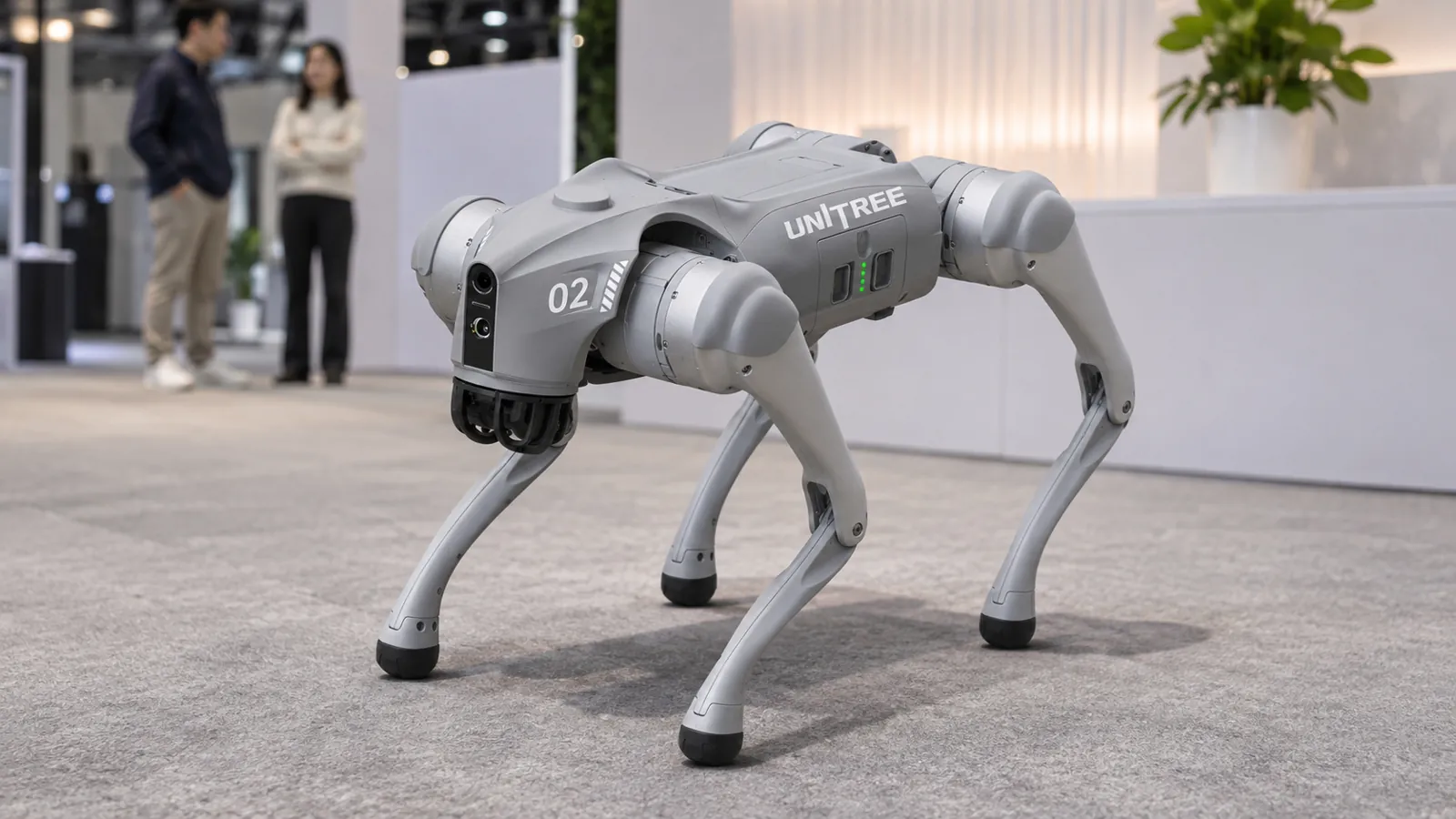
What a robot dog changes
A quadruped uses four legs, which gives its control system a different set of support options from a biped. That does not make every robot dog suitable for every surface, or remove the need for controlled operation around visitors.
Unitree's Go2 family illustrates another important point: capabilities vary by edition. The manufacturer's range includes different control, sensing and development options. Compare the exact configuration rather than assuming all robot dogs can follow a person, navigate independently or accept custom code in the same way.
For an event, the useful demonstration is the one you can reliably run in the chosen space. A spectacular movement filmed elsewhere may have little relevance to a stand surrounded by furniture and visitors.
Think about visibility, photography and space
An upright humanoid can be easier to frame beside a standing presenter. A robot dog may encourage lower camera angles and a different arrangement of spectators. These are practical creative decisions: place the robot where people can see it without crowding the operating area.
Check the actual floor, route and lighting. An outdoor concept also needs confirmation that the selected model and conditions are suitable. A robot's leg count is not a weather-protection rating.
Include setup, transport and battery arrangements in the comparison. The R1 models are compact humanoids, but still weigh roughly 27–29 kg before considering the case and accessories. For a quadruped, obtain the corresponding figures for the proposed edition.
Ask what should happen after the demonstration
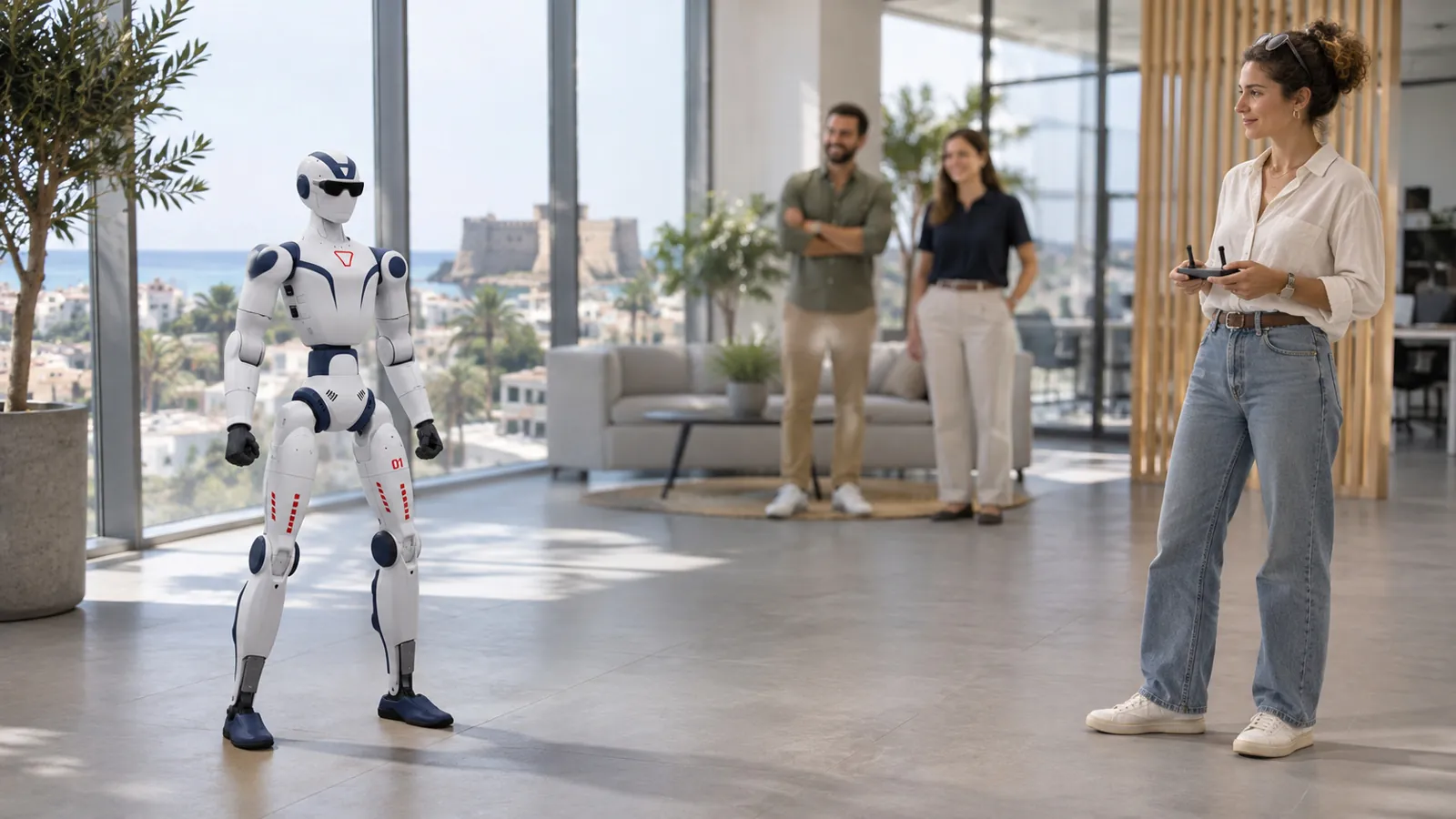
For a product launch, the answer might be a conversation with a specialist. For a school event, it could be a short explanation of how the robot balances. For a company celebration, a planned photo moment may be enough.
If the event team actually needs help with guest directions or transporting refreshments, a reception or service robot may be the more useful choice. Attraction and operational assistance can both matter, but they should be assessed separately.
Reef Robotics helps Cyprus customers compare these options and manages selection, ordering, delivery to the chosen location, installation, team training and technical support after purchase. For suitable autonomous service robots, deployment includes mapping the venue and configuring routes.
The right event robot is the one whose form, supported functions and operating plan all support the experience you want to create.