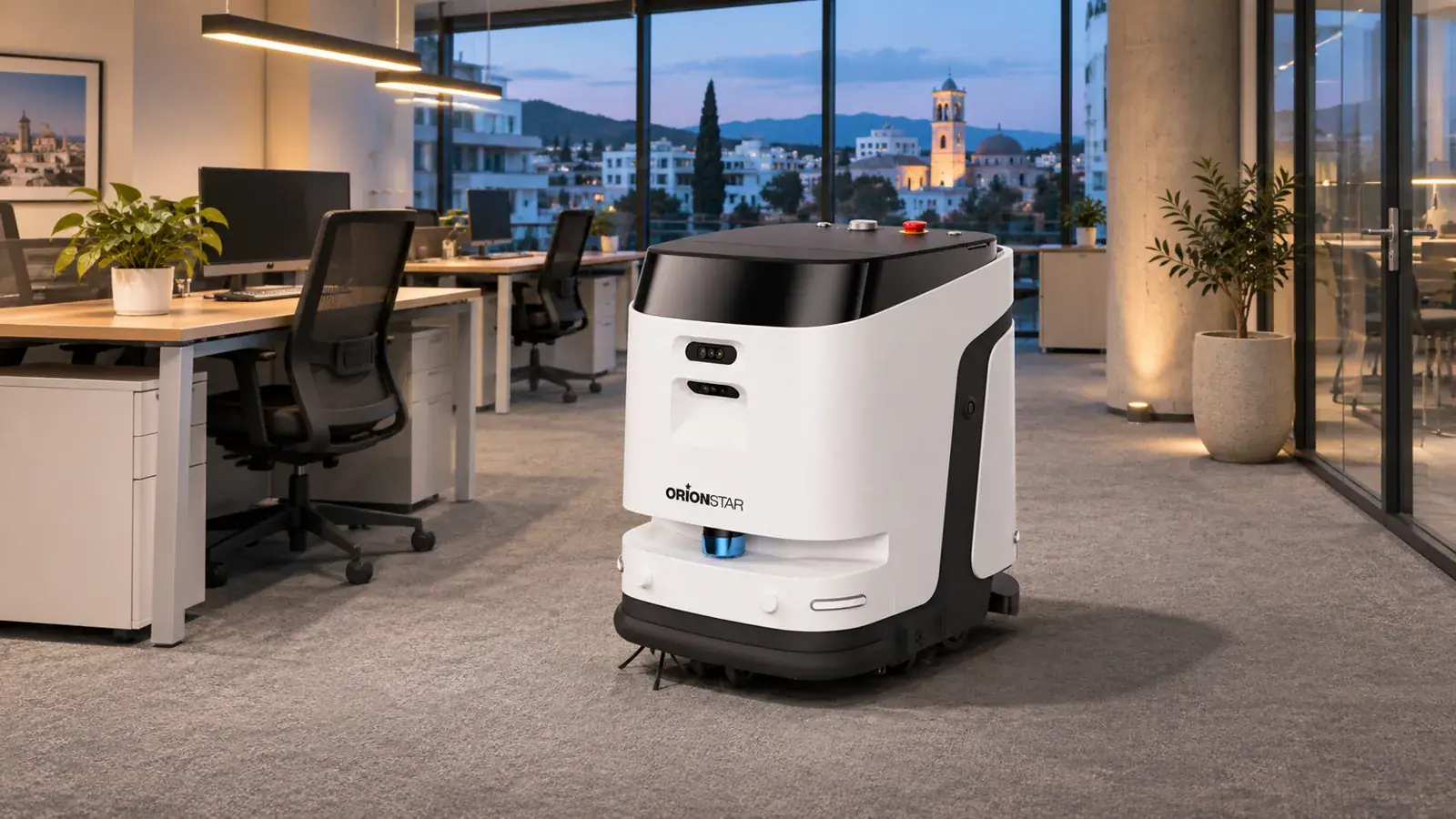
Carpeted corridors present a familiar problem. They may look clean from one end, yet dust, grit and hair collect steadily as people move through the building. Vacuuming them is necessary, repetitive work, and long corridors can absorb a surprising amount of a cleaner’s shift.
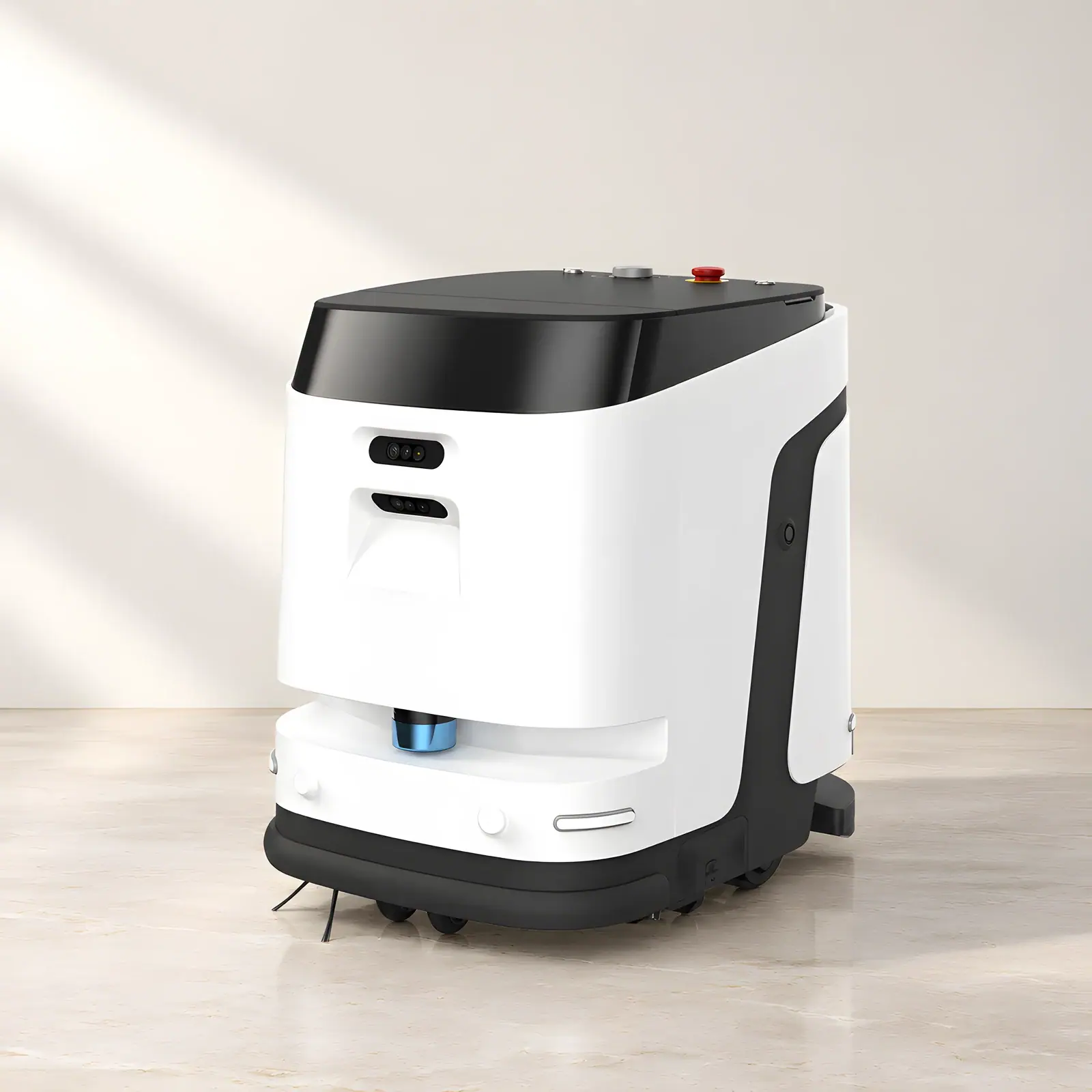
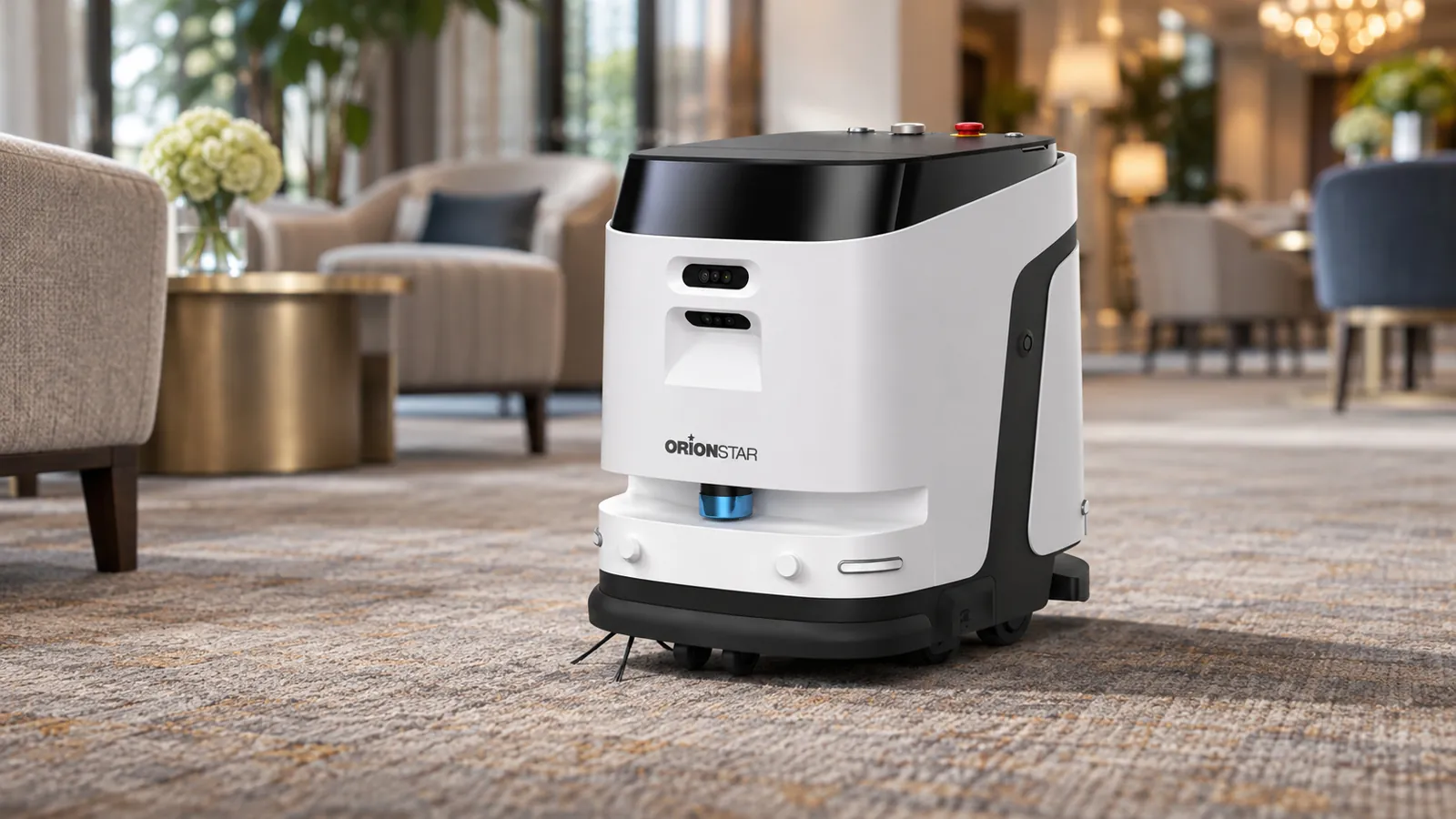
The OrionStar CleaniBot K1 is designed around that task. It is a commercial robot for vacuuming carpets and hard floors, with dust mopping available as another maintenance function. For hotels, offices and similar buildings, that focus can make more sense than buying a larger machine built mainly for wet scrubbing.
The OrionStar CleaniBot K1 is best understood as a way to organise regular dry floor cleaning, leaving the team free to handle the detail work around it.
What the OrionStar CleaniBot K1 brings to vacuuming
The K1 has a specified suction pressure of 20 kPa and a 10-litre dust bin. Suction pressure describes part of the vacuum system’s performance; it is not a complete measure of how well every carpet will be cleaned. Brush contact, airflow, carpet construction and the type of debris all influence the result.
A V-shaped anti-tangle roller is designed to reduce hair wrapping around the brush. That is particularly relevant where hair and fibres are a regular part of the cleaning load. The brush still needs inspection: anti-tangle design reduces a maintenance problem rather than removing maintenance altogether.
The 10-litre bin is useful for commercial routines because collection capacity affects how often someone needs to empty the machine. The actual emptying schedule should follow the amount of material collected on site, rather than an assumption based only on floor area.
Dry cleaning is a distinct job
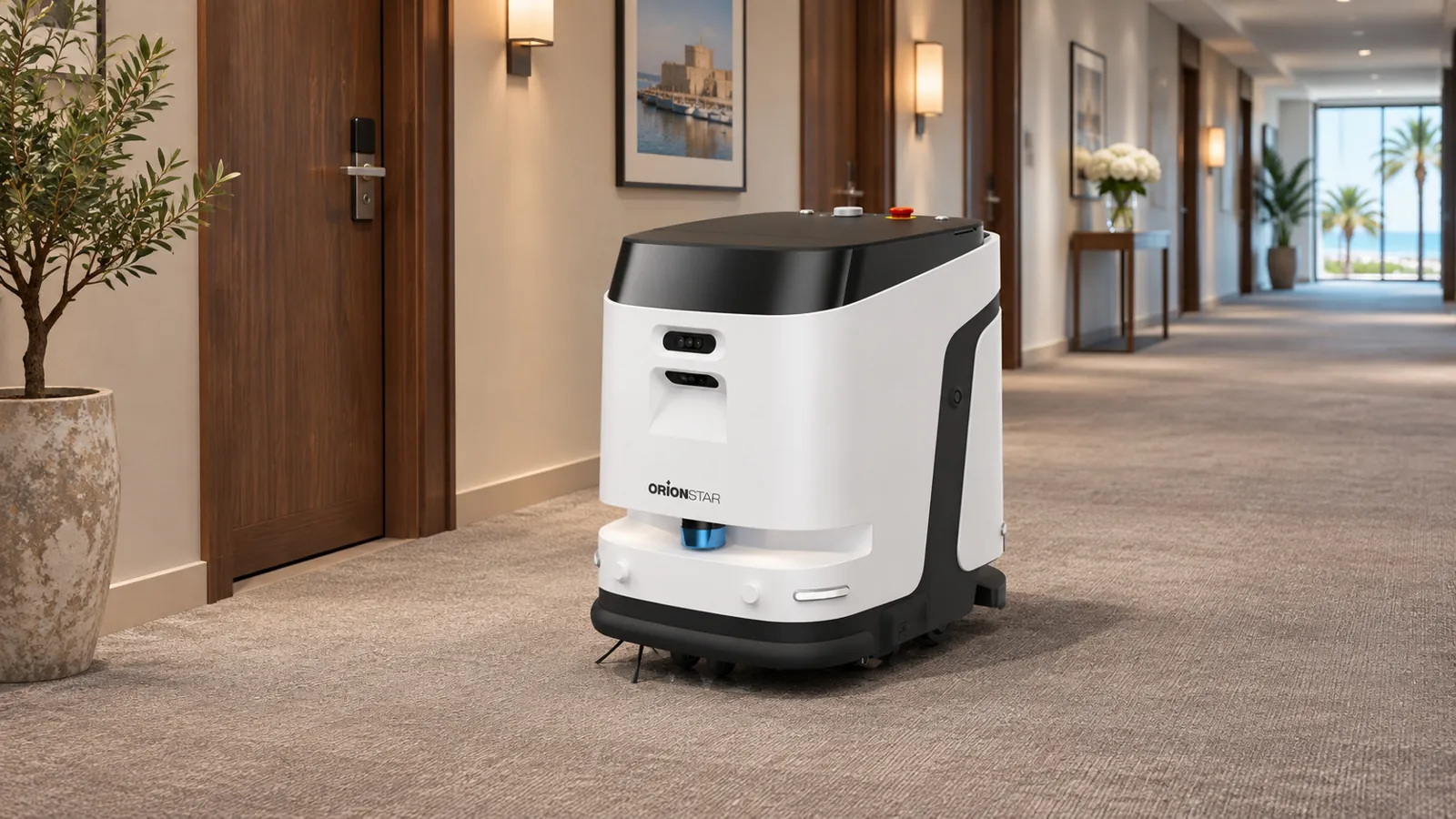
The K1 can vacuum suitable carpets and hard floors. It does not replace wet carpet extraction, shampooing or a dedicated scrubber for ingrained dirt on a hard surface.
That distinction helps avoid an expensive mismatch. If the daily problem is loose dirt in carpeted corridors, a vacuuming robot addresses the right task. If the main problem is sticky residue on tiled circulation floors, a different cleaning method may be required.
Many buildings need both. A practical plan might allocate the K1 to carpeted areas and use another machine or an existing manual process for wet cleaning. Selecting equipment by the work it will perform usually produces a clearer decision than trying to make one specification sheet cover the whole property.
Compact dimensions still need a route survey
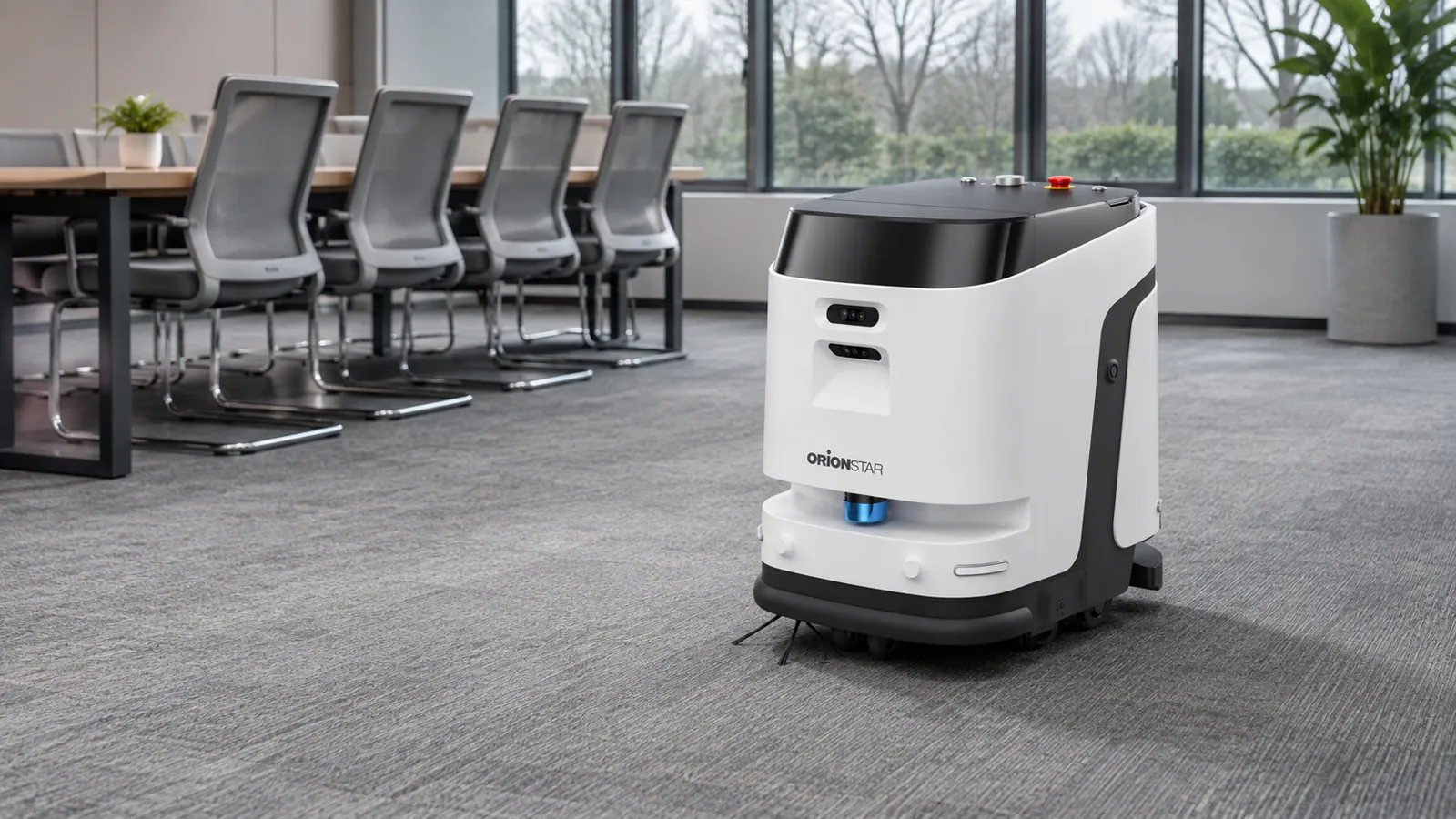
The K1 measures approximately 660 × 525 × 718 mm and weighs 46 kg. Those dimensions help explain its appeal in furnished commercial interiors, but the body width alone does not tell you where it can operate.
The published minimum passing width is 880 mm. Doorways, turning areas, chair positions and access to the dock all need checking against the actual route. A machine can fit physically into a space yet lack the clearance needed to navigate it reliably.
This is especially important in offices where furniture moves throughout the day. Pulling chairs into desks and keeping cables off the route can make a planned cleaning run much more dependable.
Scheduling around the people in the building
The specified vacuuming runtime is up to eight hours, with a maximum cleaning rate of up to 700 m² per hour. Actual coverage will depend on settings, obstacles and the route. Dust-mopping runtime is listed separately at up to four hours, and charging takes approximately 1.5 hours.
Automatic return to charging supports regular schedules, but timing should still reflect how the building is used. An office may offer a good cleaning window after staff leave; a hotel corridor may need a quieter period that suits guests and housekeeping movements. A demonstration in the intended setting is more useful than assuming any vacuum will go unnoticed.
For the cleaning supervisor, success means a reliable routine: prepare the route, run the task, inspect the result and maintain the equipment. The OrionStar CleaniBot K1 can take on a substantial share of repetitive vacuuming when that routine is well designed.
Reef Robotics can help assess carpets, access and cleaning schedules, then compare the K1 with the other commercial floor-cleaning robots available. The strongest reason to choose it is simple: your building has regular vacuuming work that a dedicated commercial robot can usefully take over.