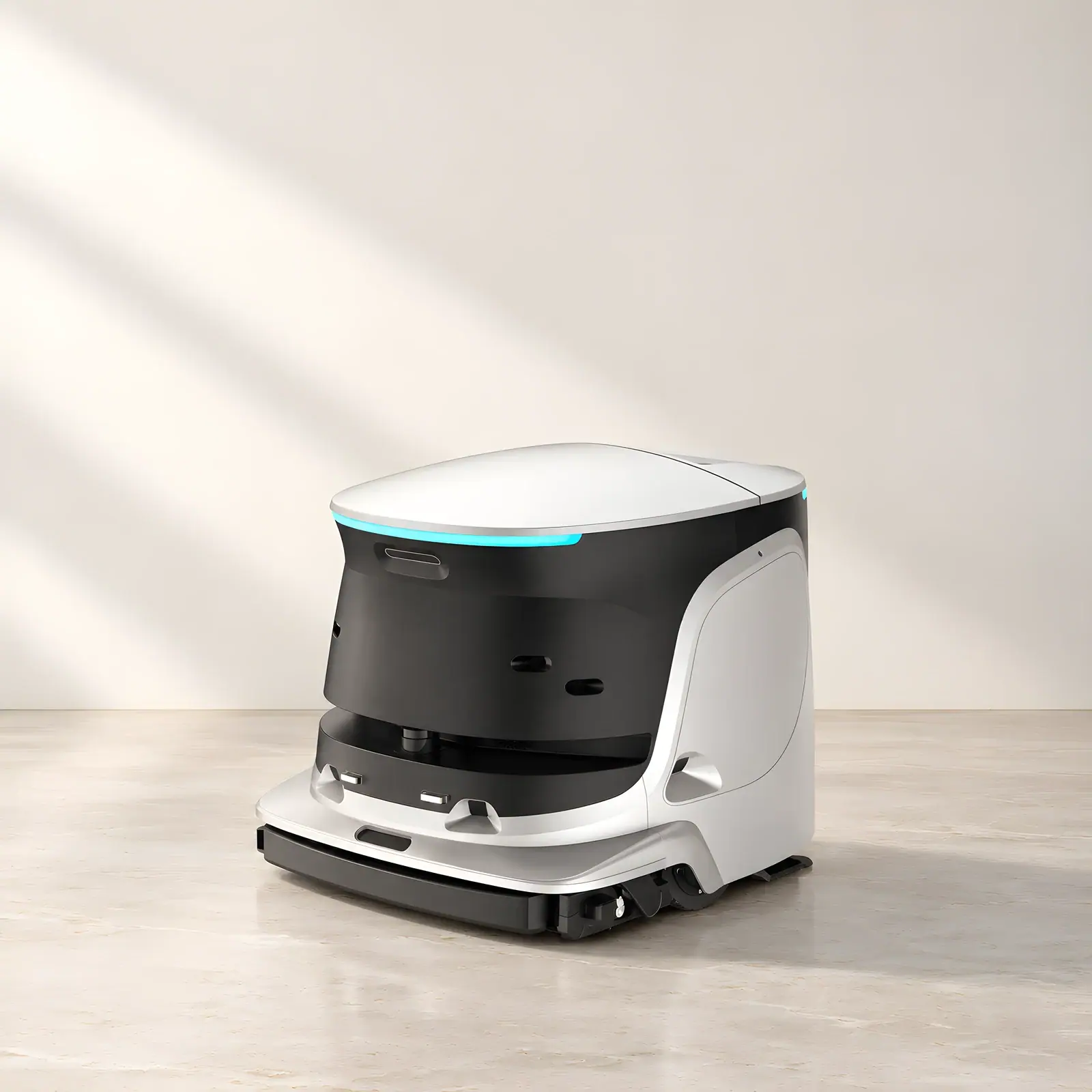
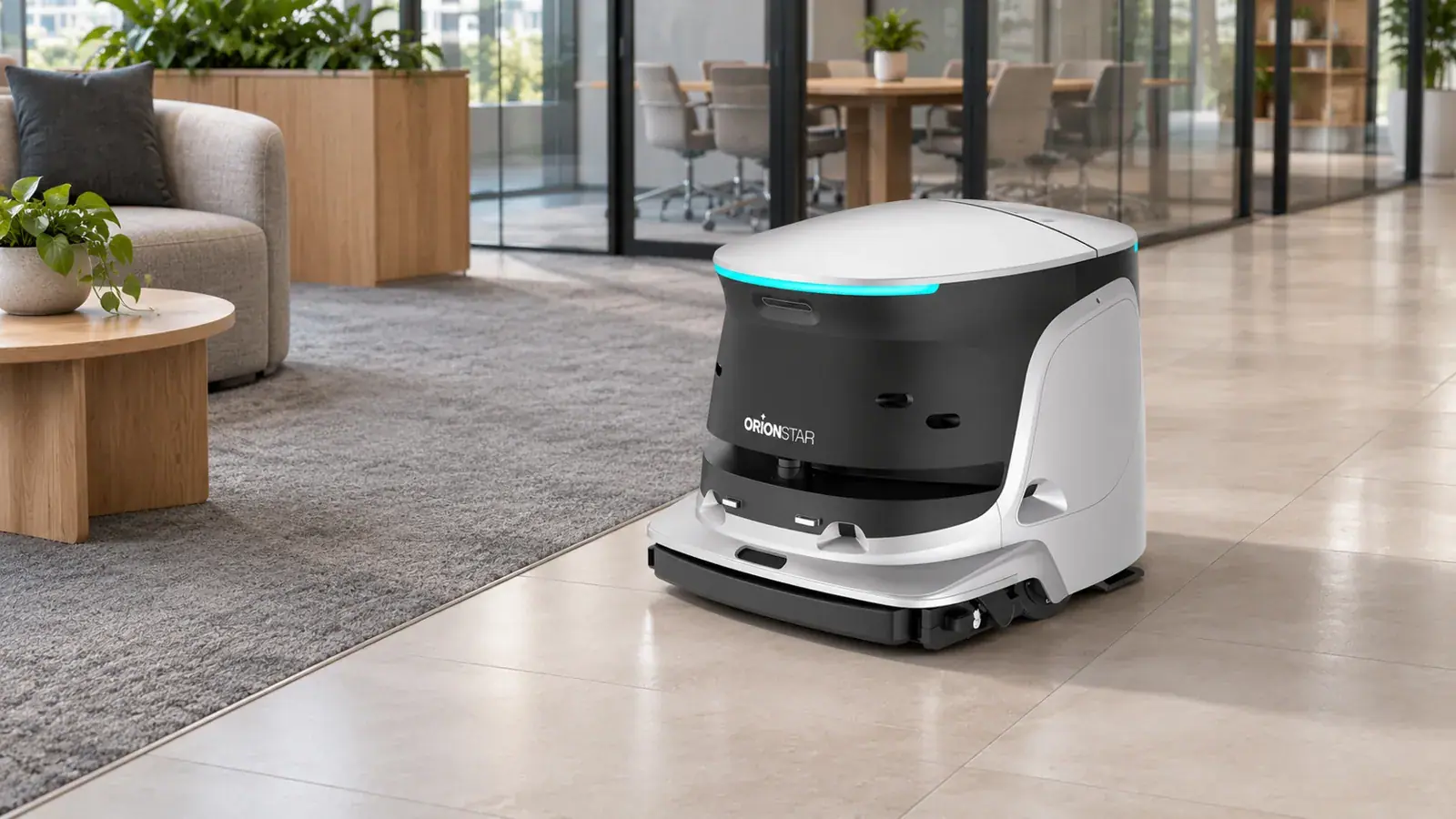
A building rarely has just one kind of floor. The entrance may be tiled, the meeting rooms carpeted and the reception finished in polished stone. For the cleaning team, each change of surface can mean a different tool, a different setting and another interruption to the routine.
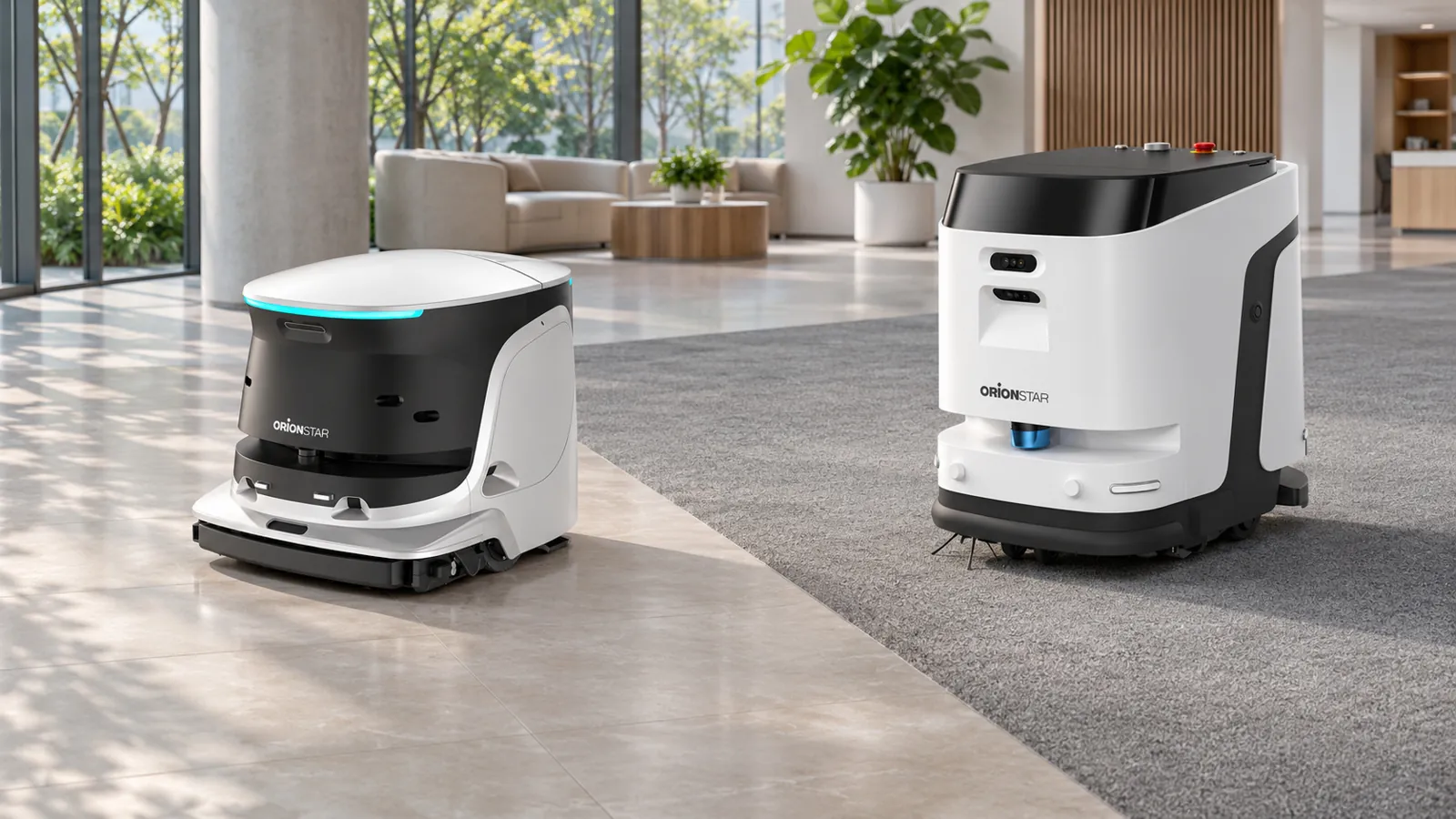
The OrionStar CleaniBot S55 Pro addresses that everyday problem with six cleaning modes in one autonomous machine. Its appeal is flexibility: a business can plan several types of routine floor care around the same robot, provided the surfaces and routes are suitable.
That makes the OrionStar CleaniBot S55 Pro worth considering when a building needs more than vacuuming, but does not need a dedicated heavy-duty scrubber everywhere.
What the six cleaning modes actually mean
The available modes are Scrub, Power Scrub, Sweep & Vacuum, ECO Vacuum, Sweep/Vacuum/Mop and Dust Mop. The names describe different jobs, rather than six versions of the same cleaning cycle.
Scrubbing uses mechanical brush action and water to address dirt on suitable hard floors. Power Scrub provides another option for more demanding cleaning. Sweeping and vacuuming collect loose material, while dust mopping is useful for routine surface maintenance. Low-pile carpets can be vacuumed rather than treated with a wet hard-floor programme.
During setup, different modes can be assigned to predefined zones. The robot can then change its cleaning programme as it follows the planned route. For staff, the benefit is less repeated equipment switching between adjacent areas.
The important detail is that the floor plan needs to be configured properly. A robot should not be expected to make every floor-care decision simply because it has cameras and sensors. Reef Robotics can help match the programme to each surface, including checking the suitability of brushes and cleaning products for sensitive finishes.
Where the OrionStar CleaniBot S55 Pro fits best
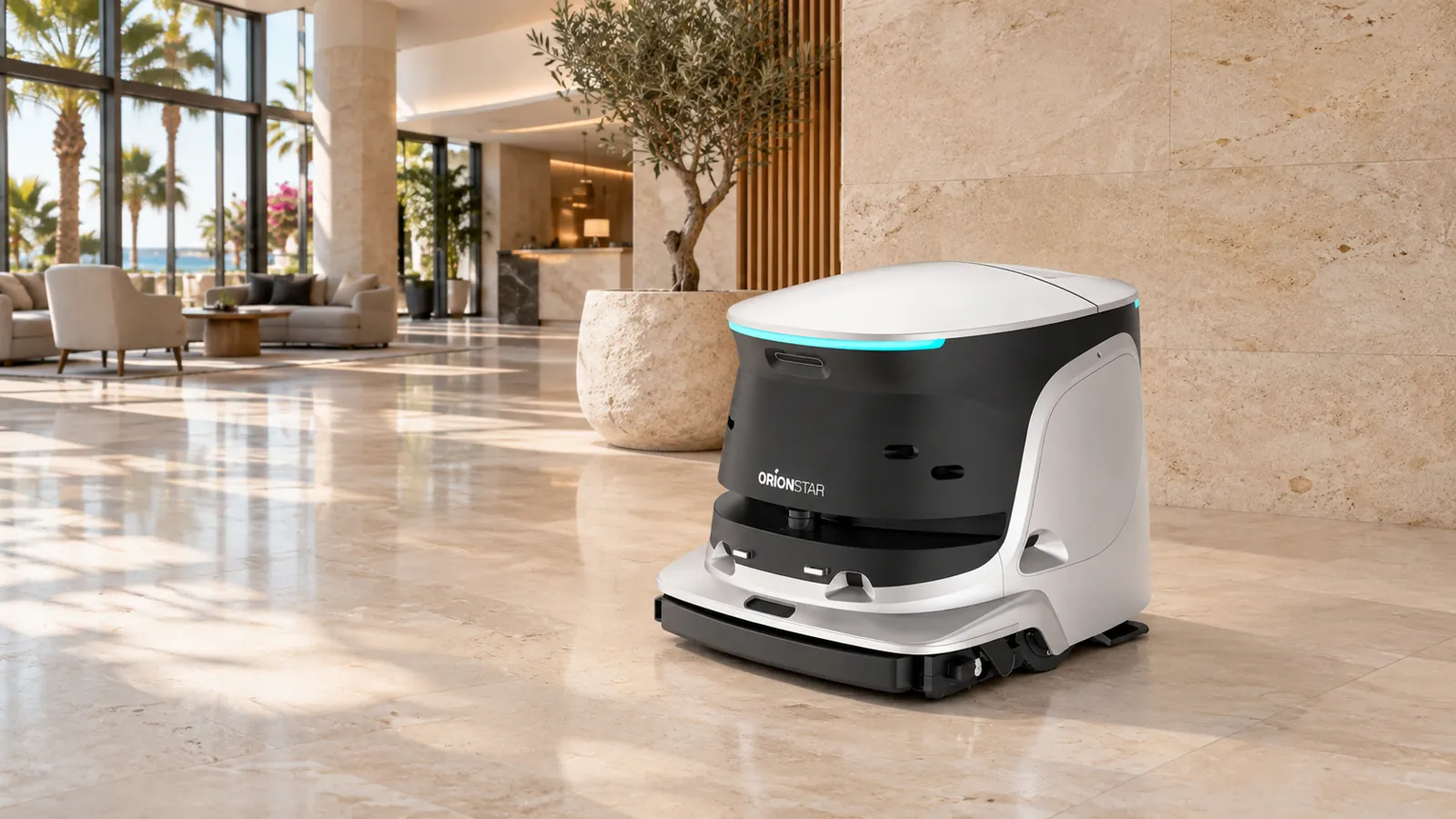
Consider a business centre with tiled circulation areas, a stone reception and low-pile carpet outside meeting rooms. A flexible robot could handle scheduled cleaning across those zones while the team cleans desks, glass and other areas beyond a floor robot’s reach.
The S55 Pro has a listed minimum passing width of 700 mm. That is useful when assessing routes through a furnished building, although turning space, doorway approaches and the docking area still need checking. A corridor that is technically wide enough may become unsuitable when chairs or delivery boxes narrow the route.
Its 22-litre clean-water tank and 15-litre wastewater tank support wet cleaning. Automatic charging helps the machine prepare for further tasks, but water handling and routine maintenance still need an agreed process. Automatic charging should not be confused with automatic water refilling.
Reading the performance figures sensibly
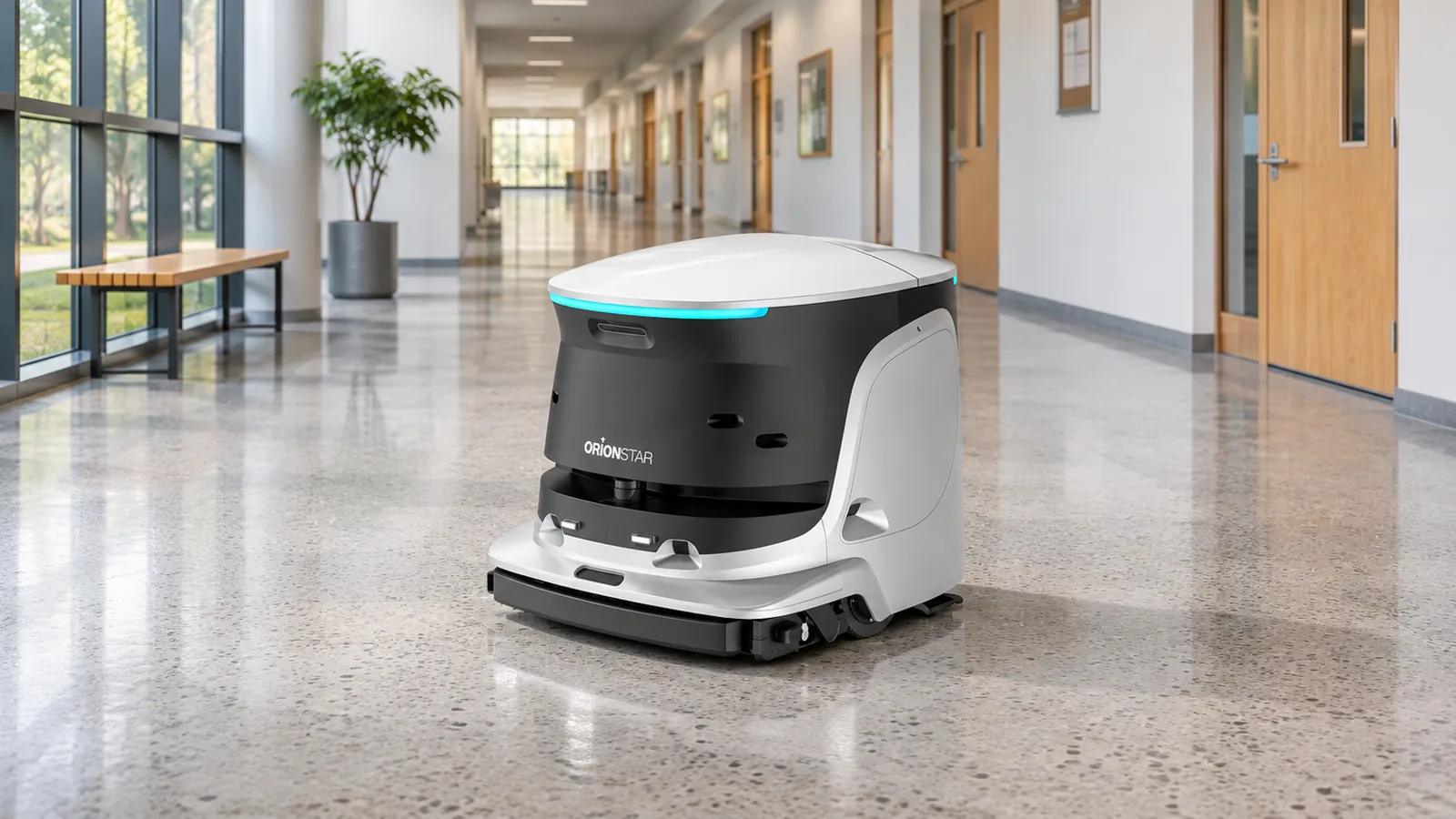
The published maximum cleaning rates are up to 1,197 m² per hour in scrubbing mode and up to 1,368 m² per hour in dry modes. These are useful comparison figures, rather than a promise that every furnished office will achieve the same output.
Actual progress depends on turns, furniture, people, the number of passes and the distance between cleaning areas. A large open lobby and a series of small meeting rooms can have the same floor area but very different cleaning times.
Battery figures also depend strongly on the programme. The specifications list up to 4.5 hours for Scrub and Sweep & Vacuum, compared with up to 19.5 hours for ECO Vacuum and 28 hours for Dust Mop. The longest figure should therefore never be used to estimate a full day of intensive wet scrubbing.
Navigation that supports a repeatable routine
The S55 Pro combines LiDAR, cameras and other sensors to navigate and detect obstacles. LiDAR measures the surroundings using laser light, helping the robot locate itself within its map. Scheduled tasks and digital reports make it easier to organise repeatable routes and review what was completed.
That repeatability is often more valuable than novelty. A corridor can receive a defined cleaning programme at a planned time, while the supervisor checks the result and deals with exceptions.
For a facilities team, the right question is whether the OrionStar CleaniBot S55 Pro can take responsibility for a useful portion of the daily floor routine. Reef Robotics can assess that fit alongside the other commercial cleaning robots in our range, then help with deployment, mapping and staff training. A flexible machine becomes most useful when its flexibility is translated into a simple, reliable working day.