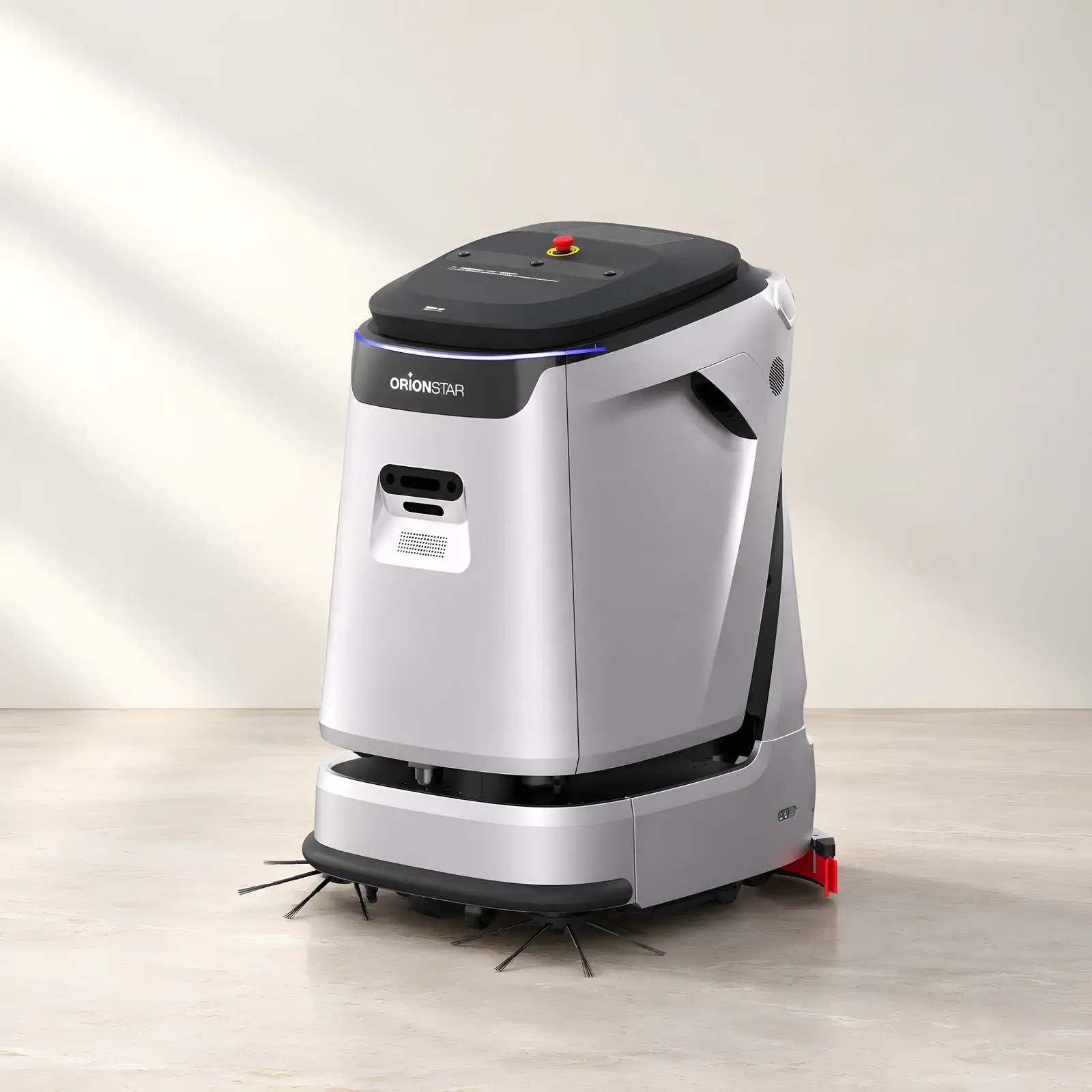
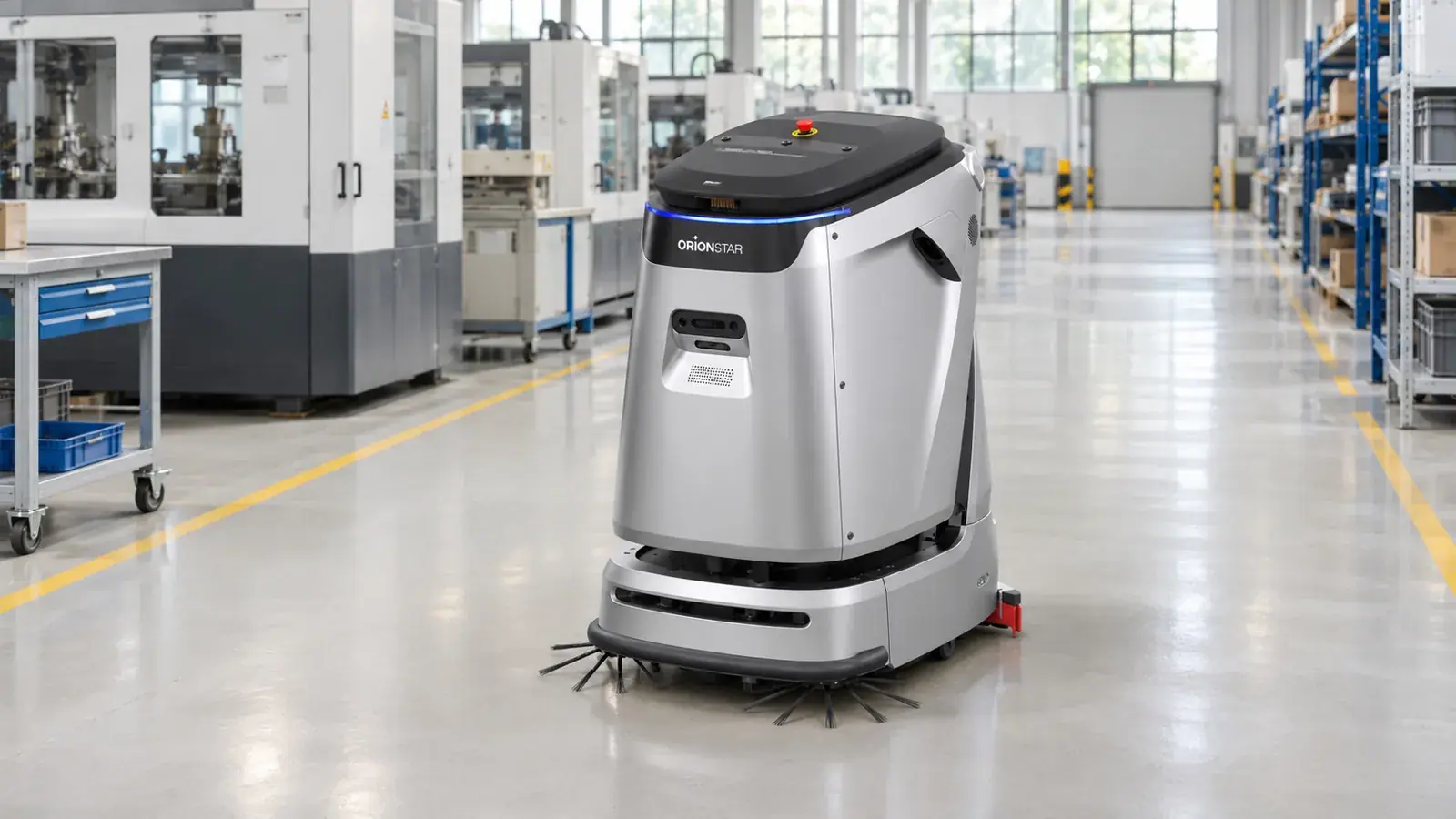
A busy commercial floor can reach the point where a light maintenance pass is no longer enough. Dirt becomes worked into the surface, traffic keeps bringing in more material, and the available cleaning window stays stubbornly short.
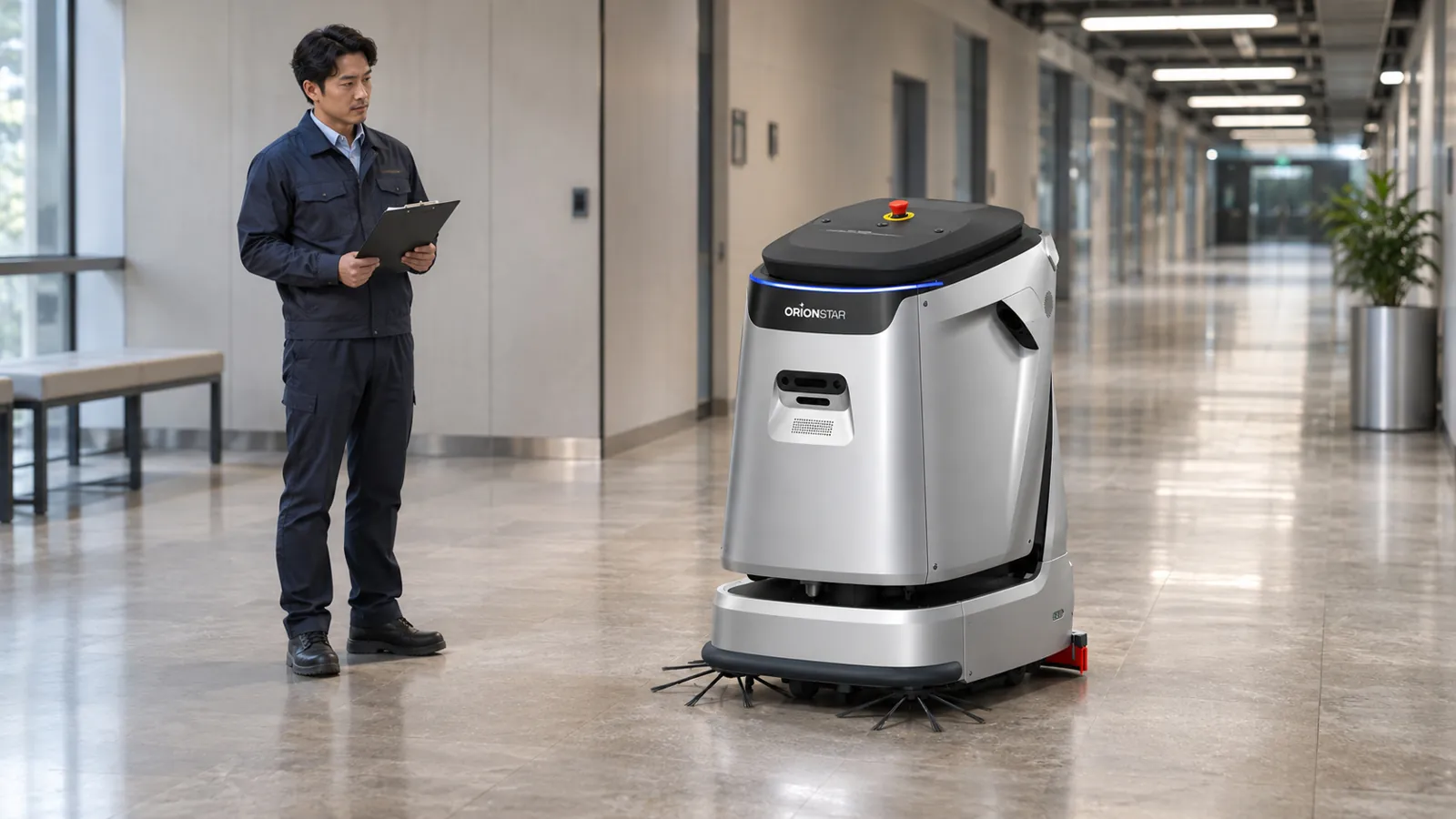
The OrionStar CleaniBot C5 is built for more demanding hard-floor care. Its combination of dual roller brushes, substantial water capacity and an automated servicing workstation makes it relevant to large commercial buildings, transport facilities, warehouses and other sites with regular scrubbing work.
The OrionStar CleaniBot C5 deserves attention when the question is how to clean a working floor thoroughly and repeatedly, with less manual operation between cycles.
How the OrionStar CleaniBot C5 tackles the floor
The C5 uses a dual-roller brush system with a 550 mm cleaning width. OrionStar specifies downward scrubbing pressure equivalent to a 25 kg load. In practical terms, the brush system applies mechanical action to help remove dirt from suitable hard flooring.
Pressure is only one part of the cleaning result. The floor finish, brush choice, cleaning solution and travel settings also matter. A surface with persistent contamination should be tested with the proposed programme, rather than assumed to become clean in one pass because a brochure describes the machine as heavy-duty.
The C5 also supports dust mopping and water absorption. Its role is different from that of a large dry sweeper: if a floor is covered in loose packaging debris, an appropriate preparation or sweeping stage may be needed before scrubbing.
Understanding the 90-litre water system
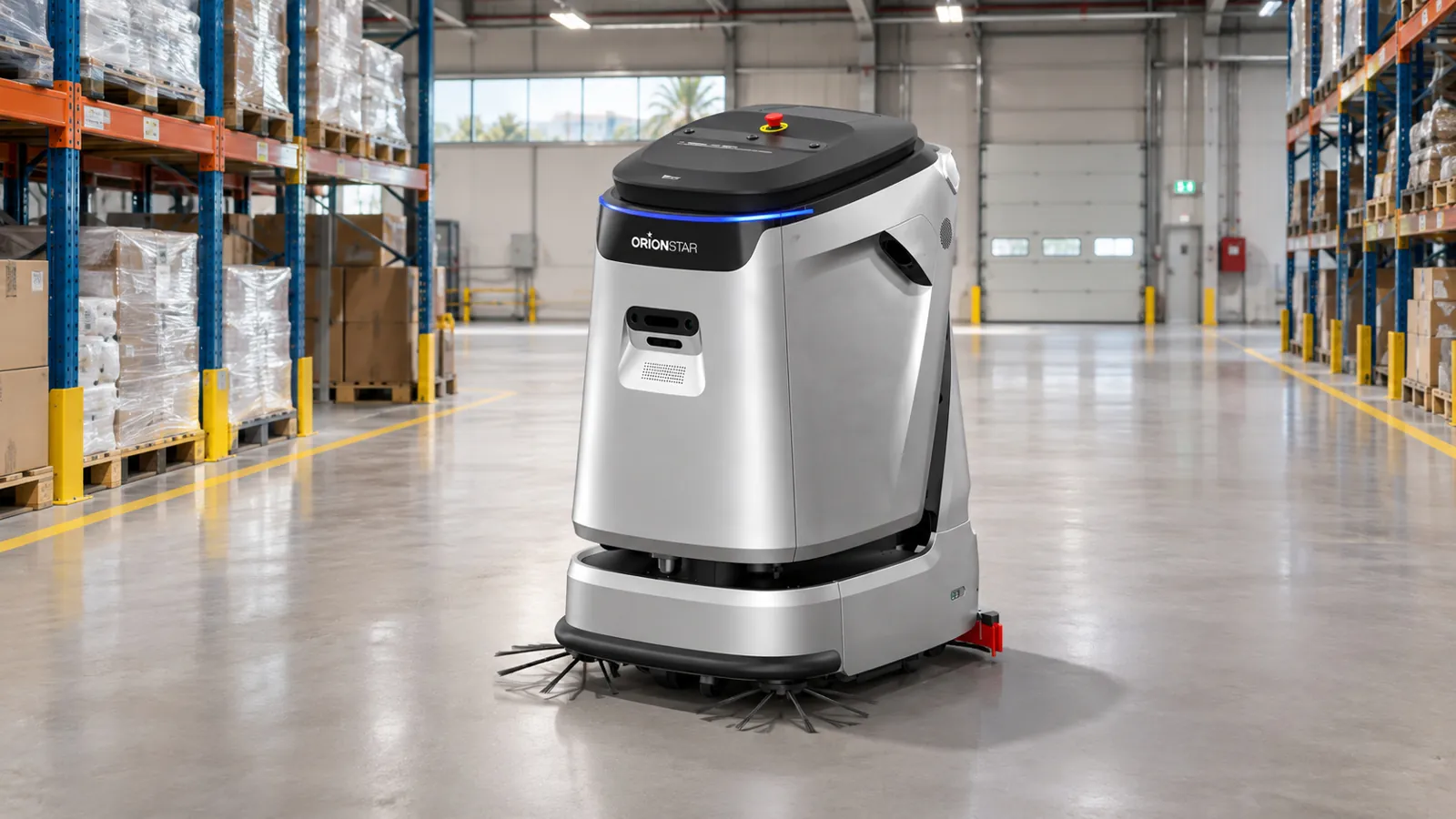
The C5 has a 45-litre clean-water tank and a separate 45-litre wastewater tank. Together they make up the advertised 90-litre system. That does not mean the machine carries 90 litres of fresh cleaning water.
The separation allows clean water to be delivered to the floor and recovered dirty water to be collected independently. For a facilities team, the useful question is how this capacity supports the actual route: water consumption changes with the cleaning settings and the level of dirt.
A larger tank can reduce interruptions, but it should be considered alongside the replenishment process. A machine that can return to a conveniently positioned station may fit the operation better than one assessed purely on tank size.
A workstation that handles more of the routine
With its dedicated workstation, the C5 supports automatic charging, clean-water refilling and wastewater drainage. It also provides internal tank rinsing, with a specified wastewater-tank self-cleaning time of approximately four minutes.
These functions can reduce routine handling between cleaning cycles. They do not remove the need to inspect brushes, check the water-recovery components and carry out scheduled maintenance. The practical benefit is that several recurring servicing tasks can be built into the robot’s routine.
An optional mobile water tank is listed for installations where plumbing modifications are difficult. Reef Robotics can assess the available configuration and the work required at the site. Station access, utilities and the route back to the cleaning area should all be settled before the installation is finalised.
Capacity needs to match the cleaning window
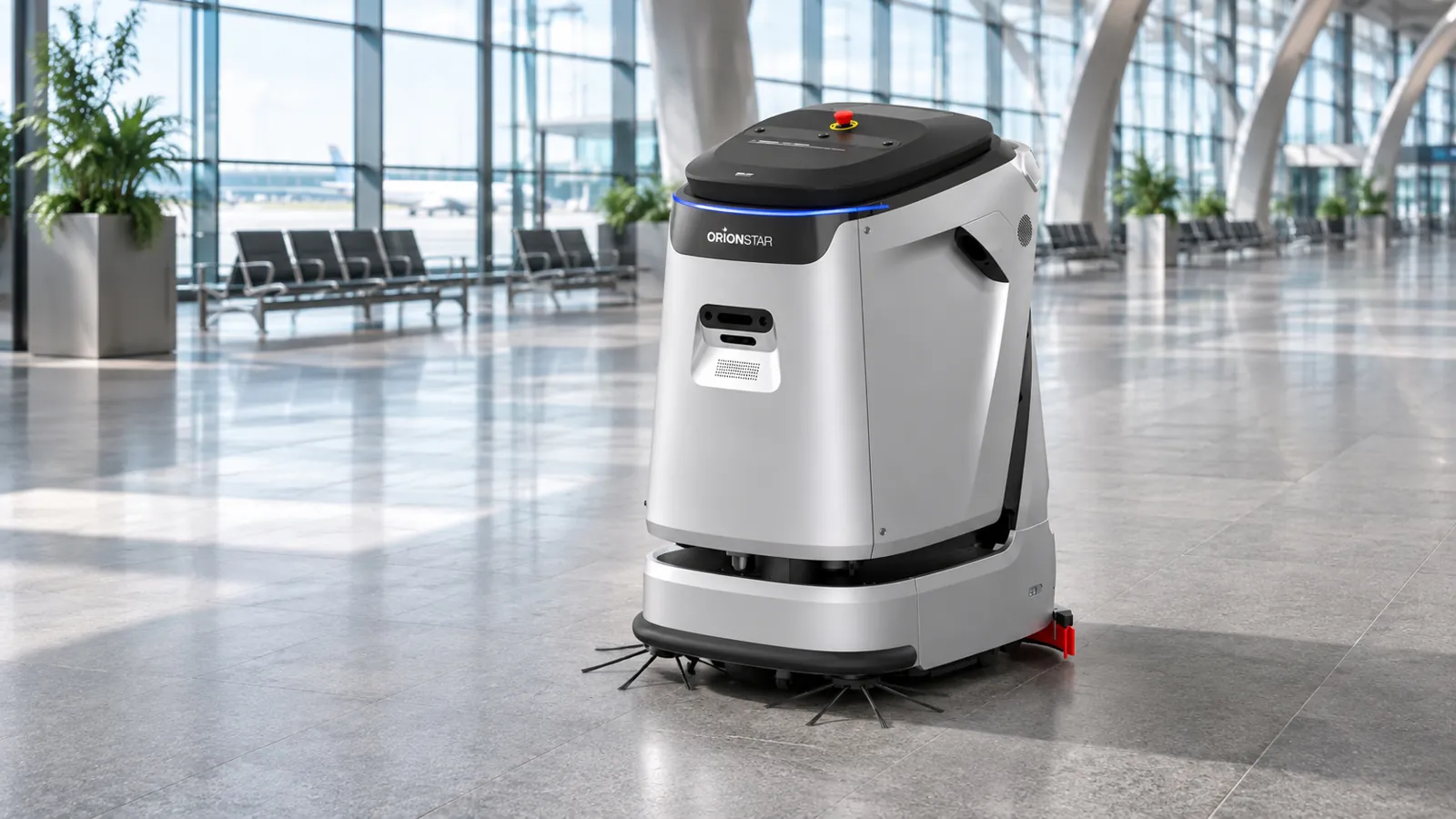
The published maximum cleaning rate is up to 1,980 m² per hour. Scrubbing runtime is up to three hours, while mopping is listed at up to eight hours. Charging takes approximately 1.5 hours.
Those figures help frame a discussion, but they should not simply be multiplied to promise a fixed area per shift. Turns, interruptions, repeated passes and returns to the station affect practical output. A trial route can show whether the required area is completed to the right standard within the available time.
Physical access matters too. The minimum passing width is 880 mm, and the robot’s net weight is 170 kg. Doorways, floor transitions, docking space and any proposed movement between levels need careful assessment.
Choosing the C5 for the right reasons
The OrionStar CleaniBot C5 makes sense when substantial, recurring hard-floor scrubbing is the job to automate. Its value comes from combining cleaning capability with a service cycle that reduces repeated operator intervention.
Reef Robotics can compare it with the wider commercial cleaning robot range and help define a practical installation. For a demanding facility, a successful choice is a robot that completes the right work reliably and leaves the team with a manageable daily routine.