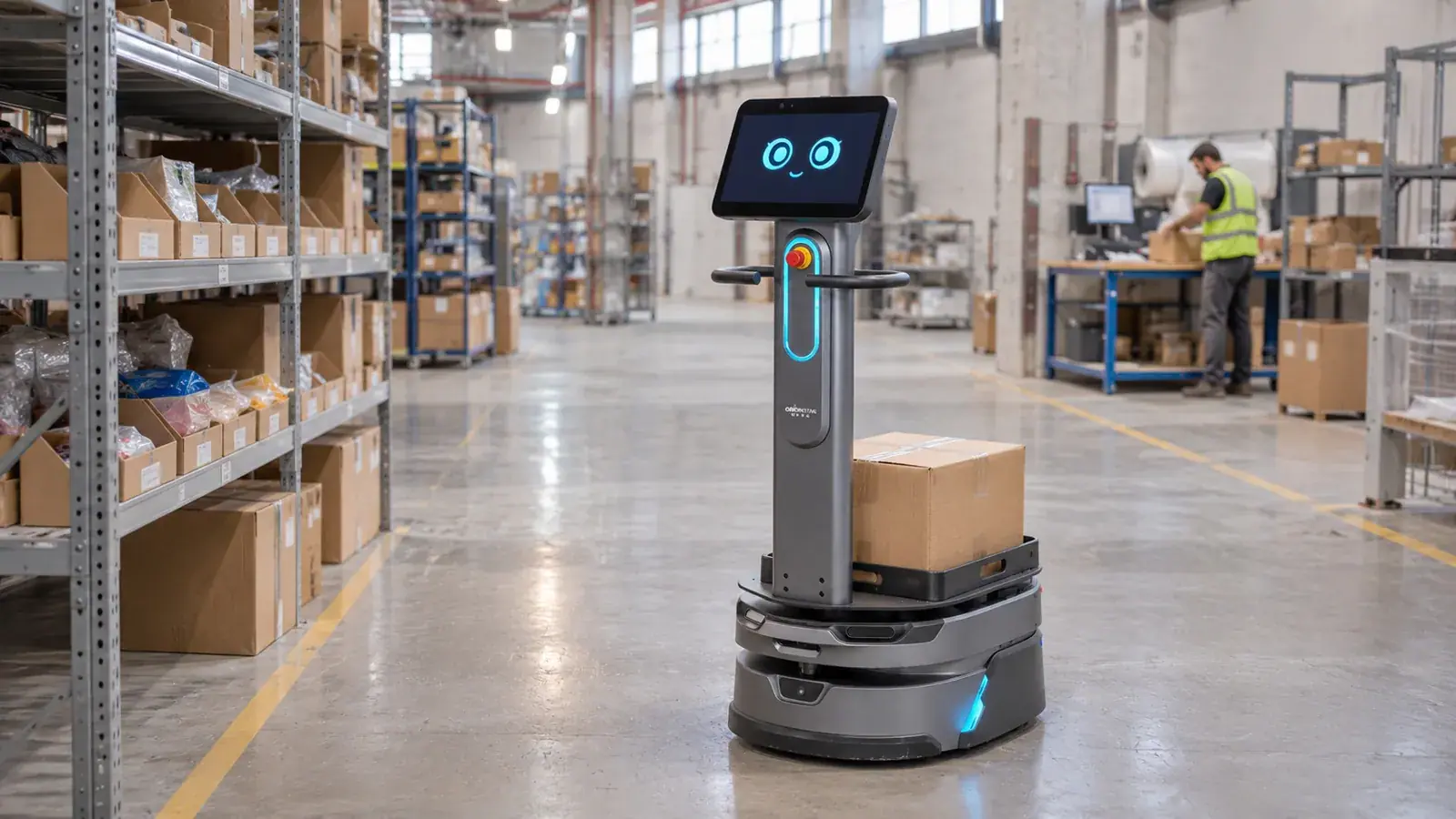
A box does not become more valuable because an employee spends several minutes carrying it across a building. The journey may be essential, but it can keep a warehouse operative away from picking or a retail employee away from customers. Finding a dependable way to handle that journey can improve how the team uses its time.
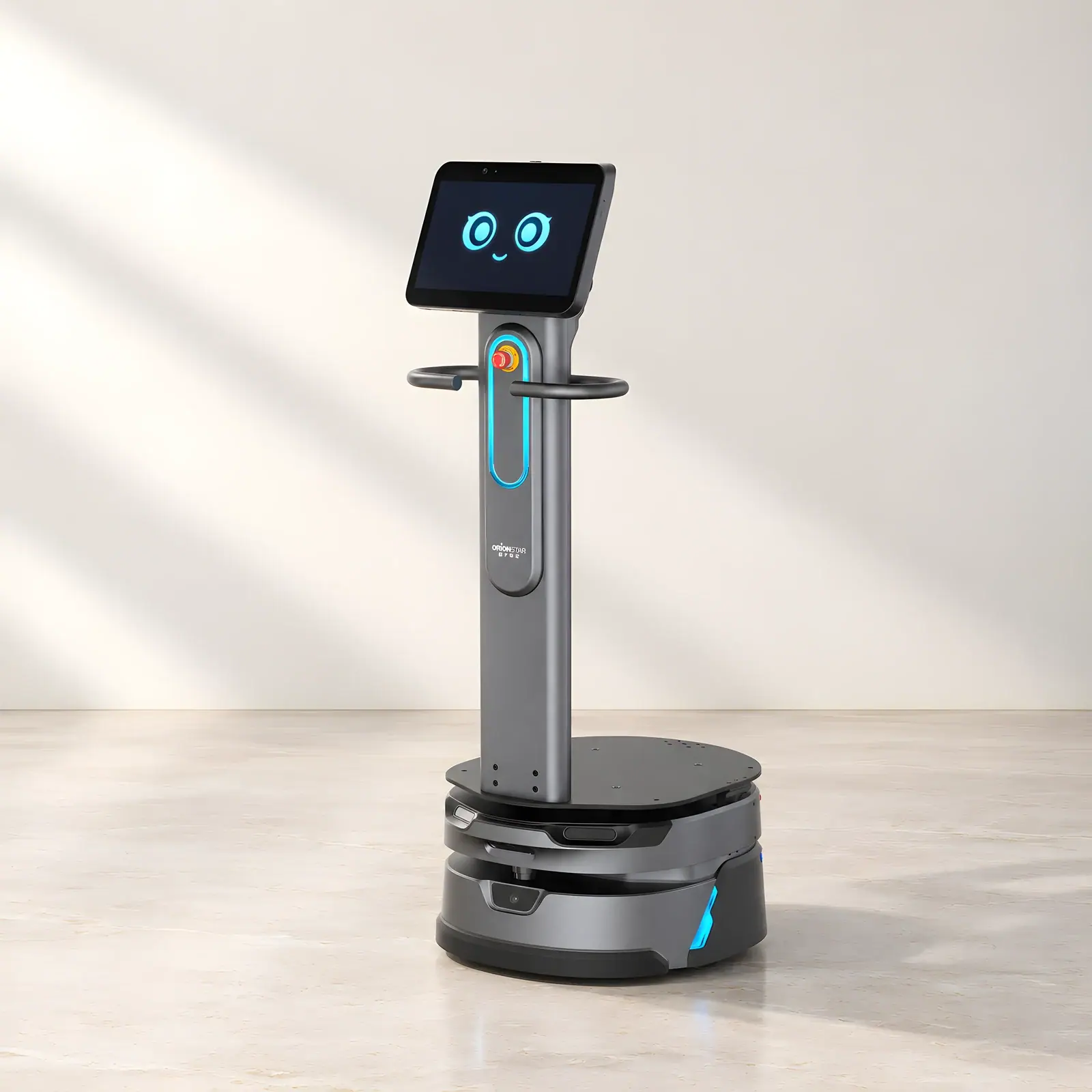
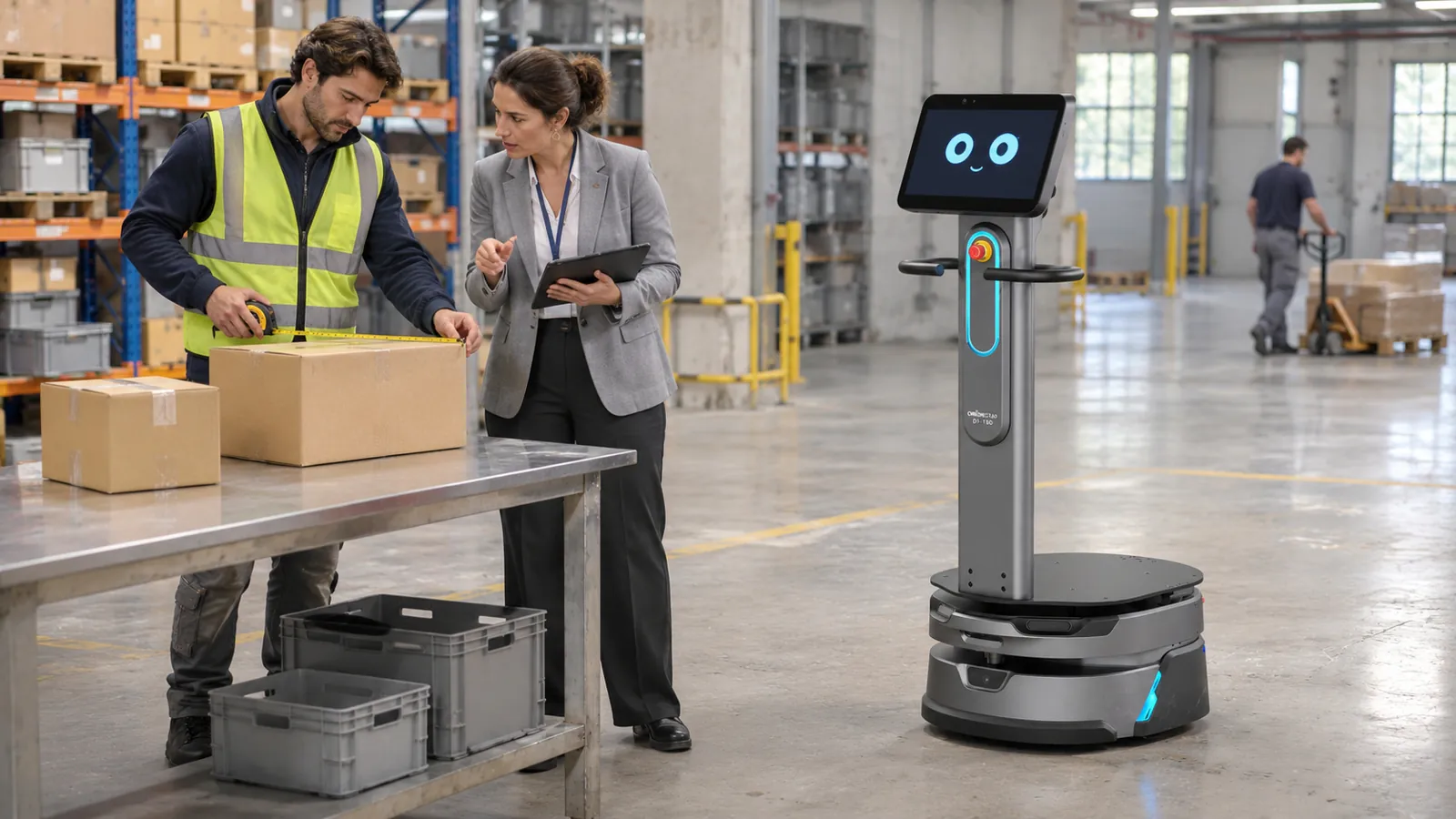
The OrionStar CarryBot D1-150 is a compact autonomous transport robot with a maximum payload of 150 kg. Its carrying arrangement can be adapted using suitable attachments, making it relevant to businesses moving boxes, inventory, components or supplies between indoor locations.
How OrionStar CarryBot D1-150 supports different jobs
The D1-150 uses a platform format rather than an integrated multi-tray arrangement. That makes the choice of attachment and container especially important. A box transport task, a parts supply route and a retail replenishment run may all need different ways to keep goods secure and accessible.
Custom attachments are supported and sold separately. They should be selected with the robot's payload, dimensions and stability in mind, including the weight of any added equipment. Flexibility is useful when it produces a repeatable loading method that employees can understand quickly.
The robot does not independently pick items from warehouse shelves or place products on shop displays. People or separately engineered equipment still handle those stages. Its main contribution is moving the prepared load between them.
Delivery modes that suit the process
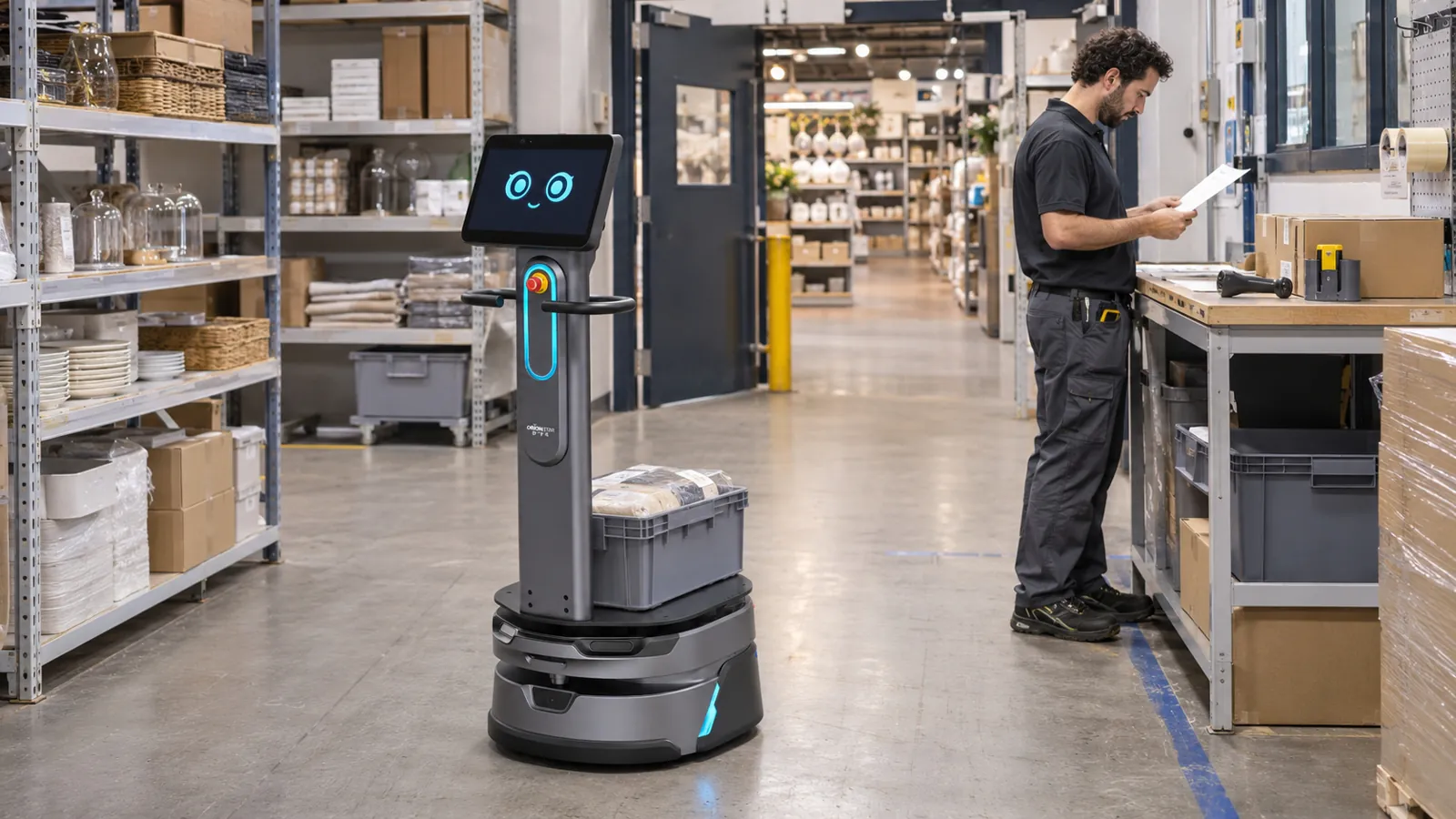
CarryBot supports point-to-point and multi-stop delivery. A warehouse could send a container to one packing station, while another operation could use a planned sequence of supply stops. Smart summon offers a way to request the robot when it is needed.
Follow-me operation is useful to consider when a person needs to lead the movement. In that mode, the robot follows a member of staff; it should not be confused with joystick control or a walk-behind powered truck. Each mode needs its own agreed use and training.
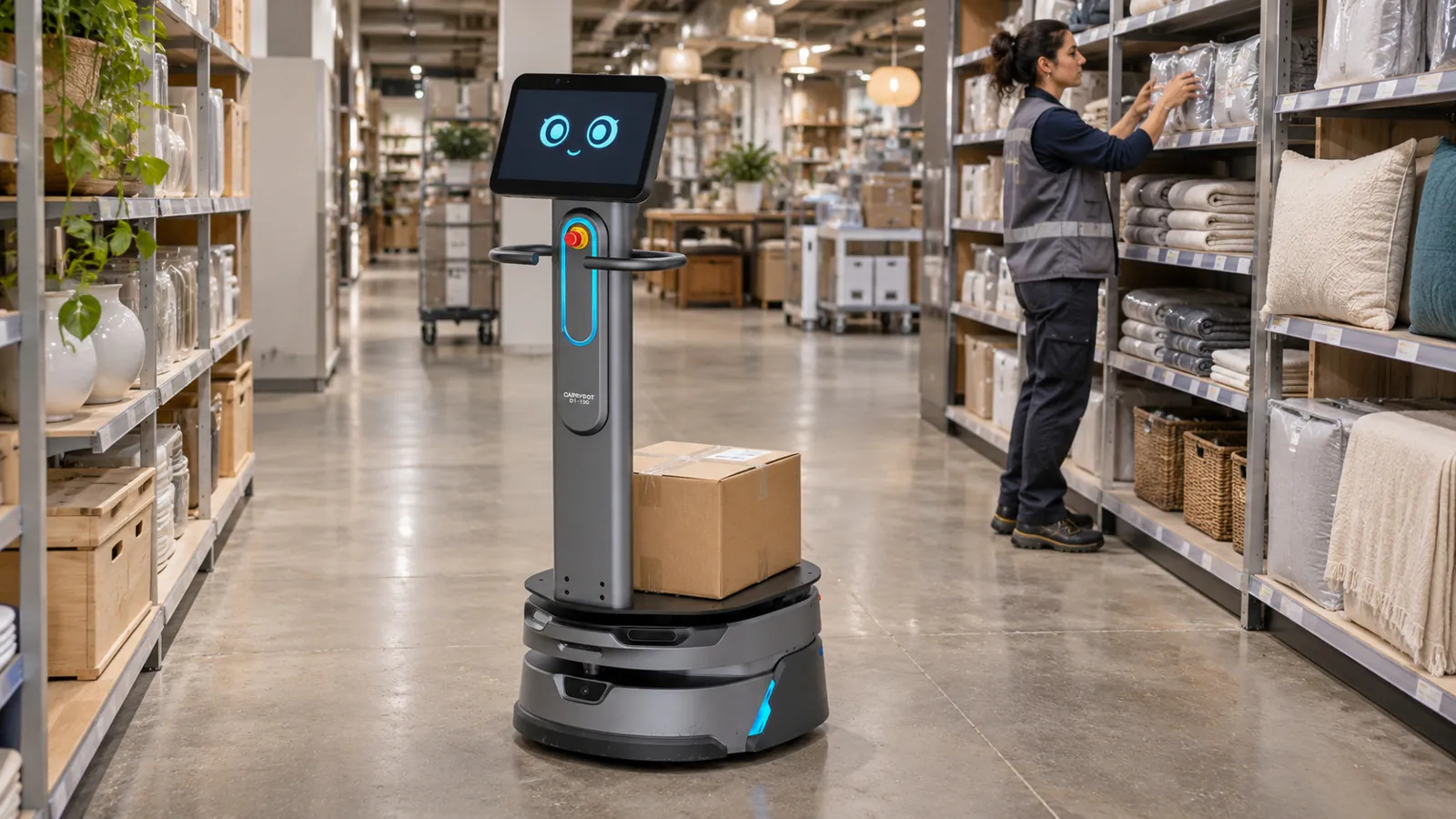
For example, a hypothetical large store might prepare stock at the backroom and send it to a defined indoor replenishment point. The receiving employee continues shelf work until the load arrives. A successful arrangement avoids needing a second employee to accompany every delivery, while keeping unloading and stock placement under staff control.
Small footprint, real route checks
OrionStar CarryBot D1-150 measures 600 × 525 × 1,377 mm and has a listed minimum clearance of 650 mm. Its navigation combines LiDAR, three depth cameras and V-SLAM 2.0 to support positioning and obstacle avoidance.
Compact dimensions can help in busy indoor layouts, but a passage needs more than a favourable width measurement. Assess the loaded robot through corners, doors and areas where people queue or leave equipment. Wider loads can increase the required clearance even though the chassis has not changed.
In retail, the most practical route may avoid the busiest customer areas altogether. A controlled receiving point near the sales floor can deliver much of the transport benefit without sending the robot through every merchandising aisle.
Runtime and realistic daily capacity
The published operating time is up to 12 hours, with approximately 4.5 hours for charging. OrionStar's reference test used a 100 kg load on a marble floor. A facility carrying heavier loads, stopping frequently or following different routes should verify its own duty cycle.
Automatic charging helps organise use, provided the dock is reachable and charging fits the workload. Assess the number of deliveries completed during the peak hour, not just the theoretical number of operating hours in a day.
The platform also supports multi-robot cooperation and development interfaces. These offer room to extend a project, but a business does not need to specify every integration on day one. Start with an operation that has a clear sender, receiver and definition of completion.
Price and local deployment
As checked on 4 November 2026, the OrionStar CarryBot D1-150 is listed by Reef Robotics at €13,000 plus VAT. Prices can change. Attachments, deployment work and additional integrations should be itemised in the final proposal so that the budget represents the working solution.
Reef Robotics is a local supplier in Cyprus and can help assess the application, arrange supply and plan configuration and training. Explore our goods transport robots for business or contact us with a typical load and delivery route. A useful robot is one that fits the rhythm of the operation as well as the available floor space.