Heavy internal transport often competes with production for both people and equipment. A material container needs moving, the usual operator is busy and the next workstation waits. Even when no delay occurs, repeated pushing, escorting and collecting can absorb a significant part of the day.
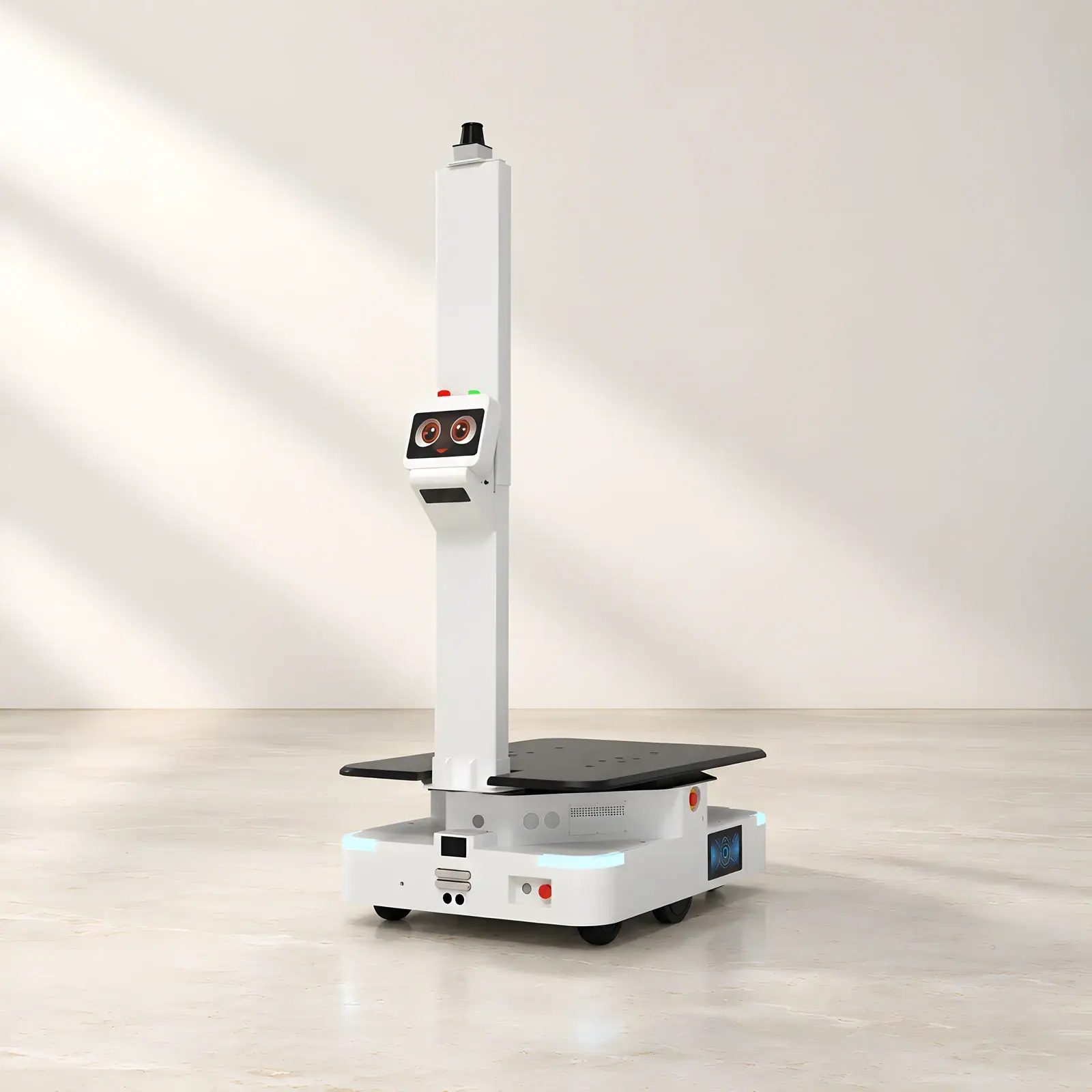
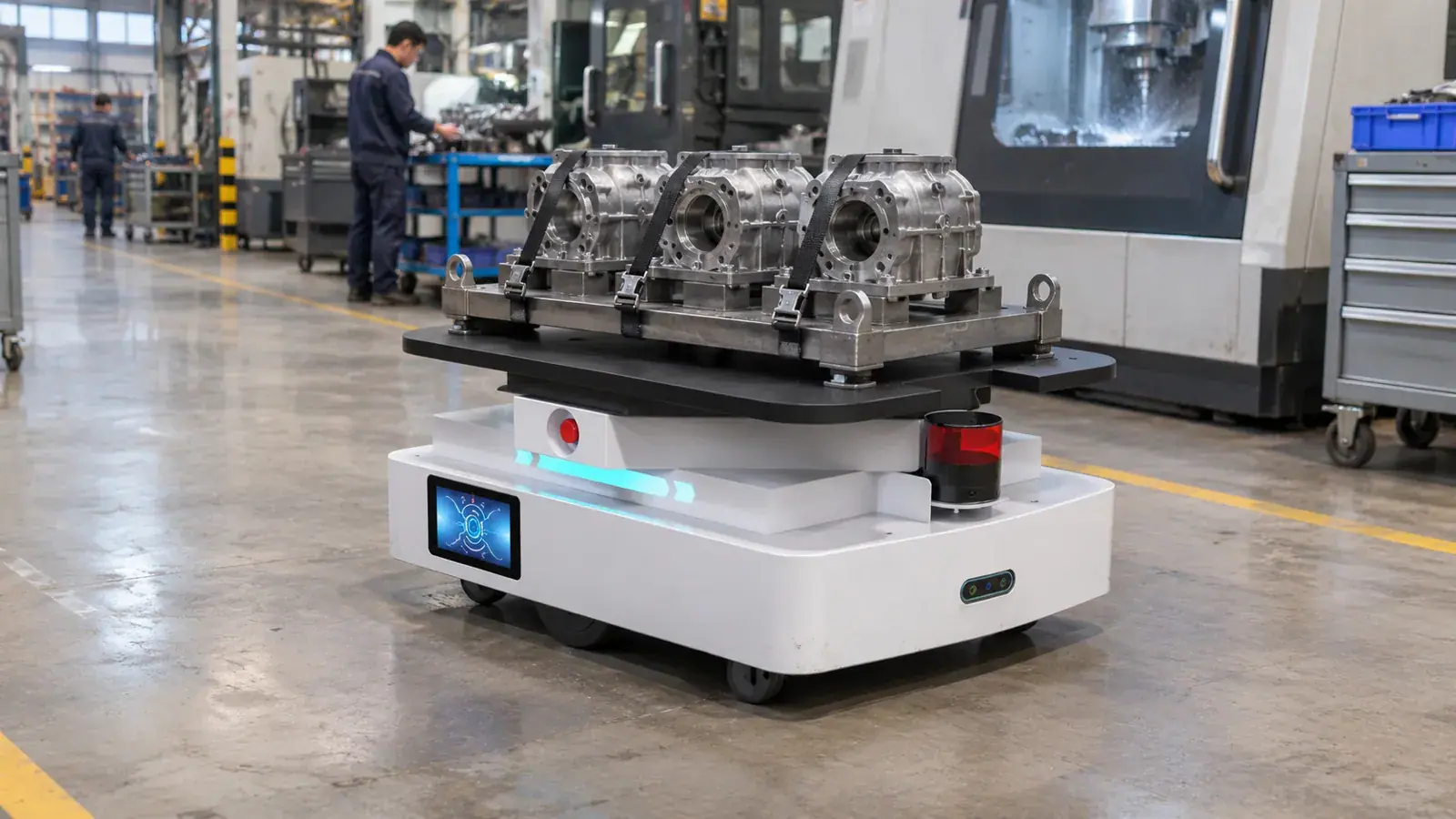
The Reeman IronBov is a heavy-duty autonomous mobile robot intended for repeated material movements in warehouses and factories. Its appeal lies in giving a defined transport task its own equipment and schedule, reducing the need to interrupt employees each time goods need to move.
Reeman IronBov: two capacities that must stay separate
The distinction between carrying and lifting is fundamental. IronBov has a listed transport payload of up to 600 kg, while its maximum lifting load is 500 kg. Its lifting mechanism moves through 100 mm, or 10 cm.
Those figures describe different operations. A task requiring the robot to lift a 550 kg combined carrier and load would exceed the stated lifting limit, even though 550 kg is below the transport figure. Any proposed use of the higher carrying capacity needs a loading arrangement confirmed for the selected configuration.
The short lifting movement is used to engage compatible loads or carriers. It should not be confused with stacking pallets on warehouse racking. Before specifying IronBov, weigh the entire supported load, including its carrier, and confirm how that load reaches and leaves the robot.
A practical role in production logistics
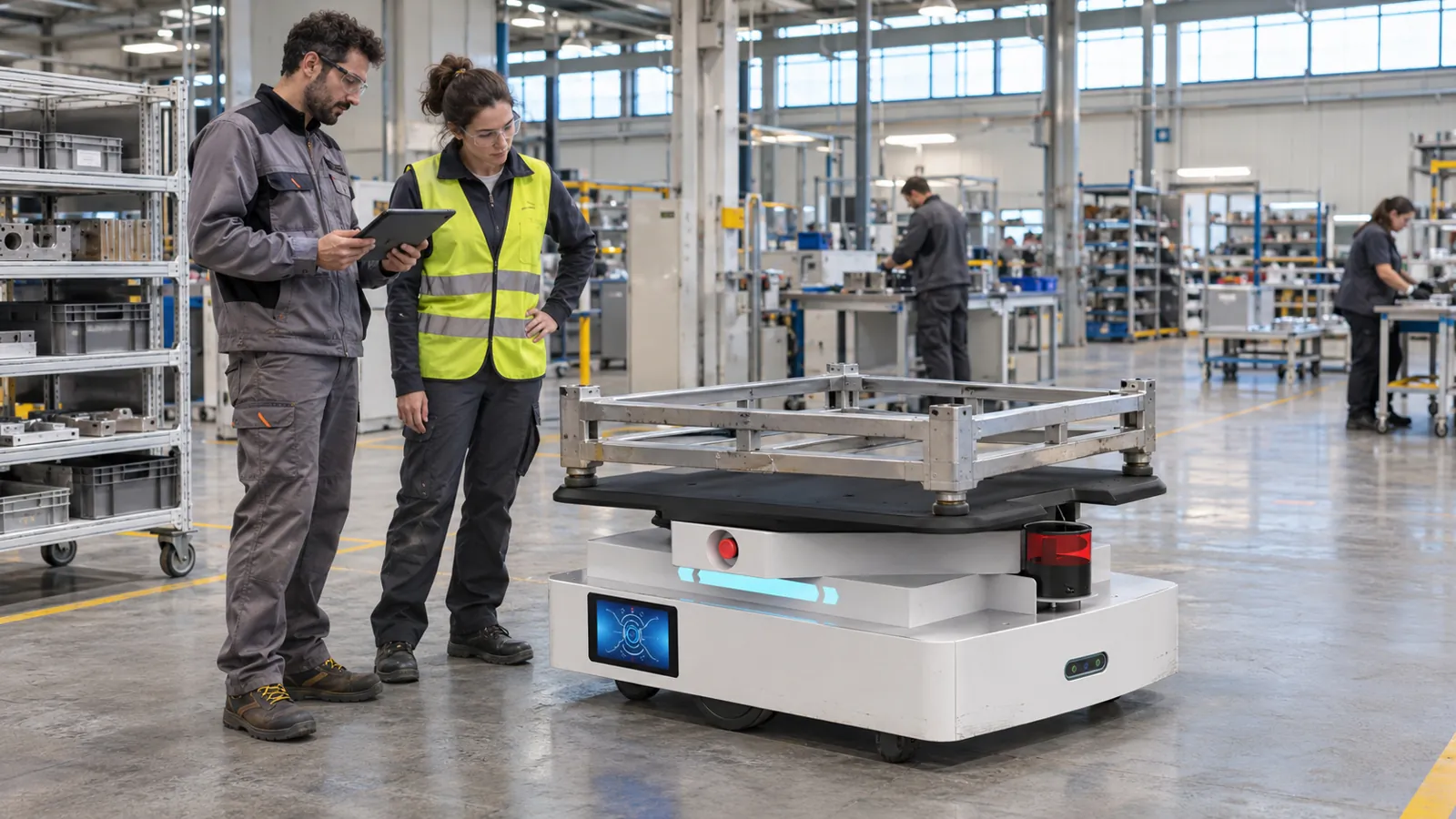
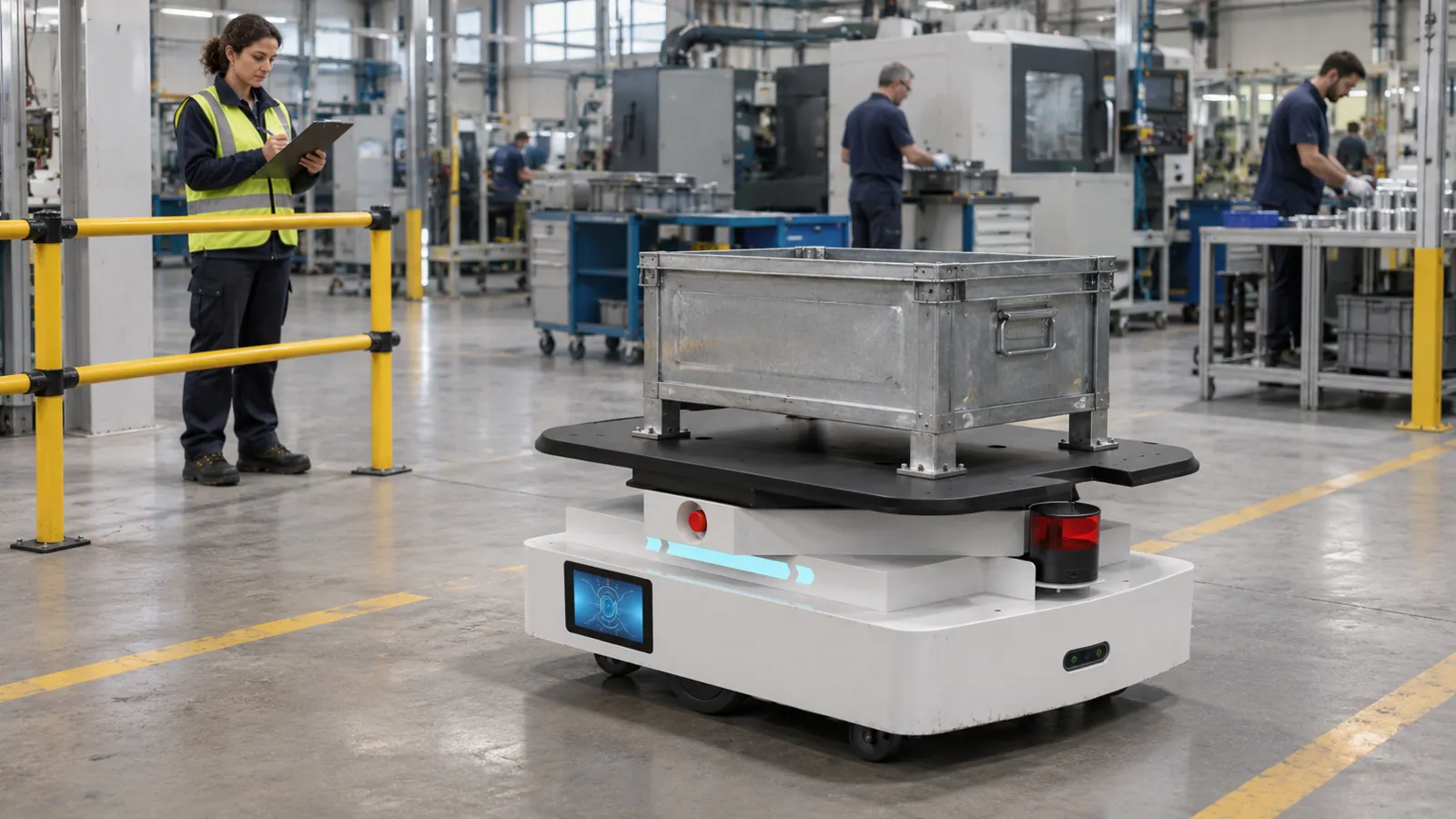
An illustrative application is the movement of prepared material carriers between a preparation cell and several production stations. Staff assemble and check the load at the source. The robot collects a compatible carrier, completes the journey and places it at an agreed receiving position.
This can release the employee who would otherwise push or accompany the load. It can also make transport easier to plan: the journey becomes a repeatable task with defined starting and finishing conditions.
The benefit depends on those conditions being met. If the source is rarely ready or the destination has no free space, autonomous travel cannot resolve the resulting queue. A useful proposal therefore examines the loading, receiving and empty-carrier processes alongside the robot itself.
Stability matters as much as the weight label
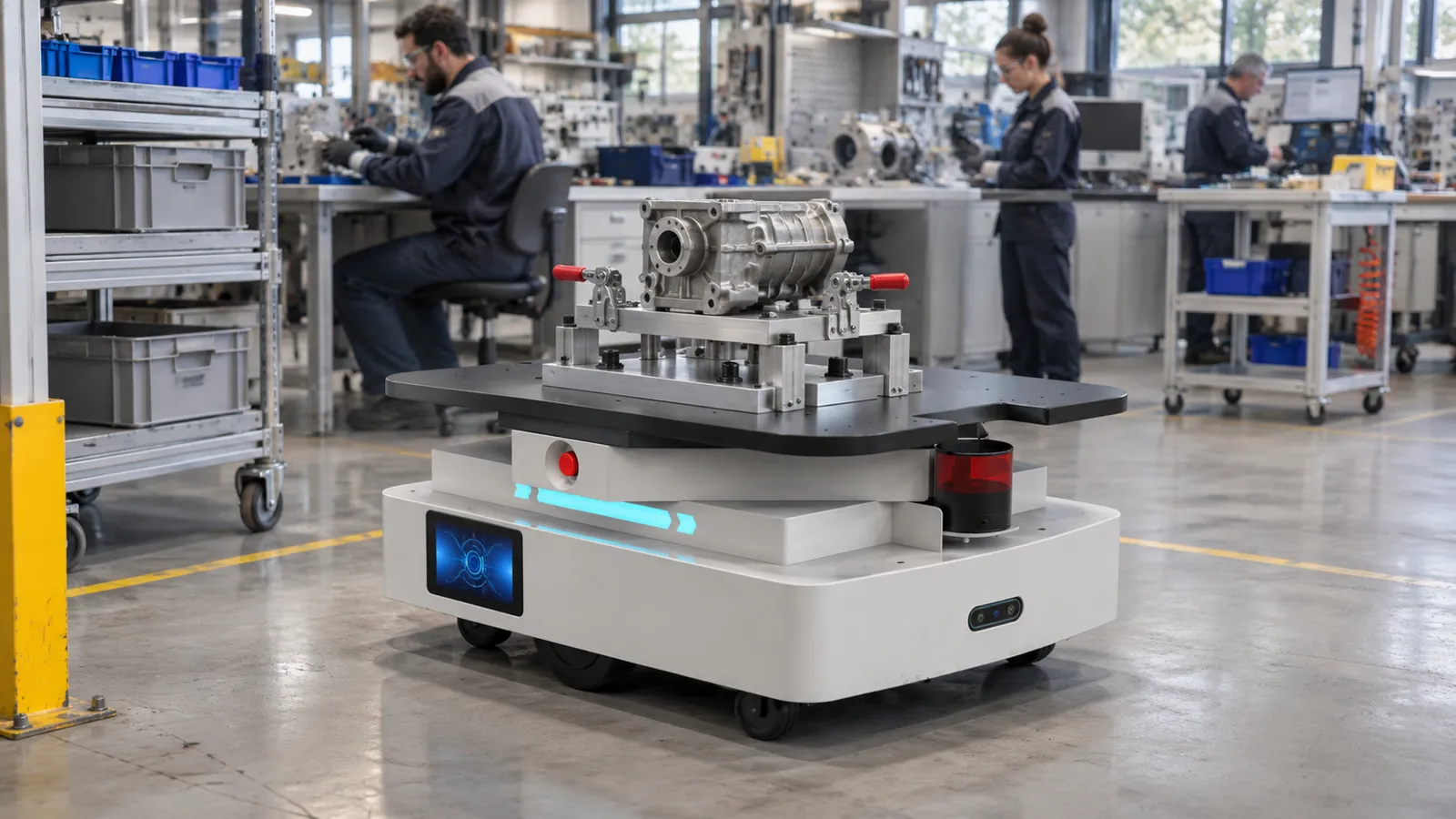
Reeman IronBov's listed dimensions are 800 × 640 × 120 mm. That low platform format does not mean the final operating envelope will be equally compact. The carrier, goods and any fixtures determine how much space the complete assembly needs.
Loads should remain stable through starts, stops and turns. A tall structure with most of its weight near the top needs a different assessment from a low container of evenly distributed components. The lifting interface also has to support the load correctly; improvised supports are not a substitute for a compatible carrier.
For a pilot, choose a representative load rather than the easiest available one. Include the turn, doorway or handover position that currently causes the most difficulty. That is where the project needs evidence.
Navigation without fixed tracks
IronBov combines LiDAR with a 3D camera to perceive its surroundings and support autonomous movement. Its Laser SLAM navigation allows it to work without fixed tracks or magnetic guidance on the floor.
This gives a business flexibility when planning internal routes, but route changes still need review and testing. A production layout can change in ways that affect load clearance, traffic patterns and destination access even when the robot can technically update its map.
Automatic charging and fleet or system integration are supported. The open SDK/API creates options for linking tasks to production or warehouse systems, although access to an interface does not provide a finished integration by itself. Software work, signal definitions and exception handling should be included in the scope where required.
Plan operating time around your application
Runtime depends on the selected configuration and load. Reef Robotics therefore recommends confirming the battery arrangement and expected operating time for the proposed task. A quoted charging time alone cannot tell you how many loaded journeys the robot will complete during a shift.
Ask for a test plan covering loaded travel, waiting, pickup and release. Record employee interventions as well as completed journeys. Reliable autonomous transport is useful precisely because it avoids repeatedly drawing people back into the task.
Getting a suitable proposal
Reeman IronBov is priced on request. Configuration, compatible equipment and deployment requirements influence the proposal, and prices may change over time.
For businesses in Cyprus, Reef Robotics can help turn a heavy transport requirement into a defined application. Our industrial transport robots cover different load formats and movement tasks. Share the combined carrier weight, pickup method and daily route frequency so that the recommendation reflects the actual work your factory needs to complete.