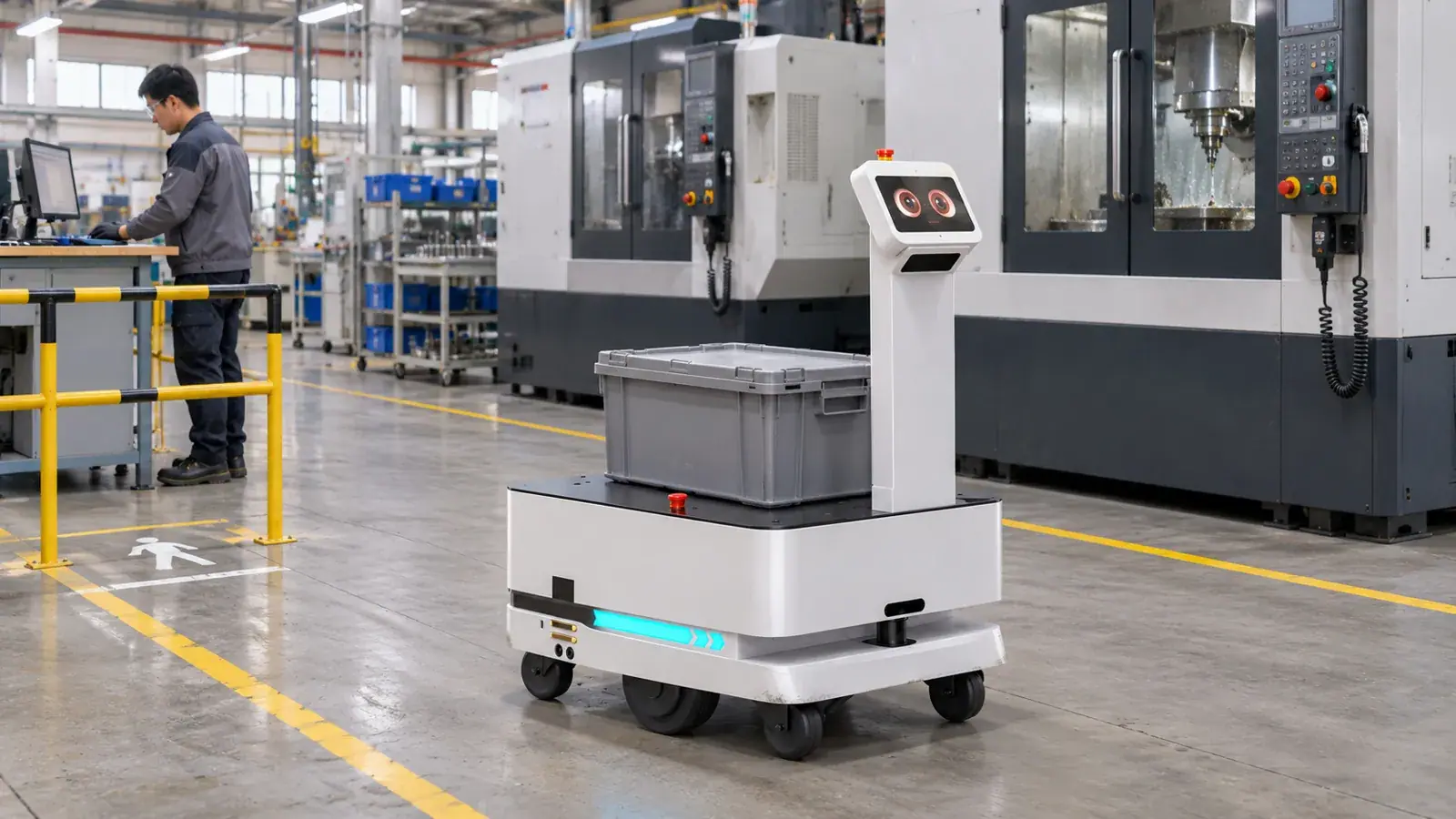
An employee walks to stores, collects a container, returns to a workstation and starts again. Each journey looks minor. Repeated across a full shift, it becomes a regular claim on skilled labour, especially when transport interrupts assembly, checking or packing.
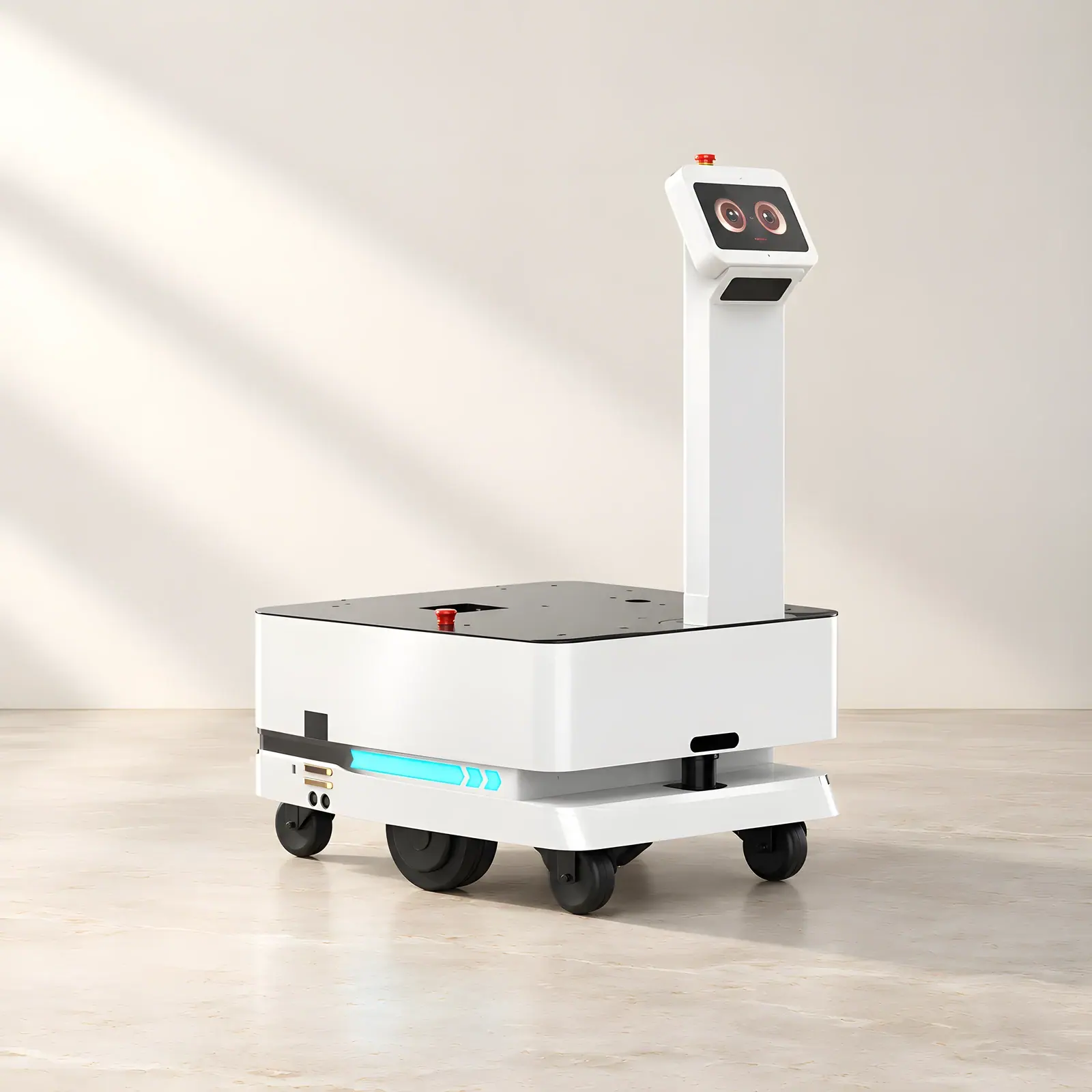
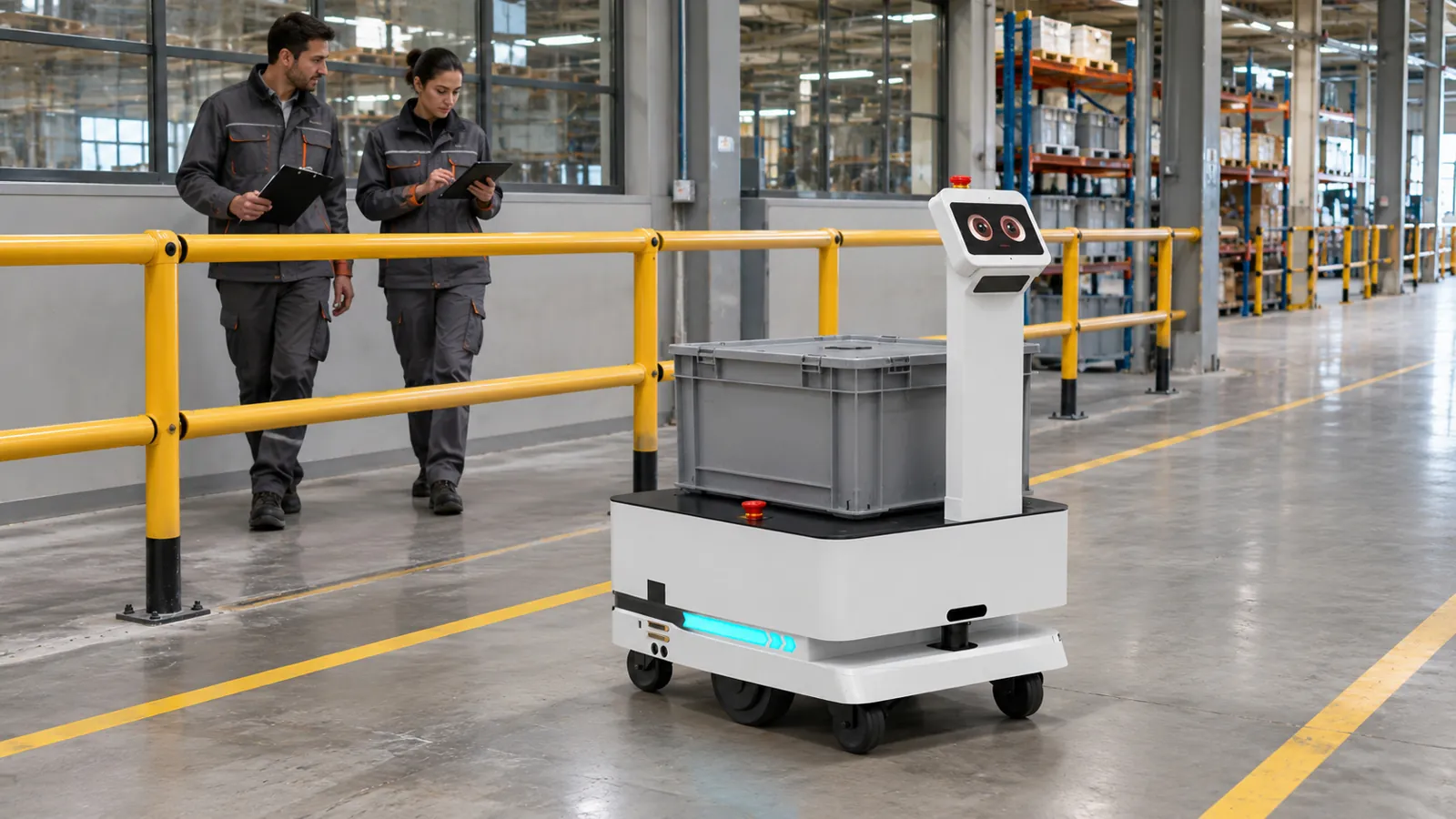
The Reeman BigDog is designed for this everyday movement of materials. It is an autonomous mobile robot, or AMR: a powered platform that navigates through a mapped working area and carries goods between agreed locations. Its maximum payload is 100 kg, making it relevant to boxes, parts bins and industrial supplies that would otherwise travel on manually moved equipment.
Reeman BigDog and the value of a short, repeated route
The most promising application is often an ordinary one. Consider a factory where inspection staff regularly collect finished components from two assembly areas. A BigDog route could move prepared containers to inspection, allowing the inspector to spend more time checking products and less time collecting them.
This is an illustrative workflow, rather than a reported customer installation. Its value would depend on the number of trips, the time saved at each handover and how reliably loads are ready when the robot arrives.
There is no requirement for a long journey to make automation useful. A short route repeated frequently may consume more employee time than an occasional trip across a large building. The important measurement is the labour tied up in the complete transport cycle, including waiting and returning empty.
A carrying platform with a clear loading process
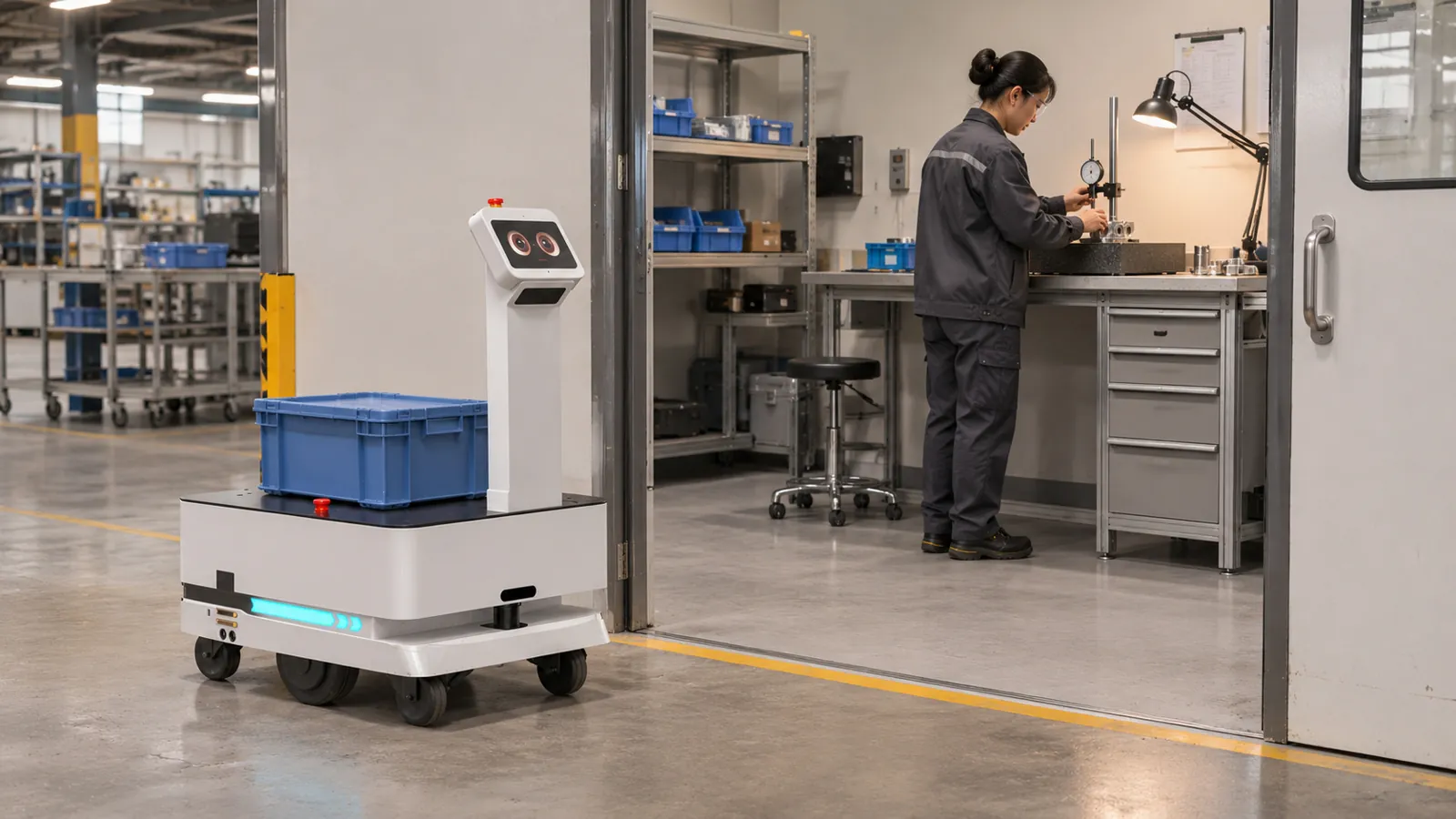
Reeman BigDog has an approximate footprint of 704 × 470 mm and a low platform format. Its size can make it an interesting candidate for routes between equipment and workstations, subject to checking the full operating envelope with the intended load.
The 100 kg capacity is a maximum, not a loading recommendation for every object. A compact container and a wide, unstable assembly impose different requirements even at the same weight. Any fixtures or adapted carrying surfaces need to be included in the load assessment.
BigDog is a transport platform, so the basic workflow still requires somebody or a separately designed system to load and unload it. It should not be described as a robot that picks products from shelves or automatically lifts a pallet. Clear responsibilities at both ends of the journey keep the proposed benefit realistic.
How it finds its way
LiDAR-based navigation helps BigDog build and use a map of the working area. A 3D camera adds information about obstacles. Together, these systems support autonomous movement and route adjustment without magnetic strips or QR guidance installed on the floor.
That reduces dependence on fixed route infrastructure, but commissioning still matters. The map needs suitable destinations, the route needs sufficient room and the team needs to know what to do when a delivery point is blocked. Mapping a building is only one part of designing a dependable service.
The listed speed range is 0.1–1.0 m/s. A robot does not have to outpace an employee to be useful: it can carry a prepared load while the employee performs another task. What matters is whether deliveries arrive when the process needs them.
Charging and growth beyond one robot
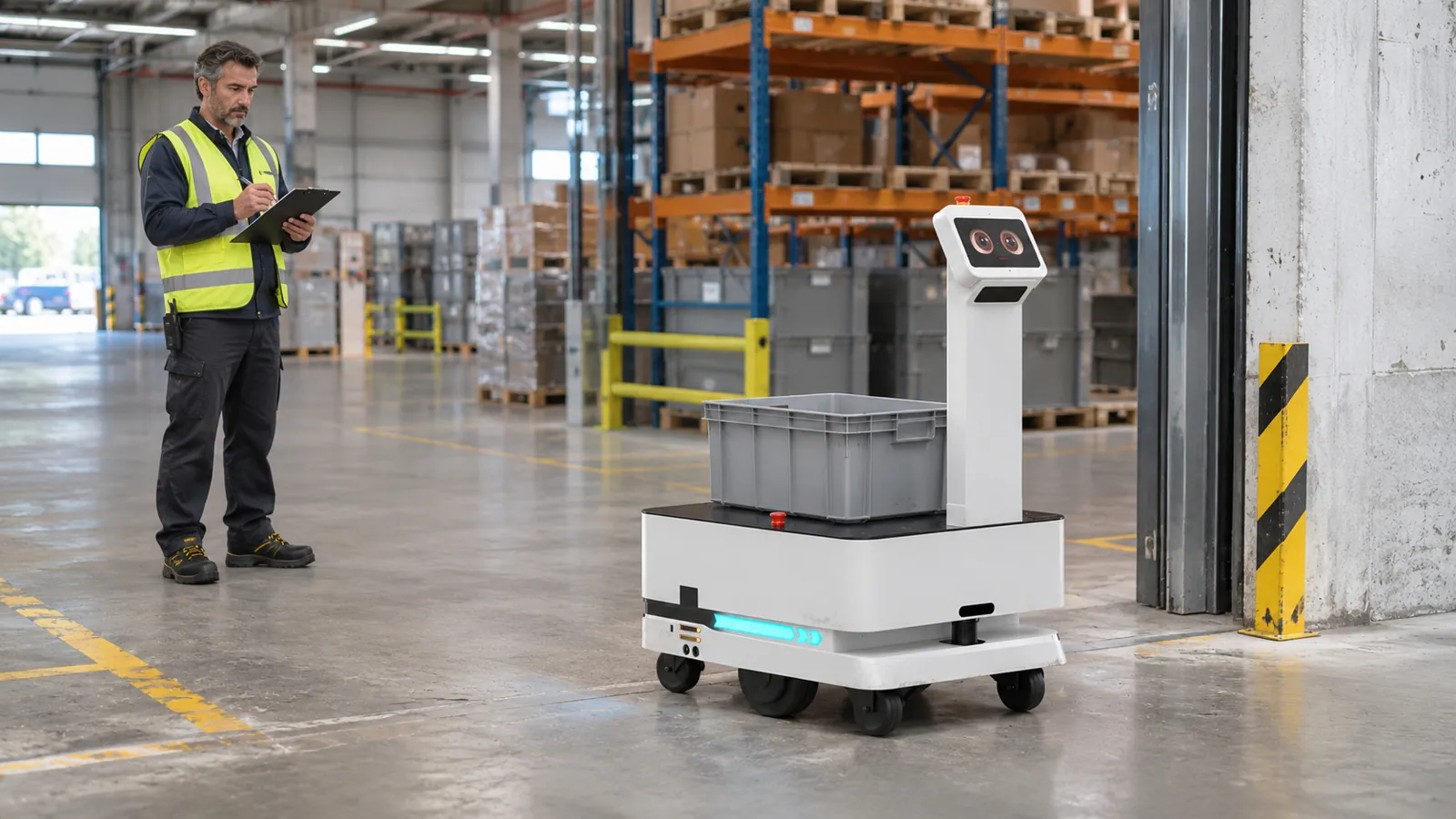
Automatic charging reduces the need to connect a cable after each operating period. Reef Robotics lists approximately 16–20 hours of battery life for BigDog; the duration achieved in a real facility will depend on load, route, stops and use. A site trial should establish a workable charging schedule rather than treating the upper figure as guaranteed shift coverage.
Reeman BigDog supports centralised dispatch and multi-robot operation. Open SDK/API support also creates possibilities for connecting task requests to other systems. Elevator and access-control integrations are optional, so they should be discussed as defined project requirements rather than assumed standard features.
For an initial installation, choose one route and measure completion time, manual interventions and employee minutes released. Additional routes become easier to justify when the first one has demonstrated reliable operation.
Buying BigDog for your facility
BigDog is priced on request through Reef Robotics. The quotation should reflect the selected equipment, charging arrangement, commissioning and any integration. Availability and pricing can change, so contact us for an individual proposal.
Our role as a local robotics supplier in Cyprus starts with understanding the job. Within our autonomous mobile robots for warehouses, BigDog is worth considering when frequent container movement is taking people away from work that needs their judgement. Bring us a typical load and a real route; we can help turn that repetitive task into a practical deployment brief.