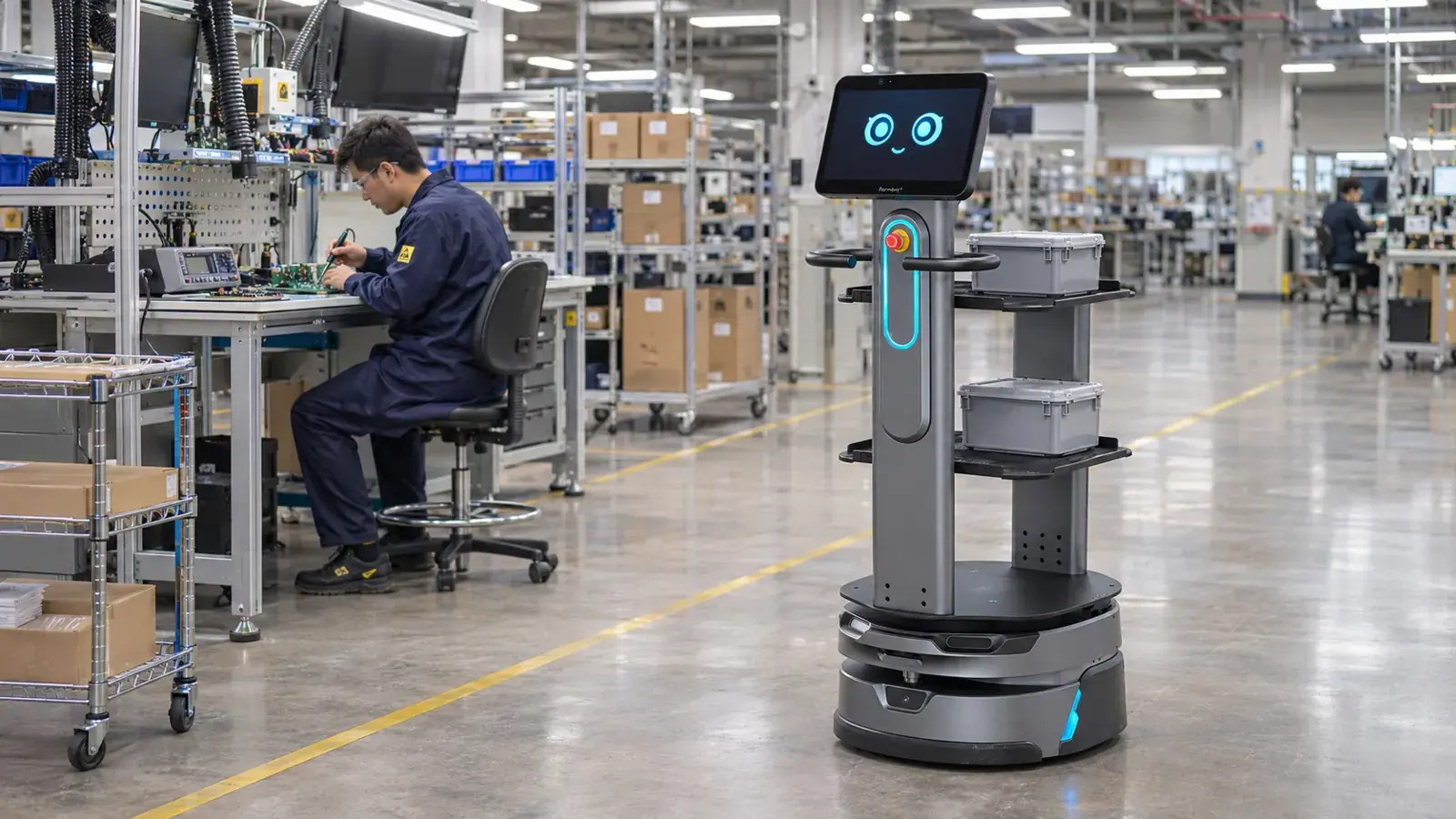
A production supervisor rarely needs another machine to watch. What they need is a reliable way to get the right components to the right workstation without repeatedly interrupting somebody else's job. The same problem appears in packing departments, stockrooms and service corridors: small deliveries consume surprisingly large amounts of working time.
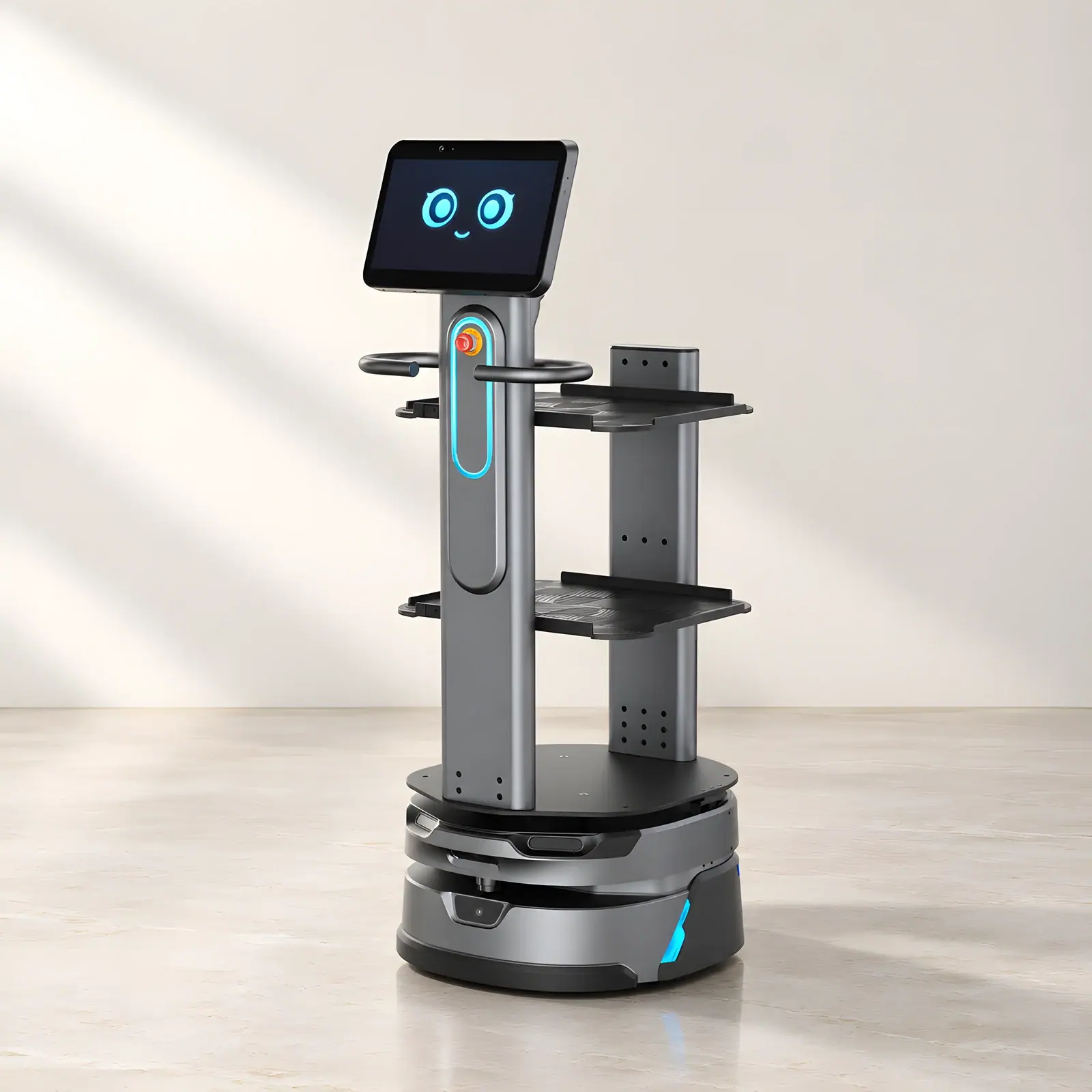
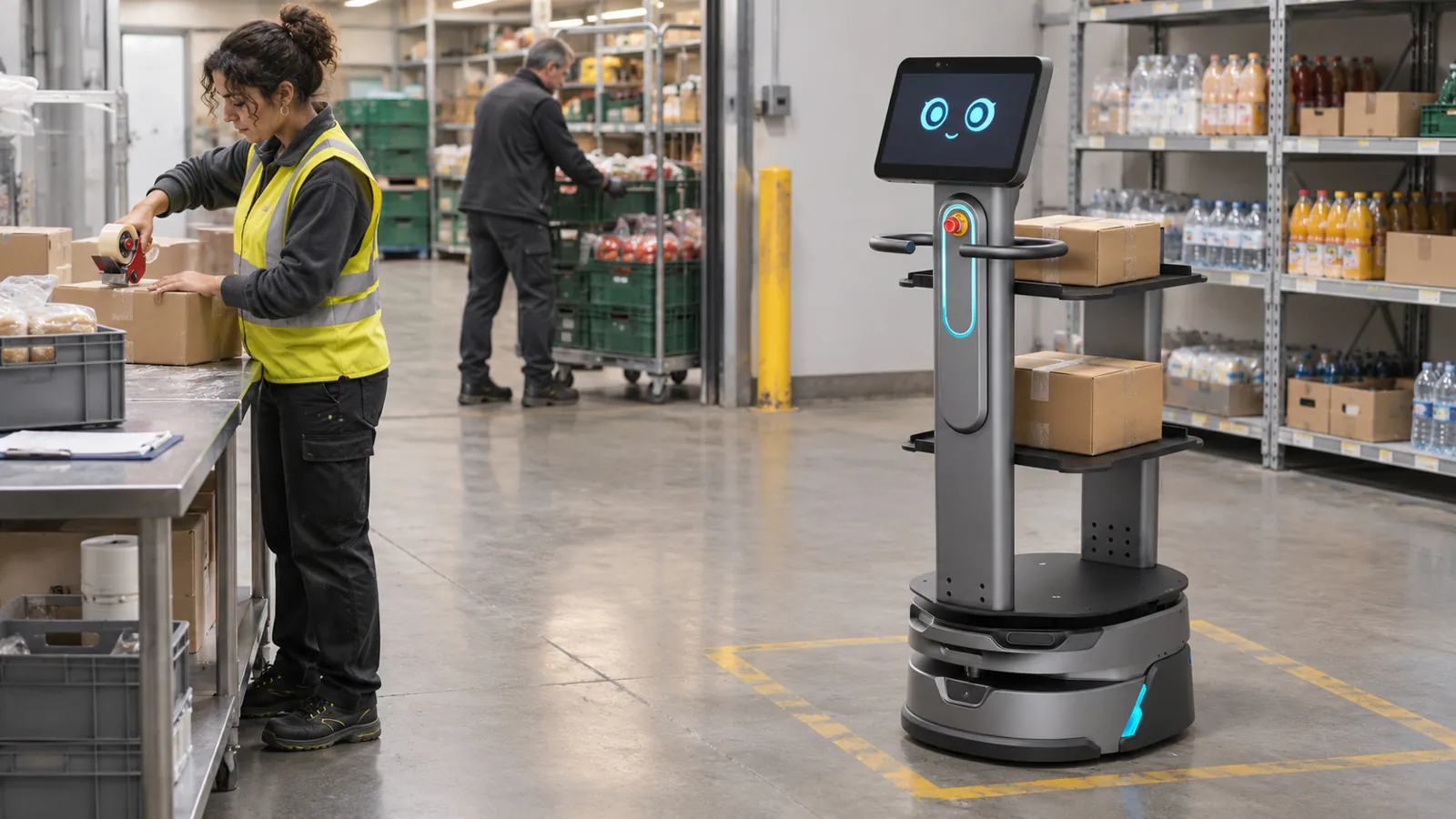
The OrionStar CarryBot 2 D-150 addresses this kind of work with autonomous movement and an integrated multi-tray layout. Goods can travel on separate levels, making the robot a practical option when organisation matters as much as carrying capacity.
Where OrionStar CarryBot 2 D-150 fits into daily operations
Imagine a warehouse preparing supplies for three assembly stations. One needs connectors, another needs packaging and the third is waiting for replacement components. Combining those deliveries on a single robot can reduce individual collection trips, provided the loads are clearly labelled and the delivery sequence is agreed in advance.
CarryBot 2 supports point-to-point and multi-stop delivery. A useful starting workflow is therefore straightforward: an employee prepares the goods, assigns the destinations and sends the robot on its route. At each stop, the receiving team removes the appropriate items. Autonomous transport takes over the journey; people still control picking accuracy and the physical handover unless a separate loading system is engineered.
That division of work is valuable. A technician can remain at a workstation instead of leaving it to collect a box. A stockroom employee can prepare the next delivery while the previous one is moving.
Understanding the tray limits
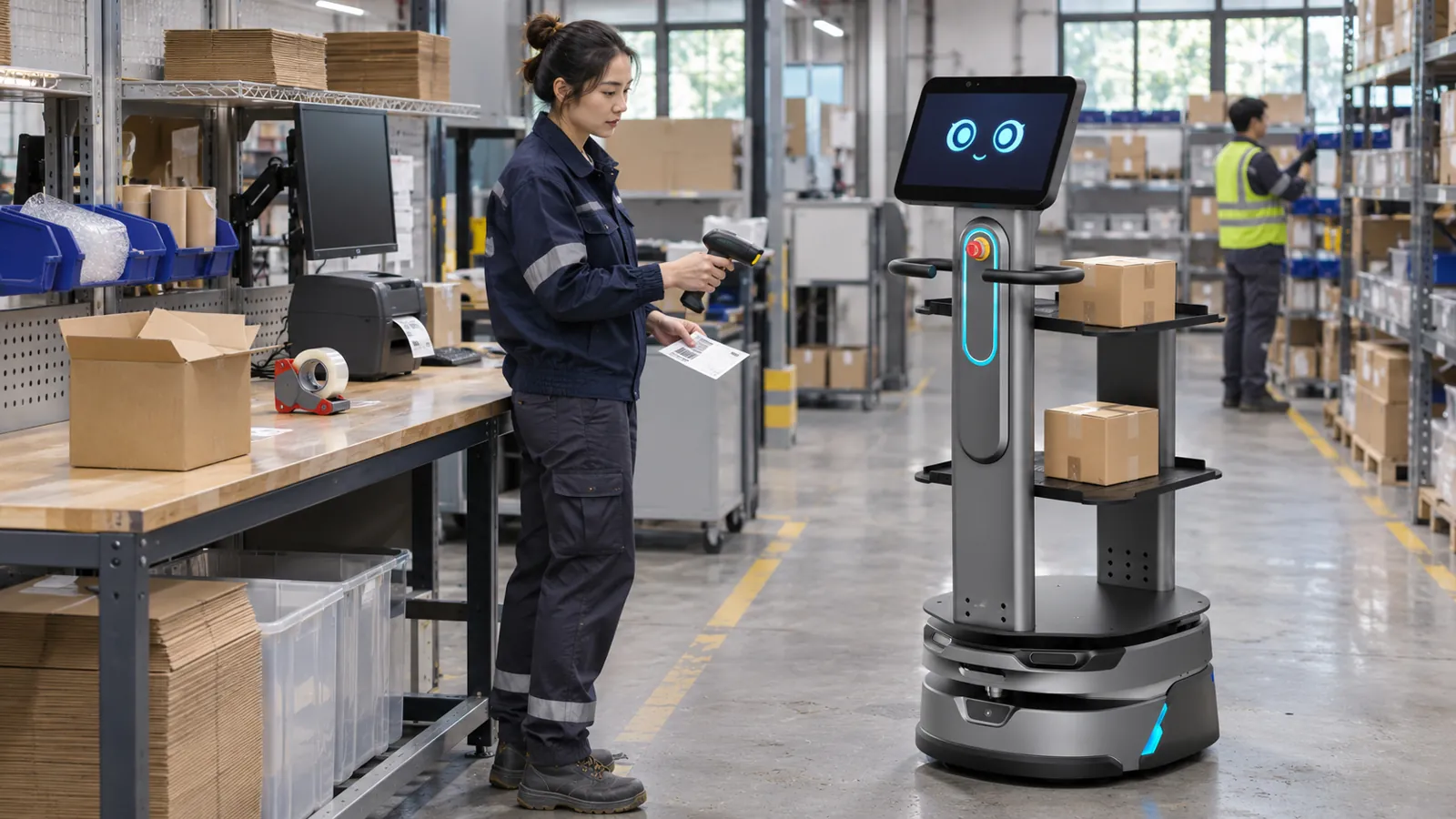
Each tray is rated for up to 30 kg. The maximum overall load is 150 kg including the trays. These limits apply together: the total figure does not permit placing an oversized load on one level, and it should not be read as 150 kg of goods in addition to the tray structure.
Weight is only part of loading. Containers need to fit securely, avoid obstructing sensors and remain stable when the robot turns or stops. Tall items and uneven loads deserve particular attention. For some businesses, standardising the containers before commissioning will make daily operation easier than adding more software features.
A practical loading plan also identifies which items belong on each level and how staff confirm that a delivery is complete. The robot's trays help maintain separation, but they do not independently verify the contents of a box.
Navigation that needs a workable route
The OrionStar CarryBot 2 D-150 combines LiDAR, three depth cameras and V-SLAM 2.0. In everyday terms, these technologies help the robot locate itself and detect objects along its route. The stated minimum passage clearance is 650 mm, which makes compact layouts worth evaluating.
That measurement is not a promise that every 650 mm corridor will be suitable. Turns, load overhang, pedestrian traffic and stopping space also matter. A straight passage tested with an unloaded robot tells you little about a busy doorway during a shift change.
Automatic charging and a quoted runtime of up to 12 hours support repeated use. OrionStar's published runtime test used a 100 kg load on a marble floor; actual performance depends on the task, load and surroundings. Charging takes approximately 4.5 hours, so the charging plan belongs in the workflow from the outset.
Build a useful routine before adding integrations
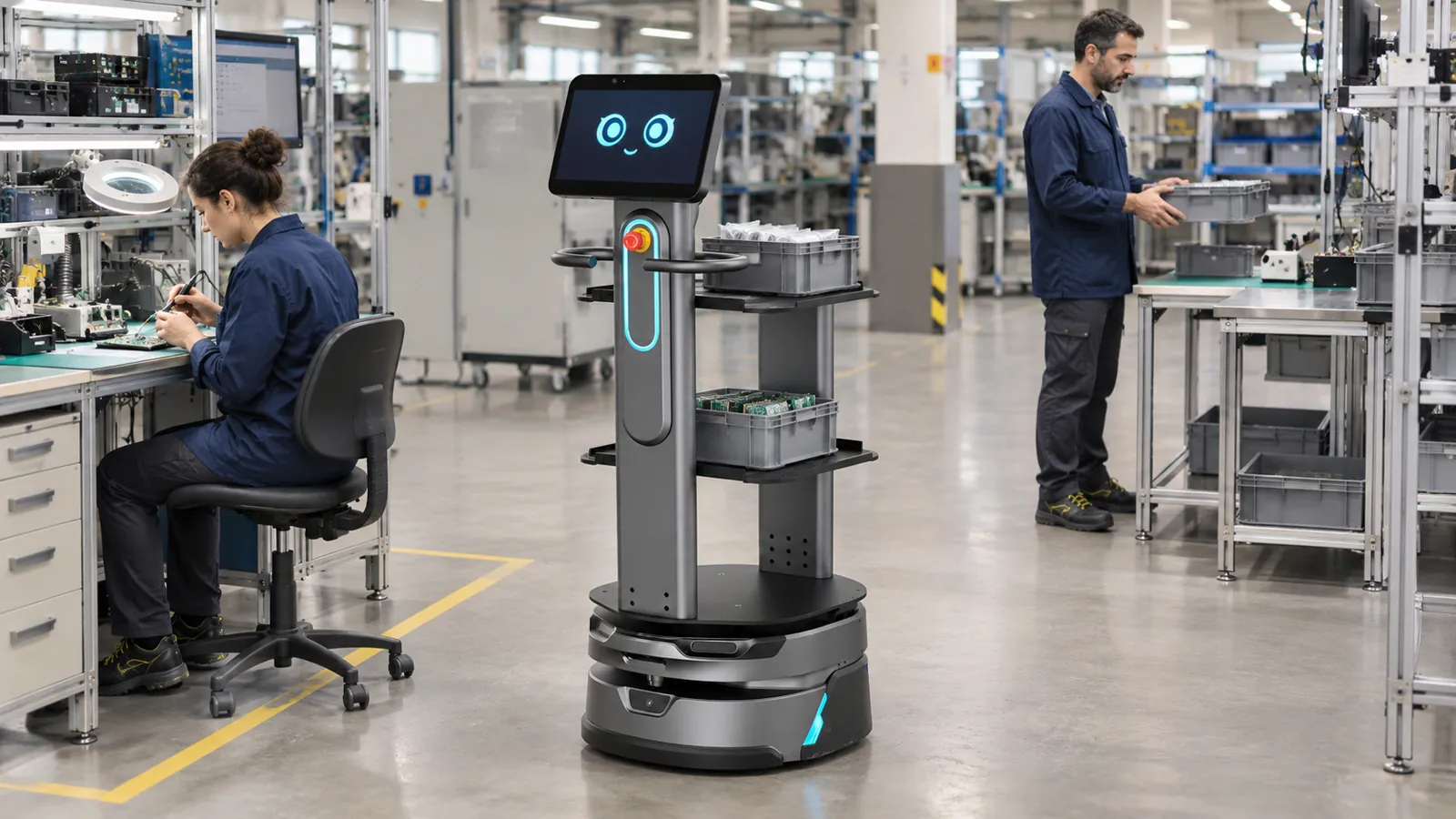
Smart summon and follow-me operation offer different ways to initiate or support movement. Follow-me means the robot follows a person; it is not the same as an operator manually driving the robot. Select the mode that fits the task and train staff on that specific process.
The platform also offers APIs and expansion interfaces for more advanced projects. Connecting deliveries to a warehouse system may be worthwhile, but the required development, hardware and testing should be scoped separately. A well-organised route with a simple task request can already address a substantial amount of repetitive transport.
Price and next steps
As checked on 4 November 2026, Reef Robotics lists the OrionStar CarryBot 2 D-150 at €14,000 plus VAT. Prices may change, and the final proposal should specify the configuration, commissioning and any additional integration work.
As a local supplier in Cyprus, Reef Robotics can help assess the route and loading arrangement before recommending a deployment. Explore our warehouse transport robots or contact us with your typical containers, delivery frequency and floor plan. Those three details provide a much stronger starting point than payload alone.