
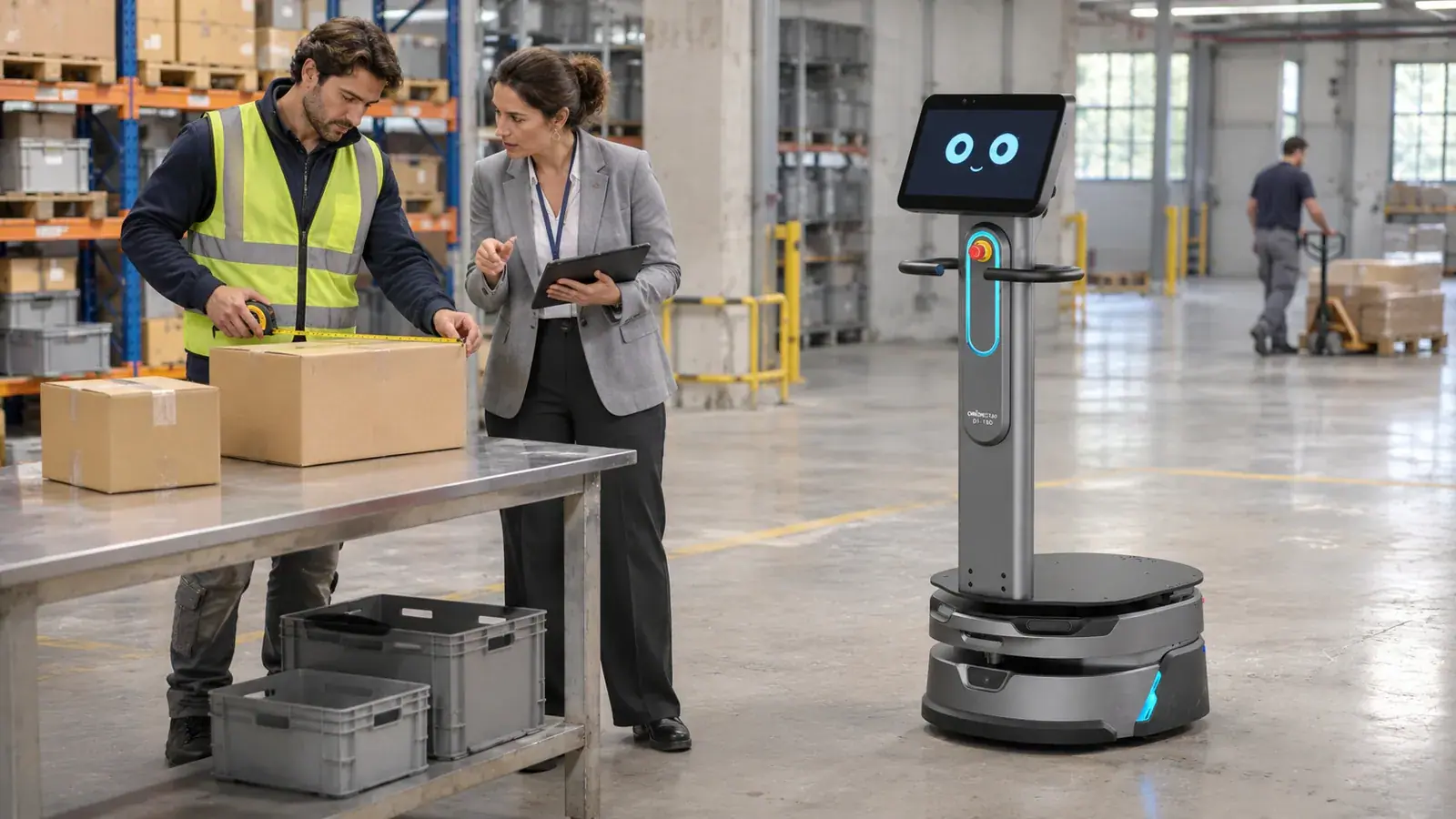
The first question in a robot project should be practical: which movement would you most like your team to stop repeating? A clear answer might be taking cartons to packing, bringing components to production or transferring finished pallets to dispatch. Each is a transport task, but each can require a different machine.
Understanding how to choose a warehouse robot starts with the complete job. Payload is important, yet it is only one part of a decision that also includes load shape, pickup method, traffic and the way work reaches the robot.
How to choose a warehouse robot around the load
Begin with the goods and their carrier. Record the usual and maximum combined weight, dimensions, centre of gravity and any overhang. Include containers, racks and attachments rather than measuring the products alone.
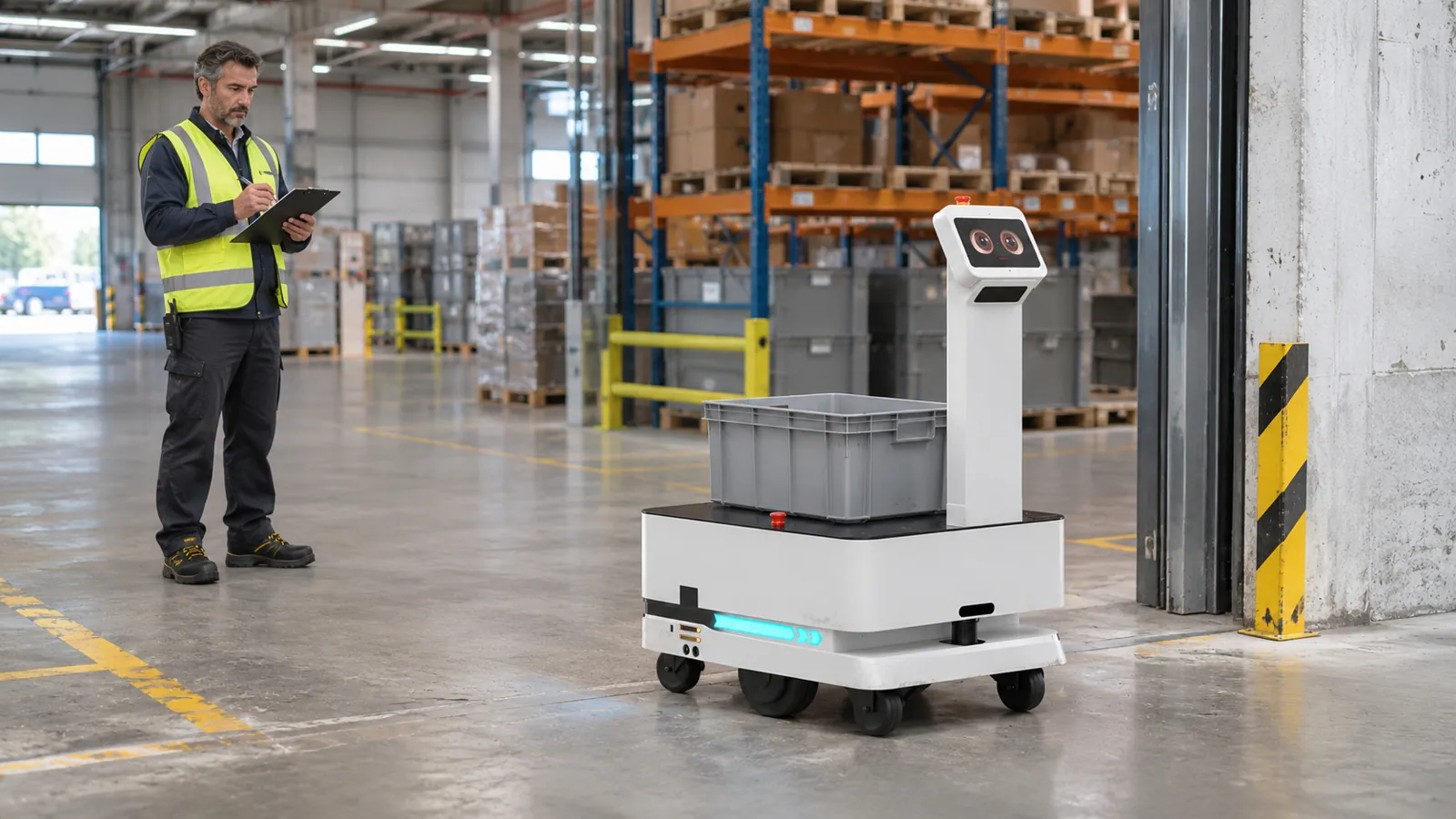
For cartons and parts bins, a platform such as Reeman BigDog offers transport up to 100 kg. OrionStar CarryBot D1-150 supports up to 150 kg with suitable carrying arrangements. Where different orders or components need separate levels, CarryBot 2 D-150 provides integrated trays rated at 30 kg each, within a 150 kg total that includes the trays.
These are examples of different load arrangements, not a ranking. The useful choice is the one that can carry your real goods securely and hand them over conveniently.
Decide whether the carrier must be picked up automatically
If an employee loads a platform and another unloads it, autonomous travel can still release valuable time. But the two manual handovers remain part of the process and the business case.
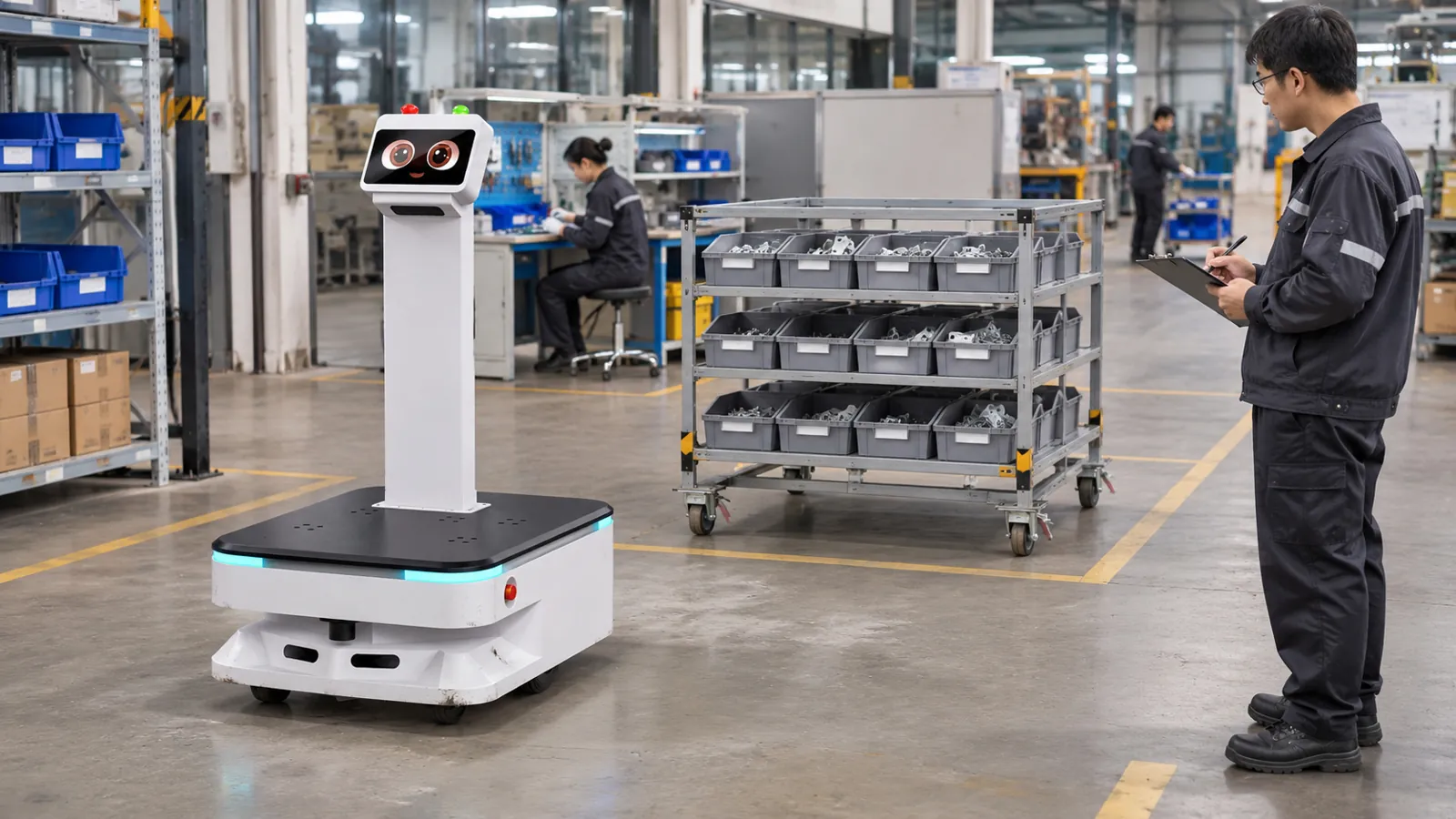
Where whole compatible racks move between departments, a lifting AMR may remove an additional handling step. Reeman FlyBoat supports up to 300 kg with a 10 cm lift. Reeman IronBov provides up to 600 kg transport capacity and 500 kg lifting capacity, also with a 10 cm lifting movement. Carrier compatibility and the distinction between carrying and lifting must be checked before selection.
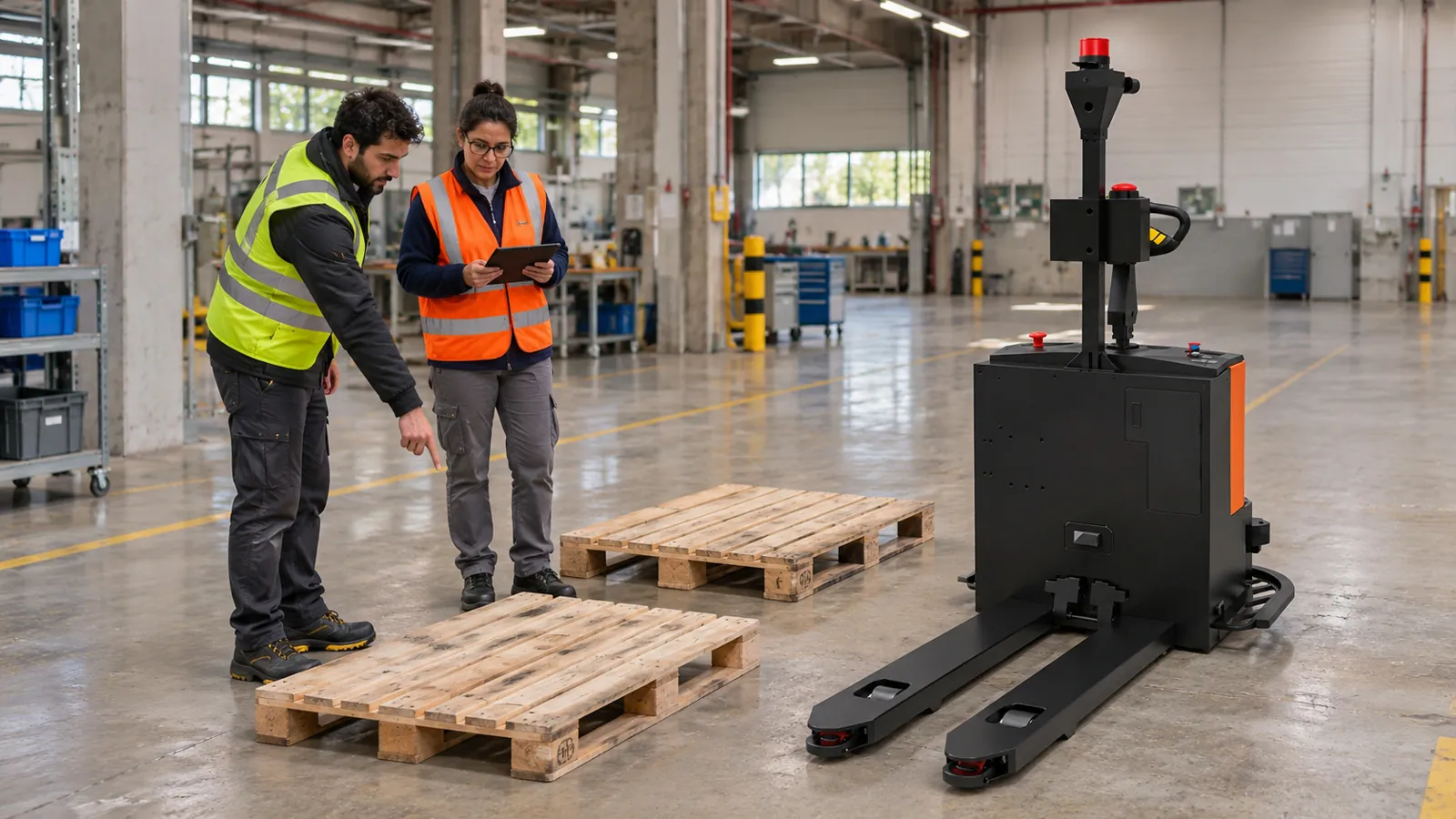
Pallet tasks take the assessment further. Reeman IronHide 2.0 is intended for horizontal movement of loads up to 1,500 kg, with a 120 mm lift. Reeman Rhinoceros adds higher lifting capability, up to 2,585 mm, for suitable pallet placement and retrieval tasks.
Measure the busy hour, not just the daily total
A robot may have enough capacity for the day's total number of deliveries and still struggle with a concentrated rush. Record when requests occur, how long goods can wait and whether several destinations demand service simultaneously.
Time the complete cycle: task release, approach, loading or pickup, travel, unloading or placement and the next positioning movement. Include delays at doors and receiving points. Charging also reduces the time available for deliveries unless the schedule can accommodate it during quieter periods.
This exercise often reveals useful process improvements before equipment arrives. Preparing loads earlier or moving a receiving point can make the same robot substantially more useful without increasing its speed.
Walk the route with the load in mind
Measure narrow points, turns, floor transitions and the space needed to approach a carrier. Consider pedestrian crossings, parked equipment and temporary storage. A chassis width or turning radius alone cannot establish the suitability of the whole route.
Check whether the journey crosses doors, lifts or different operational areas. Some platforms support integrations with building equipment, but the equipment, interfaces and commissioning still have to be included in the project. A supported feature is not an installed connection.
Also agree what happens when the route is unavailable. Replanning around an obstacle is useful only if a suitable alternative route actually exists.
Match autonomy to the people using it
An autonomous task, a follow-me function, a remote task request and manual driving are different operating modes. CarryBot supports follow-me and smart summon; that does not establish that it offers the same operator controls as a forklift.
Some autonomous forklift configurations also provide manual operation. If your process needs that flexibility, request confirmation for the exact unit and a demonstration of the approved transition between modes. Include recovery responsibilities in training so that unusual situations do not leave staff improvising.
Build a shortlist from one measurable job
A good answer to how to choose a warehouse robot is a brief that an equipment supplier can test: one load, one route, a required delivery frequency and clear handovers. Agree what a successful pilot must achieve, including completion rate and the amount of human assistance needed.
Reef Robotics can help businesses in Cyprus evaluate that brief against our warehouse automation solutions. Ask for an individual proposal covering the robot, compatible equipment, deployment and support. Prices and configurations can change, so evaluate the complete quoted solution rather than a hardware price in isolation.
