Breakfast is one of the busiest services in any hotel and one of the most visible. Within a couple of hours, most guests come down to eat, tables have to be cleared and reset again and again, and the buffet needs constant attention so that it never looks empty. For many teams it is also the shift where every trip to the kitchen counts.
A hotel breakfast robot does not cook eggs or chat with guests about their plans for the day. What it can do is take over a large share of the carrying: used plates going back to the dishwashing area and, in some setups, trays of clean cups or cutlery going out. This article looks at how that works in practice and what to plan before the first morning.
Why breakfast is a good place to start
Breakfast has three features that make it well suited to a service robot. First, it is repetitive. The same journeys between the dining room and the dishwashing area happen many times every morning. Second, it is predictable. Peak times are similar from day to day, so routes and staffing can be planned around them. Third, it is visible. Guests notice an untidy table or an empty bread basket much more than they notice who carried the plates.
In a typical buffet, the walking is split between two jobs: clearing tables and keeping the buffet stocked. Both take staff away from the room at exactly the moment guests are looking for coffee refills, a high chair or a quick answer about checkout times. A robot that handles part of the walking helps the team stay in the room.
Clearing tables with a hotel breakfast robot
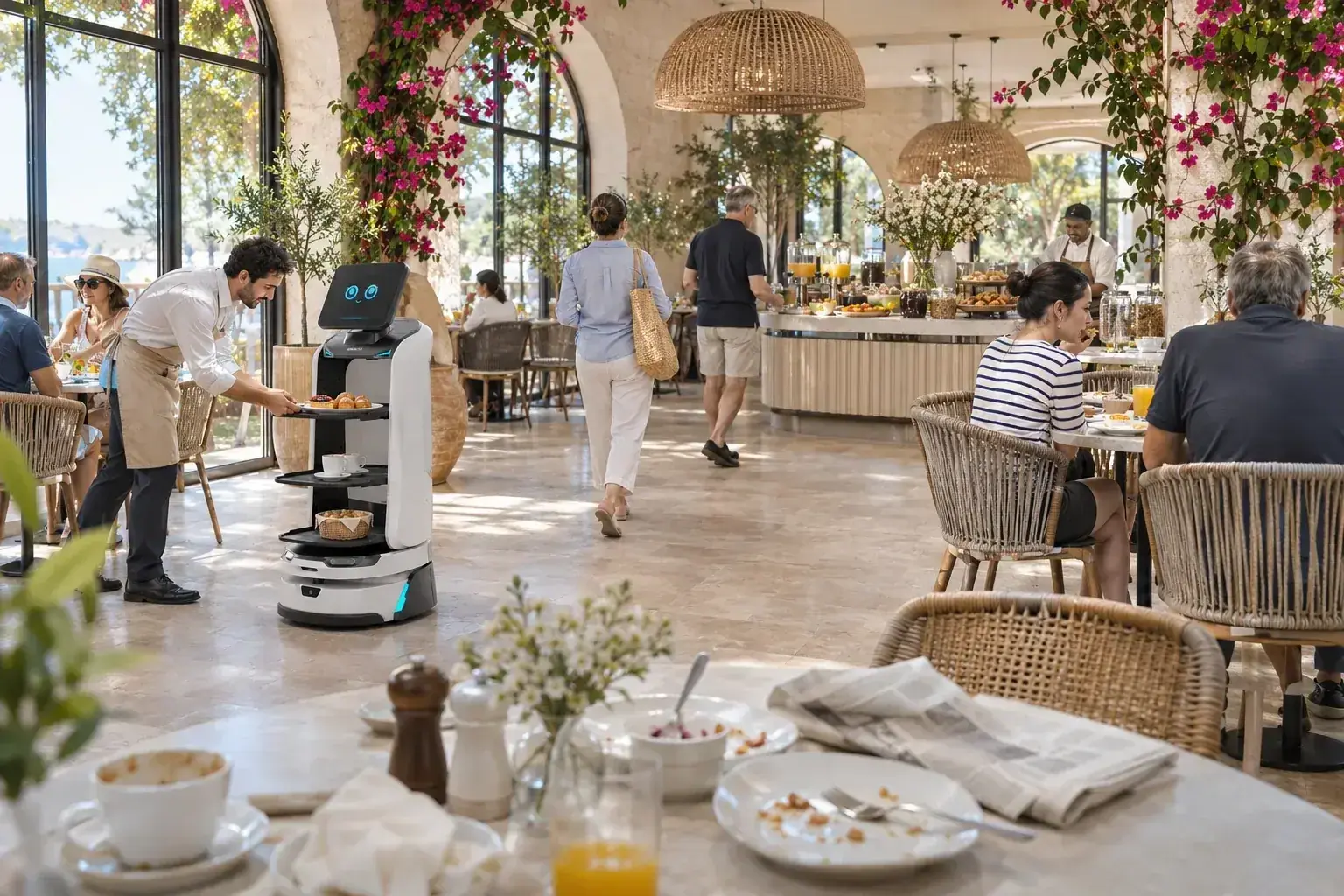
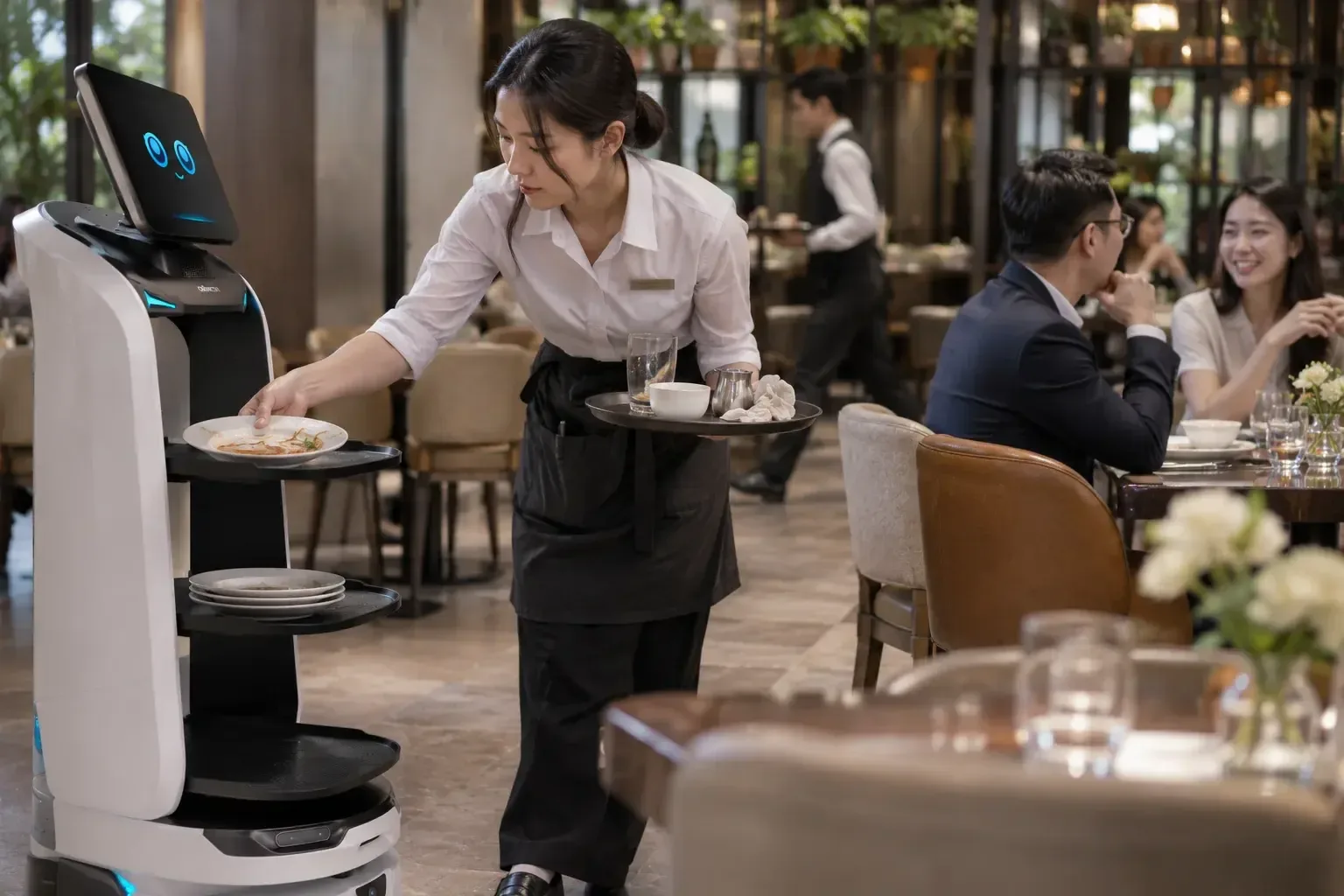
Dish collection is usually the simplest first task. Staff clear a table, stack plates and cups on the robot’s trays, and send it to the dishwashing area, where a colleague unloads it. The robot then returns to a waiting point in the dining room, ready for the next load.
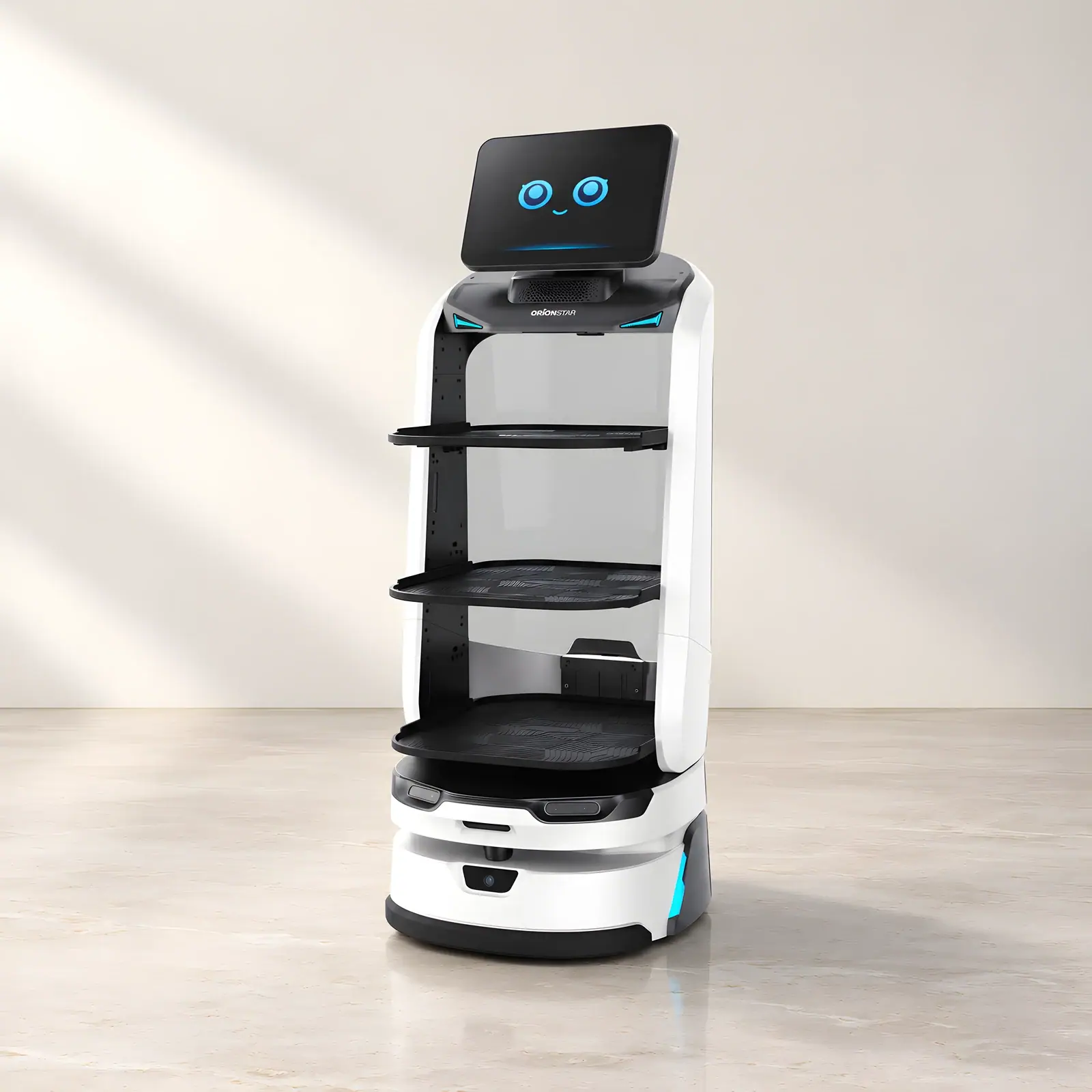
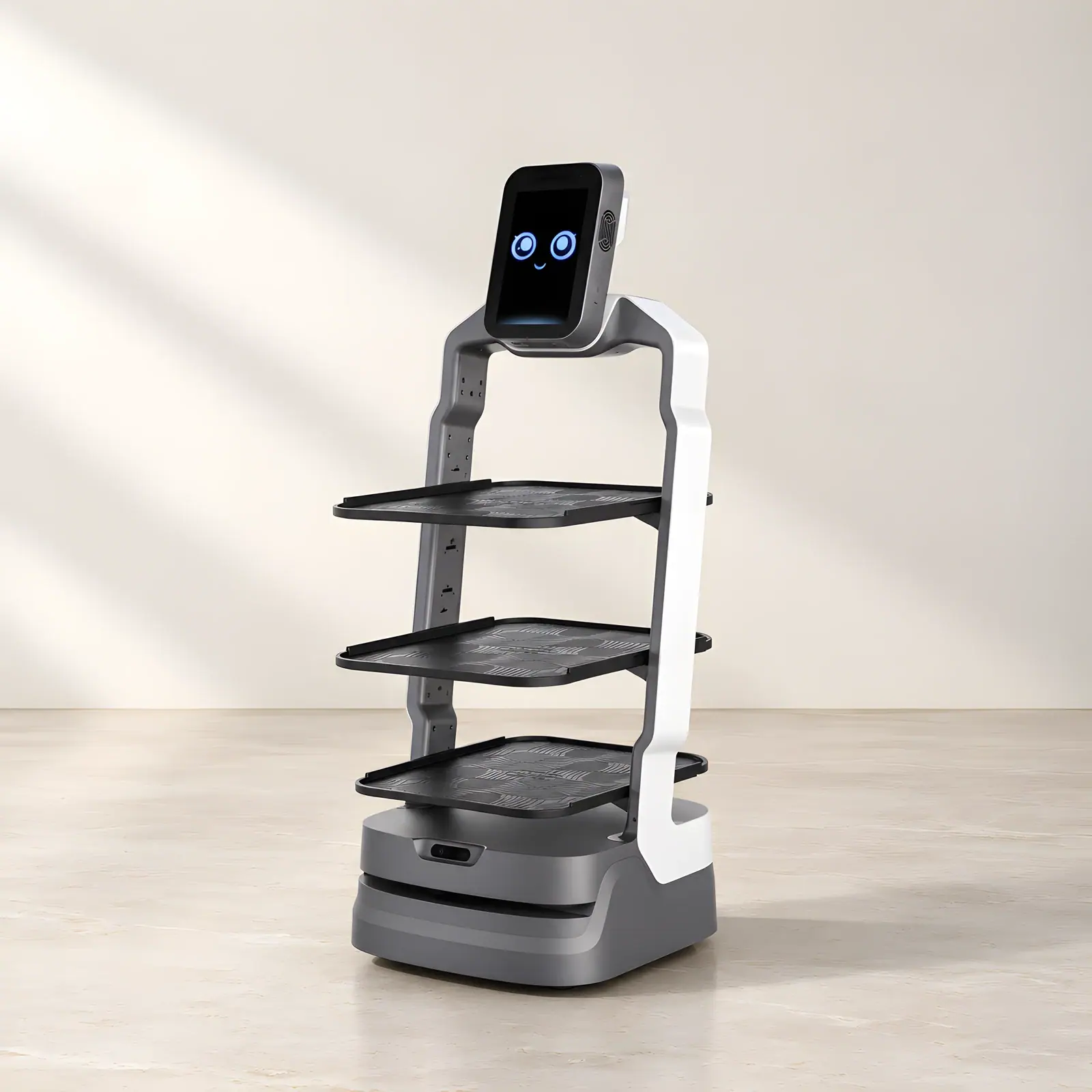
The OrionStar LuckiBot Pro is well suited to this kind of work. It can be configured with three or four trays, each supporting up to 15 kg, with a total payload of up to 60 kg. Its torsion-bar suspension is designed to improve stability on less-than-perfect flooring, which matters when a terrace has tiles or thresholds. Visual SLAM, 240° 3D obstacle recognition and a depth camera help it move through a busy service area, and smart dish detection helps it recognise items placed on its trays.
For smaller breakfast rooms, the lighter OrionStar LuckiBot may be enough. It carries up to 40 kg across adjustable open trays and supports the same basic roles, including delivery and collection.
Refilling the buffet
The second job is less obvious but just as useful. During the peak, the kitchen often prepares trays of pastries, fruit or clean glasses faster than someone can take them out. A robot can carry those items from the kitchen pass to a fixed point near the buffet, where a staff member places them on display.
It is worth keeping one rule in mind: the robot delivers to staff, not to the buffet itself. A person still checks presentation, food safety and labelling. The robot simply removes the walk.
As an illustrative example, a resort hotel in Paphos with a terrace breakfast might run one robot for clearing on the terrace and use it for occasional buffet refills when the clearing load is lighter. The team would decide in the morning briefing which task takes priority, depending on occupancy.
Planning the routes and the room
A breakfast room changes during the morning. Tables are pushed together for families, high chairs appear, and guests stand in small groups near the coffee machine. Plan for this before the robot arrives:
- Keep paths away from the busiest stations. The robot should travel along the edges of the room and avoid the egg station or coffee queue.
- Define two or three loading points. Staff know where to bring plates, and the robot always waits in the same place.
- Agree what goes on the robot. Stacked plates and cups yes; overfilled bowls or open jugs of juice, perhaps not.
- Prepare the unloading area. If no one is ready to unload at the dishwashing area, the robot simply waits there, and the benefit disappears.
Installation is usually a one-off visit of up to a few hours, during which the space is mapped, delivery points are set and the team is shown how to use the robot. LuckiBot Pro supports an automatic charging dock as well as cable charging and offers up to 12 hours of typical cruising time, so after breakfast it can return to charge or move on to lunch service. Our article on how service robots improve table turnover covers the same logic for à la carte service.
What to measure in the first weeks
Keep the evaluation simple and focused on the breakfast service itself. Useful questions include:
- How long do cleared tables wait before they are reset during the peak?
- How often does the buffet run low on frequently used items?
- How many times per morning do staff need to step in to help the robot?
- Do staff feel they spend more time in the room with guests?
Guest reactions are worth noting too. Some guests, especially families, may find a robot at breakfast memorable, but the goal is a smoother service, not entertainment. For a wider view of hotel use cases, see our overview of service robots for hotels in Cyprus.
Buying, renting or trying first
Many hotels in Cyprus see large differences between winter and summer occupancy. A robot bought with payment in instalments, agreed individually, can spread the cost across the seasons. Delivery usually takes 4–12 weeks, depending on the model and current availability, so plan ahead of the spring opening. You can compare the options for service robots for hotel restaurants on our hospitality page.
A breakfast robot earns its place when tables are cleared sooner and the buffet stays full without the team leaving the room. Start with dish collection, keep the routes simple and add refills once the morning rhythm is settled.