
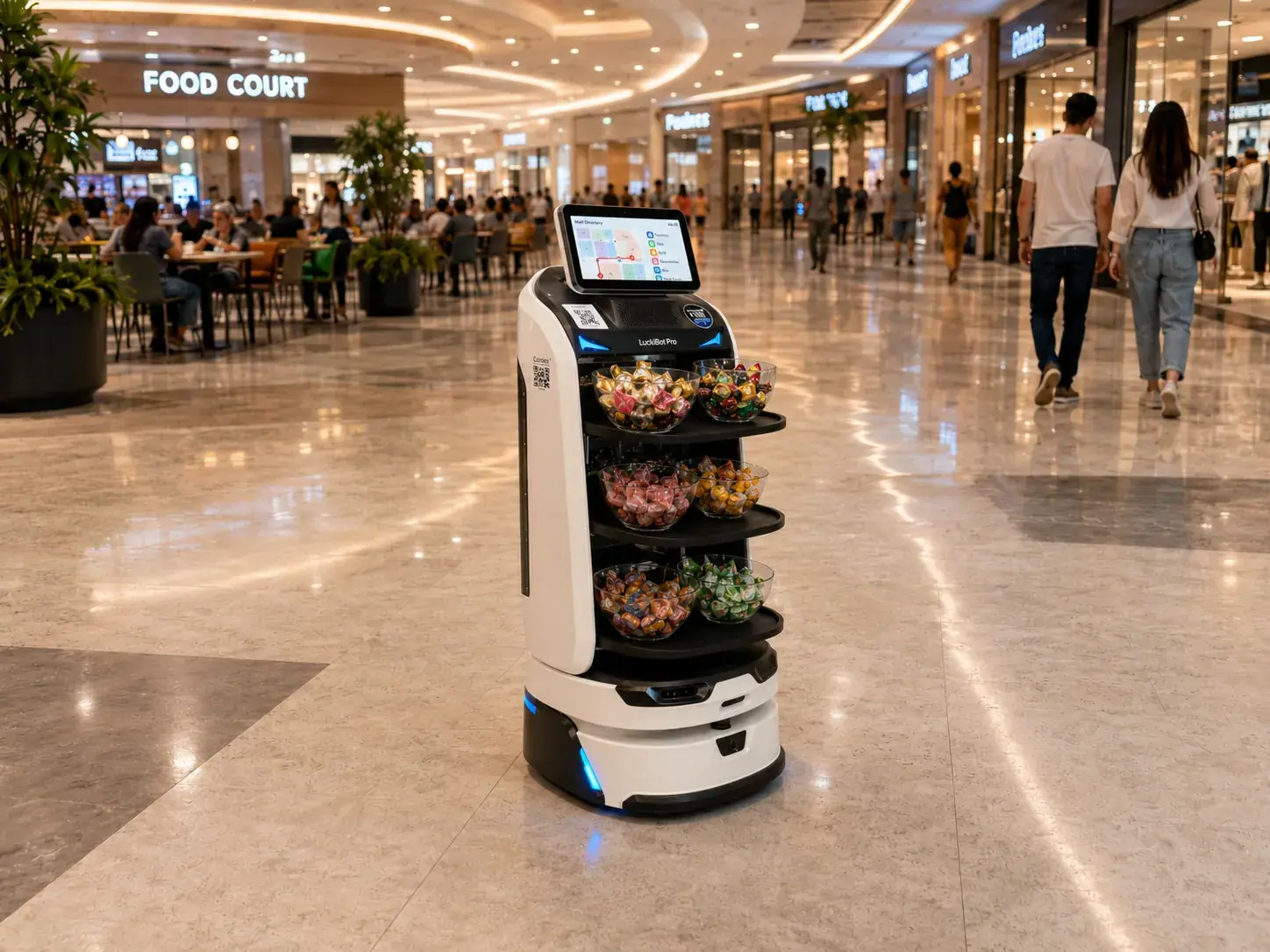
Shopping malls are built around movement. People move between shops, food courts, entertainment zones, cafés, and entrances. During busy hours, this creates a simple operational challenge: how to deliver items, support tenants, and attract visitor attention without adding more staff pressure.
This is where a service robot can become surprisingly useful. In a shopping mall, a robot is not only a delivery tool. It can also become a moving point of interest, a promotional screen, and a practical assistant for restaurants, cafés, and event activations.
For malls in Cyprus, where visitor flow can change quickly between weekdays, weekends, holidays, and tourist seasons, this kind of flexible automation makes a lot of sense.
Food Court Delivery – The Most Practical Use Case
The clearest use case is food court delivery. In many shopping malls, guests order from different restaurants and then wait near the counter or collect food themselves. During peak times, this creates queues, crowding, and extra pressure on staff.
A service robot can help by transporting orders from selected food court vendors to defined pickup points or seating areas. The workflow can be simple: restaurant staff place food and drinks on the robot’s trays, select the destination, and the robot moves safely through the mapped area. Guests can collect their order from the robot, or staff can use the robot as a support tool to move several orders at once.
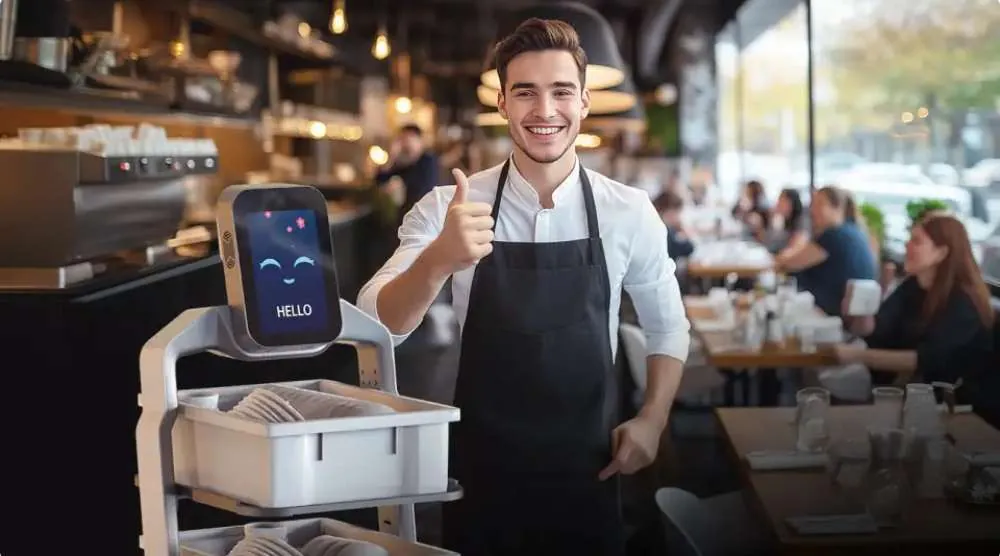
This is especially useful in larger food courts where the distance between kitchens, counters, and seating zones is significant. The robot does not replace restaurant staff. It reduces repeated walking and helps keep the service area more organized.
Supporting Multiple Vendors
A robot can also support more than one food court tenant, depending on the mall layout and operational model. For example, it can follow a predefined route between selected restaurants and central seating areas. It can carry meals, drinks, desserts, or packaged takeaway orders.
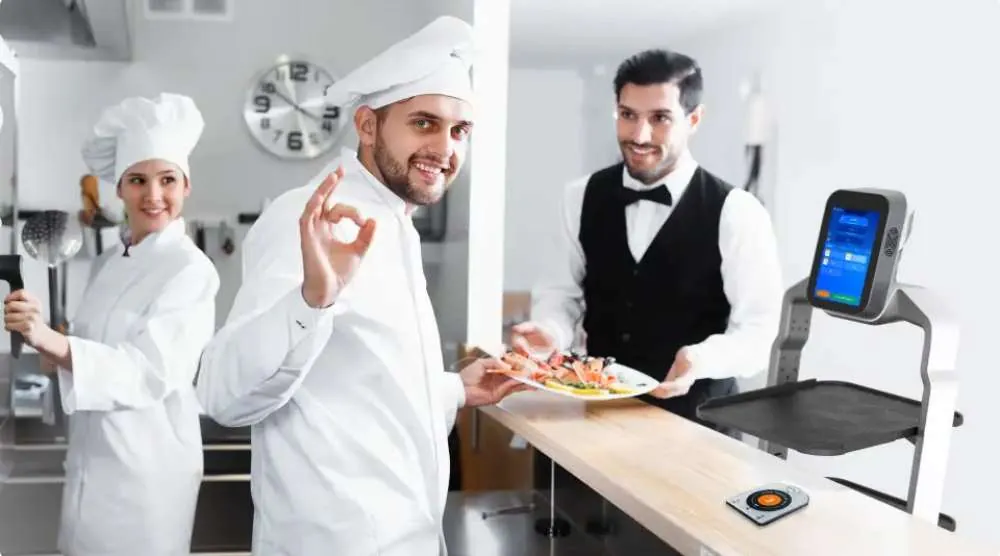
This creates an interesting option for malls that want to offer a more modern customer experience without forcing every restaurant to invest in its own delivery system. The mall can position the robot as shared infrastructure — part of the food court experience.
For restaurants, this can mean better visibility and smoother delivery. For the mall, it becomes a visible innovation that improves the atmosphere of the whole space.
More Than Delivery: A Moving Promotion Channel
A shopping mall robot is not only useful because it carries items. It is also useful because people notice it. A robot moving through a mall naturally attracts attention. Visitors look at it, film it, take photos, and often ask questions.
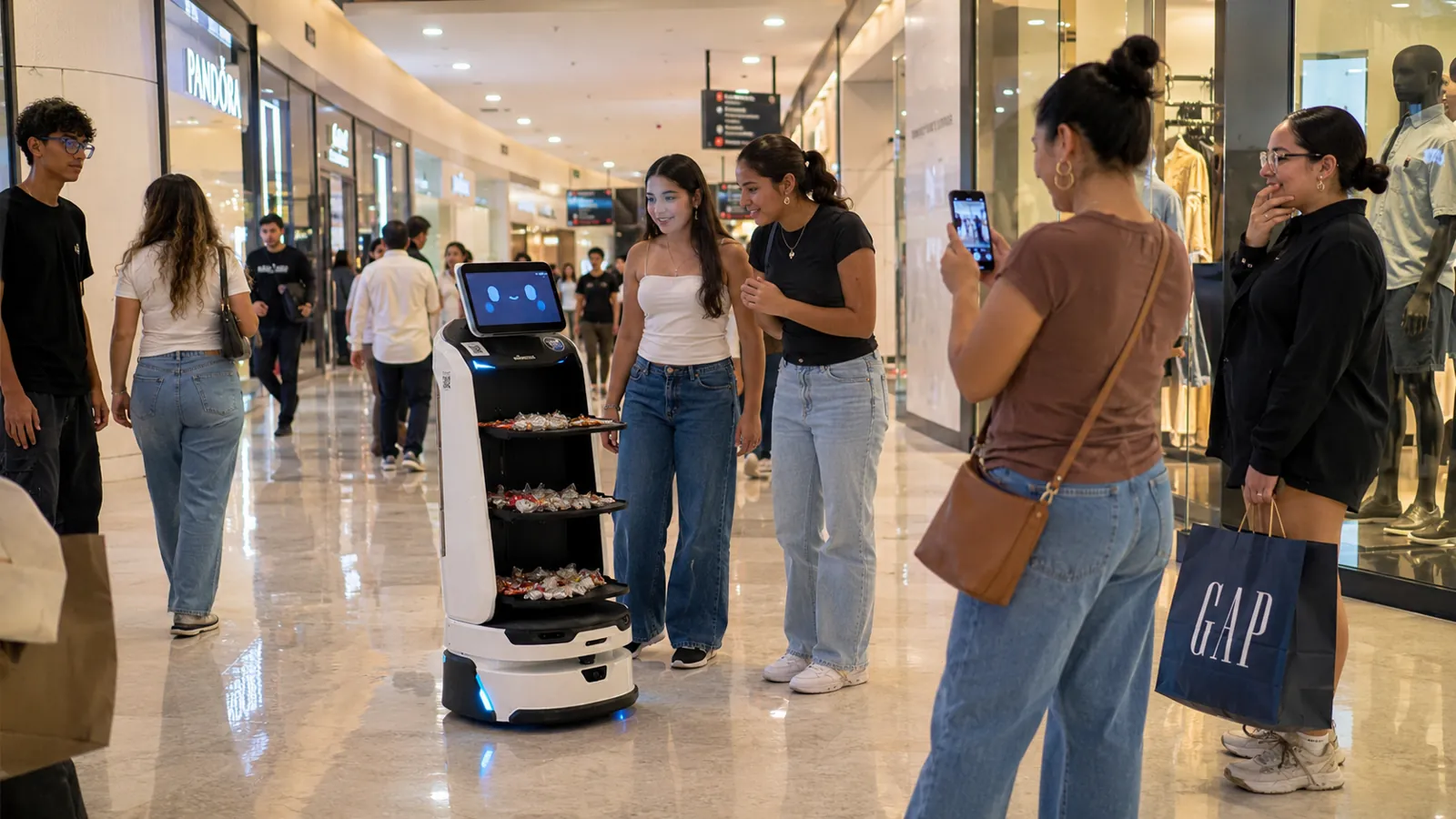
This makes it a strong promotional tool. The screen can display offers from food court tenants, mall events, seasonal campaigns, cinema promotions, kids’ activities, or partner advertisements. Instead of static posters, the message moves through the space and reaches people where they are.
For marketing teams, this is valuable because the robot combines visibility with interaction. It is not just an ad display. It is something visitors engage with.
Guest Assistance and Wayfinding
In larger shopping malls, a service robot can also support simple guest communication. It can be positioned near entrances, food courts, or event zones to welcome visitors, display directions, or promote current activities.
For example, the robot can show information about:
- food court offers
- children’s events
- pop-up activations
- seasonal campaigns
- store promotions
- mall services
This is not meant to replace information desks. It simply adds another visible and modern touchpoint inside the mall.
Safety in a Busy Mall Environment
A mall is a dynamic space. Children, families, shopping bags, strollers, and groups of people move unpredictably. That is why safety and navigation matter.
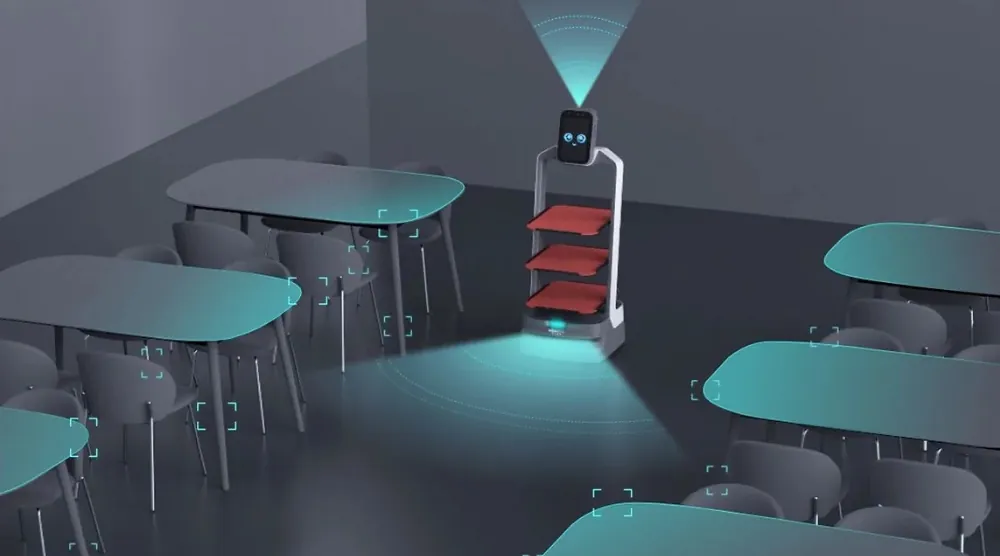
Professional service robots use sensors, mapping, and obstacle detection to move safely around people and objects. The robot operates within a mapped area, and no-go zones can be defined to keep it away from restricted spaces, stairs, escalators, narrow passages, or sensitive areas.
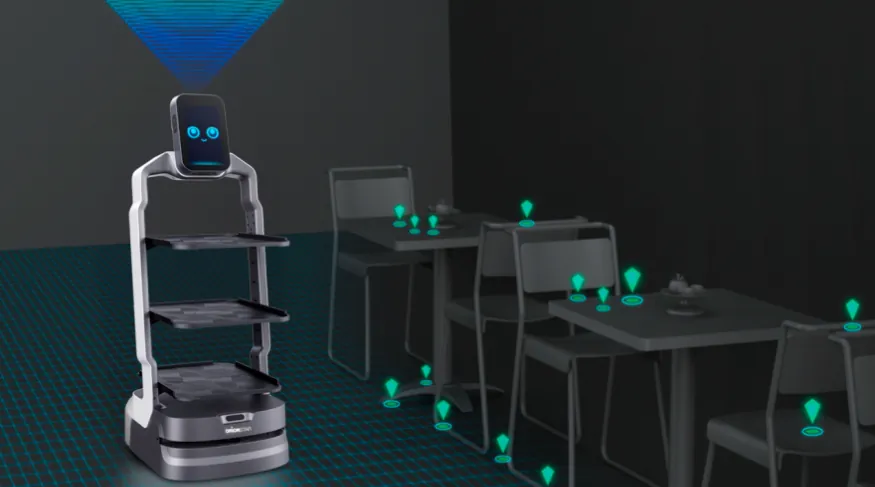
Speed can also be adjusted depending on the environment. In busy food court zones, slower movement is usually better. In wider corridors, the robot can move more efficiently while still keeping a safe distance from visitors.
Where This Works Best
Service robots are especially useful in malls with large food courts, long internal distances, regular events, or strong family traffic. They also work well in malls that want to position themselves as modern, innovative, and experience-driven.
For Cyprus, this can be particularly relevant in Limassol, Nicosia, Larnaca, and Paphos, where shopping malls often combine retail, food, entertainment, and events in one space. A mall robot can support operations while also creating a memorable visitor experience.
Proven in Real Event Conditions
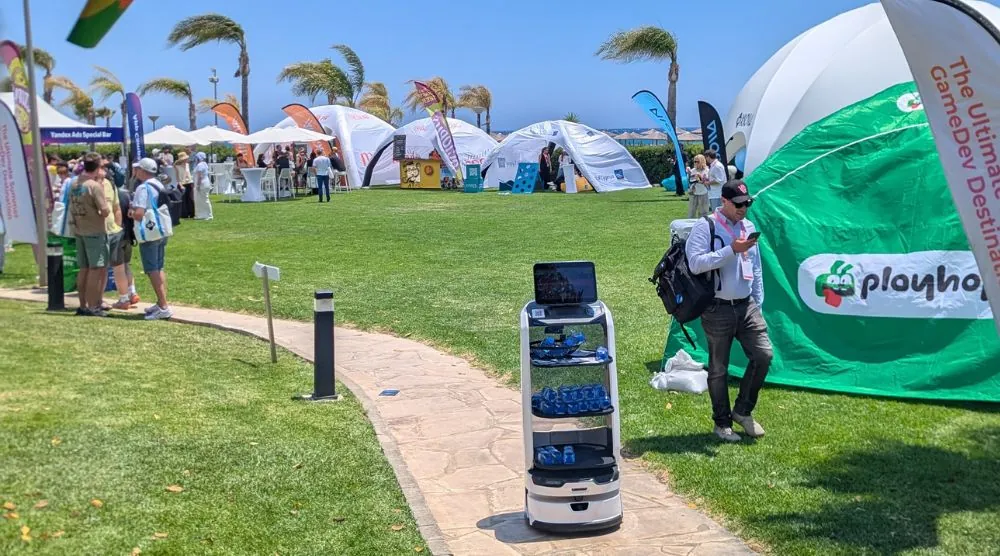
Reef Robotics has already tested LuckiBot Pro in real environments in Cyprus, including busy events and public spaces. The reactions are always similar: people stop, smile, take photos, and interact with the robot naturally. It works because it combines practical use with strong visual impact.
You can see examples here:
- Doers Summit — robot at a business event
- AI Cyprus Expo — LuckiBot Pro in Limassol
- GDCy Fest 2026 — service robot at a tech event
These examples show that the robot is not just a concept. It has already worked in real local conditions.
A Practical Tool for Modern Shopping Malls
For shopping malls, service robots offer two benefits at once. They support practical tasks, especially food court delivery, and they create a modern visitor experience that people remember.
A robot can move food, drinks, samples, brochures, and promotional materials. It can display offers, attract attention, and help brands stand out inside a busy mall environment.
For mall operators and food court managers in Cyprus, this is a realistic way to test automation without changing the whole operation.
Contact Reef Robotics to discuss how a service robot can support food court delivery, guest engagement, or promotional activity in your shopping mall.
