
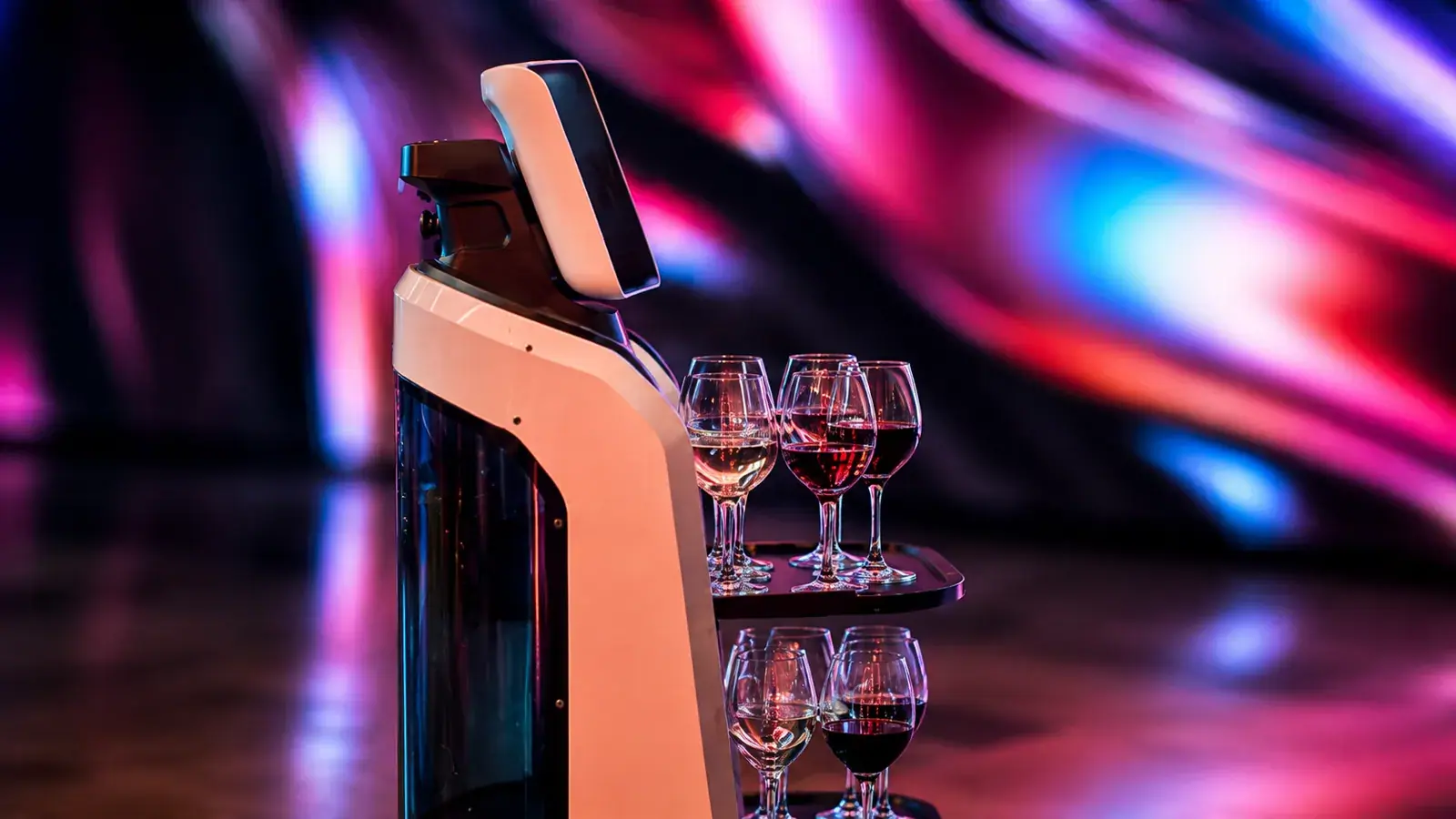
Large banquets are always a logistics challenge. Food, drinks, service equipment, staff movement, guest flow, and timing all need to work together. When 500 people are in one venue, even small delays become visible very quickly.
This event case study robot example shows how a service robot can support a large banquet in a practical way. The goal is not to replace the event team. The goal is to reduce repetitive movement, create a smoother guest experience, and add a strong visual element that makes the event feel more modern.
Event Overview
For this example, imagine a 500-guest banquet organized in a large hotel or event venue in Cyprus. The event includes a reception area, a main dining hall, and a service zone connected to the kitchen. Guests arrive within a short time window, drinks are served first, and food service follows in several waves.
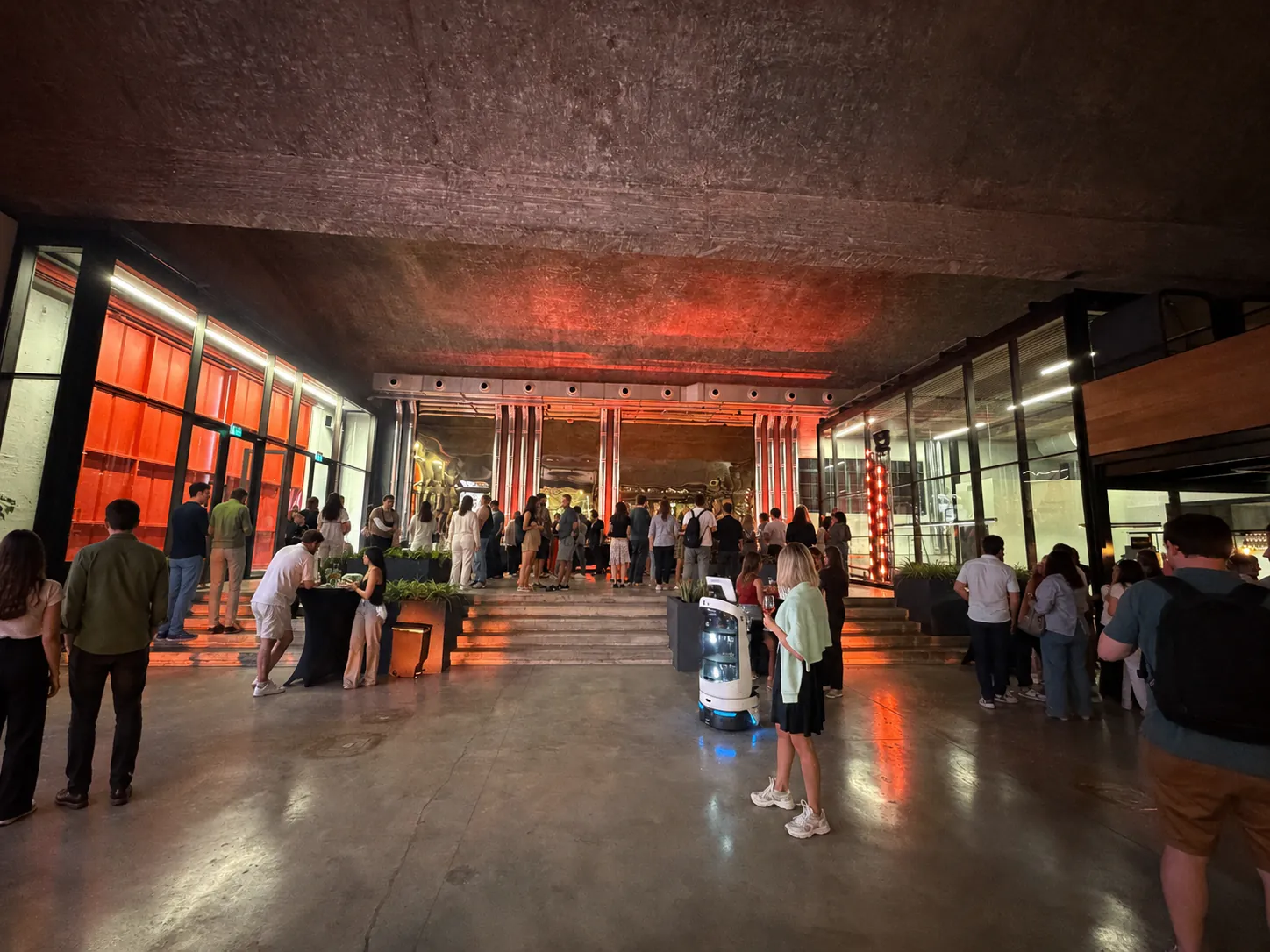
In this type of environment, the pressure is not only on the kitchen. It is also on the service team. Staff must move constantly between preparation areas and guest zones. During peak moments, people carry trays, refill stations, collect used glassware, and respond to requests at the same time.
A service robot can support the team by handling selected transport tasks throughout the event.
Objective
The main objective was simple: reduce unnecessary staff movement and improve service flow during the busiest parts of the banquet.
The robot was not used for full table service. That would not be the right approach for this type of event. Instead, it was used as a mobile support unit, helping with drinks, small items, promotional materials, and selected logistics between service zones.
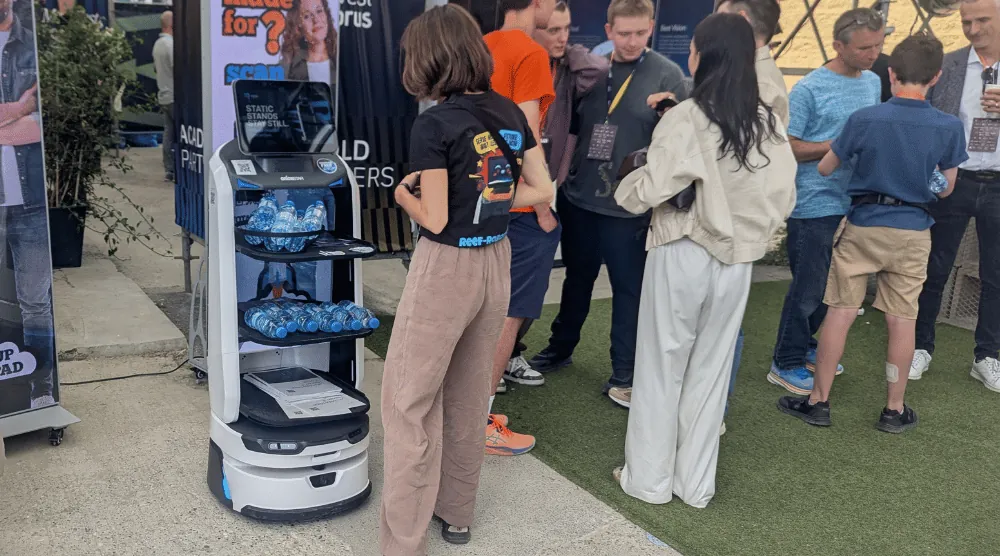
The secondary objective was visibility. At large events, a robot naturally attracts attention. Guests notice it, take photos, and interact with it. This makes the robot useful not only operationally, but also as part of the event experience.
Setup
Before the event, the venue was mapped. The robot learned the key areas: reception zone, main hall entrance, service station, kitchen-side pickup point, and return point. No-go zones were also defined to keep the robot away from crowded corners, technical areas, stairs, and narrow staff-only passages.
The route was kept simple. For events, simplicity is usually better than complexity. The robot followed a predictable path between the service station and guest-facing areas. This made it easy for staff to understand where the robot would be and when it would arrive.
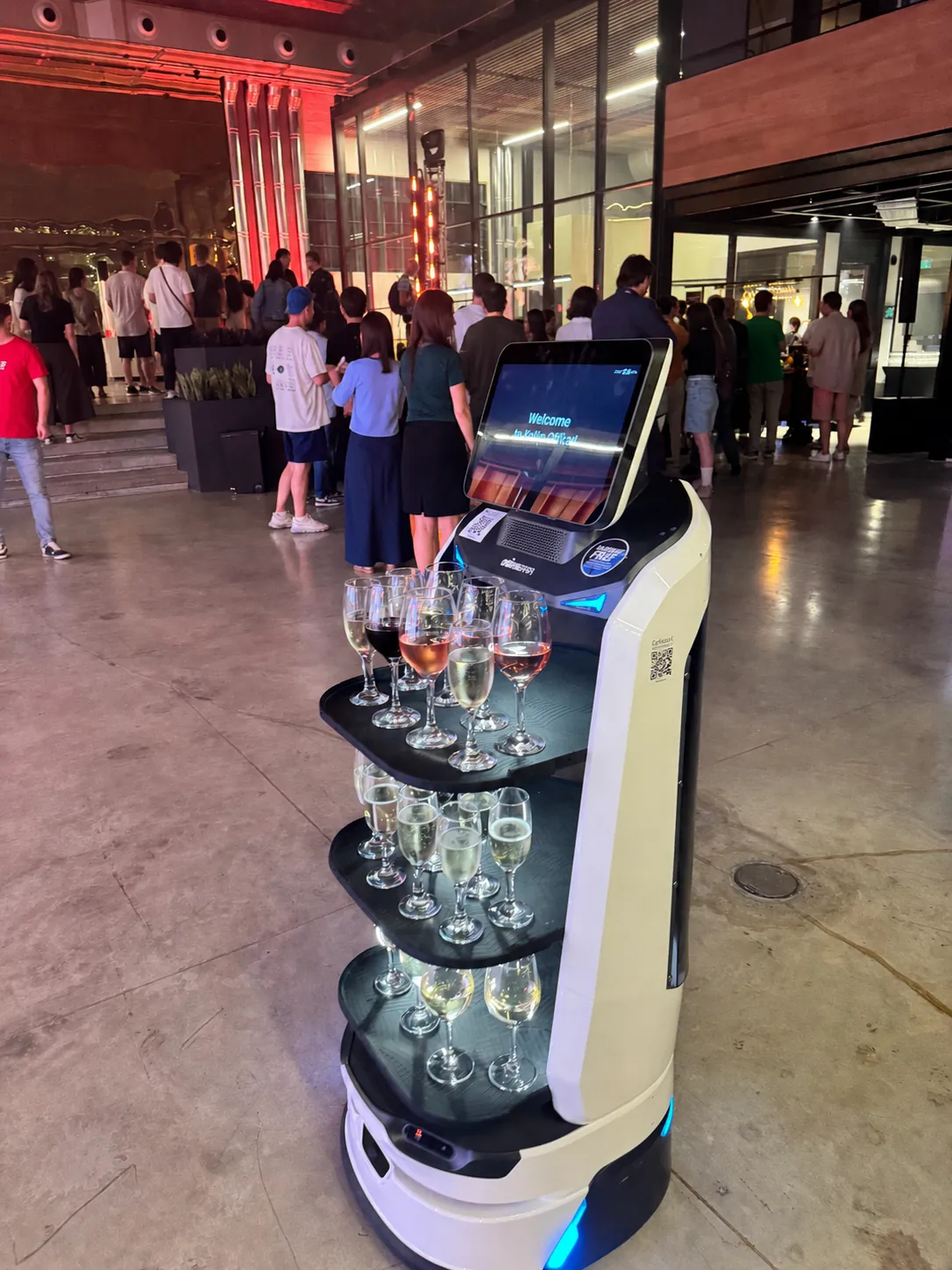
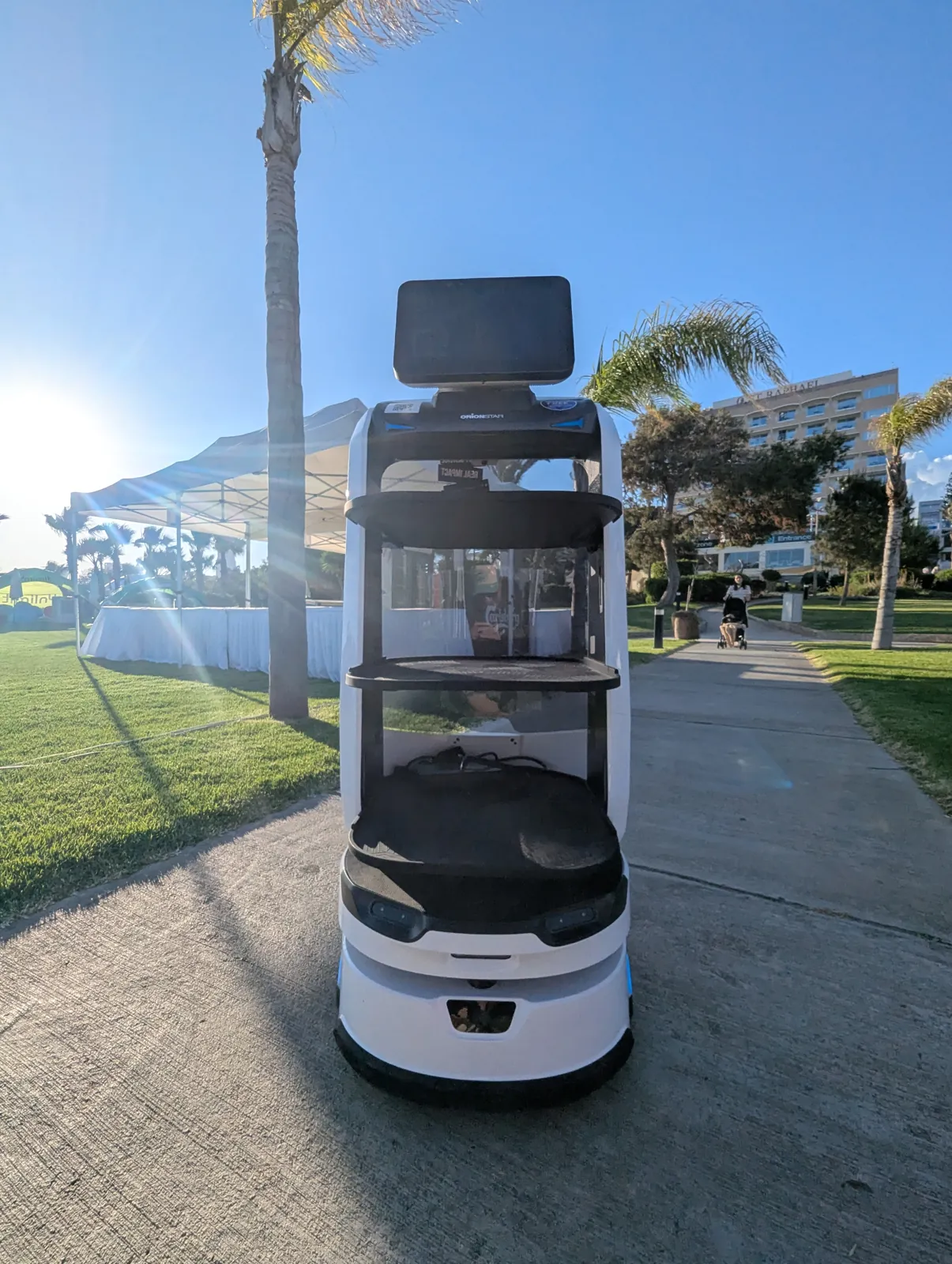
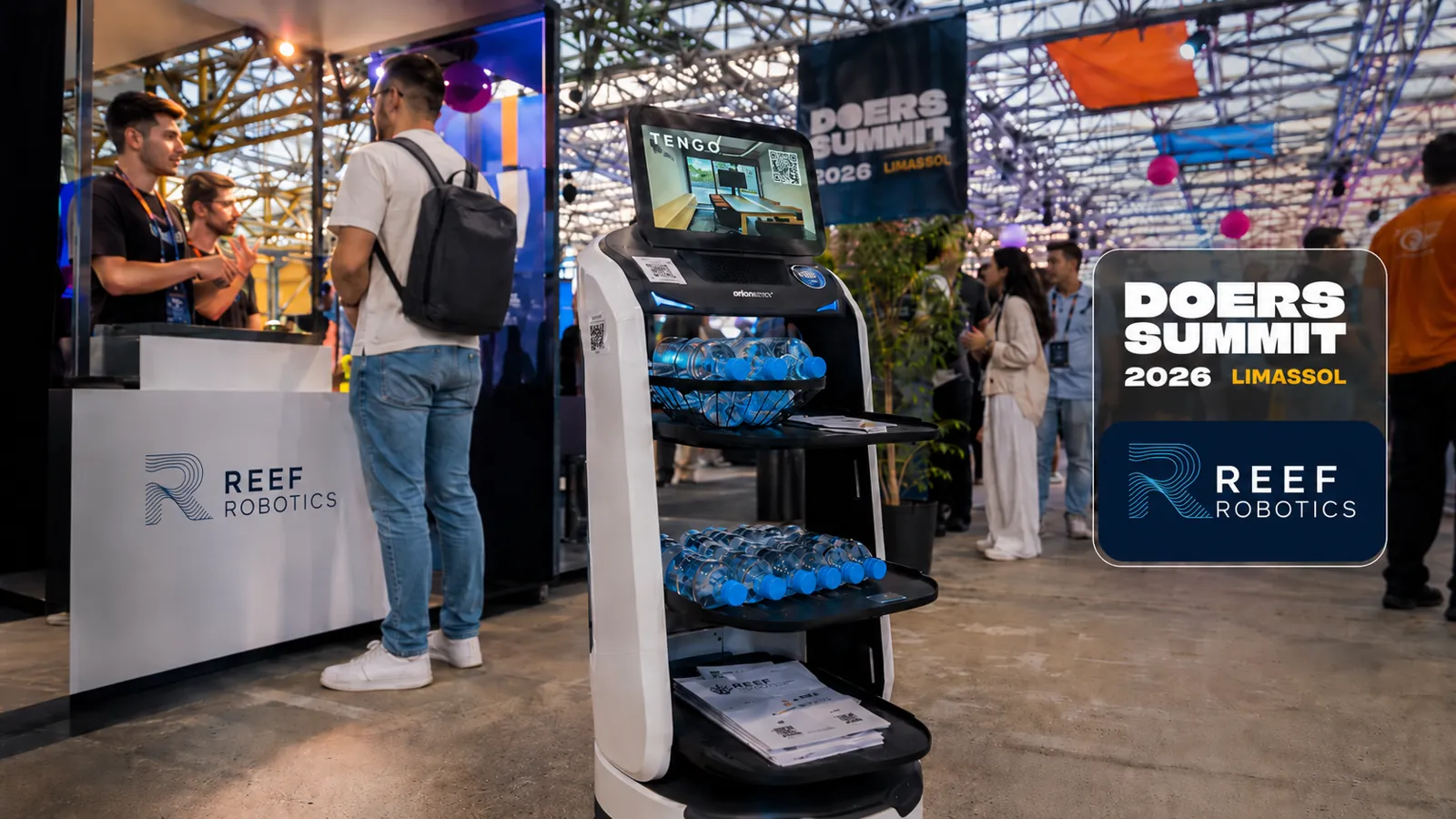
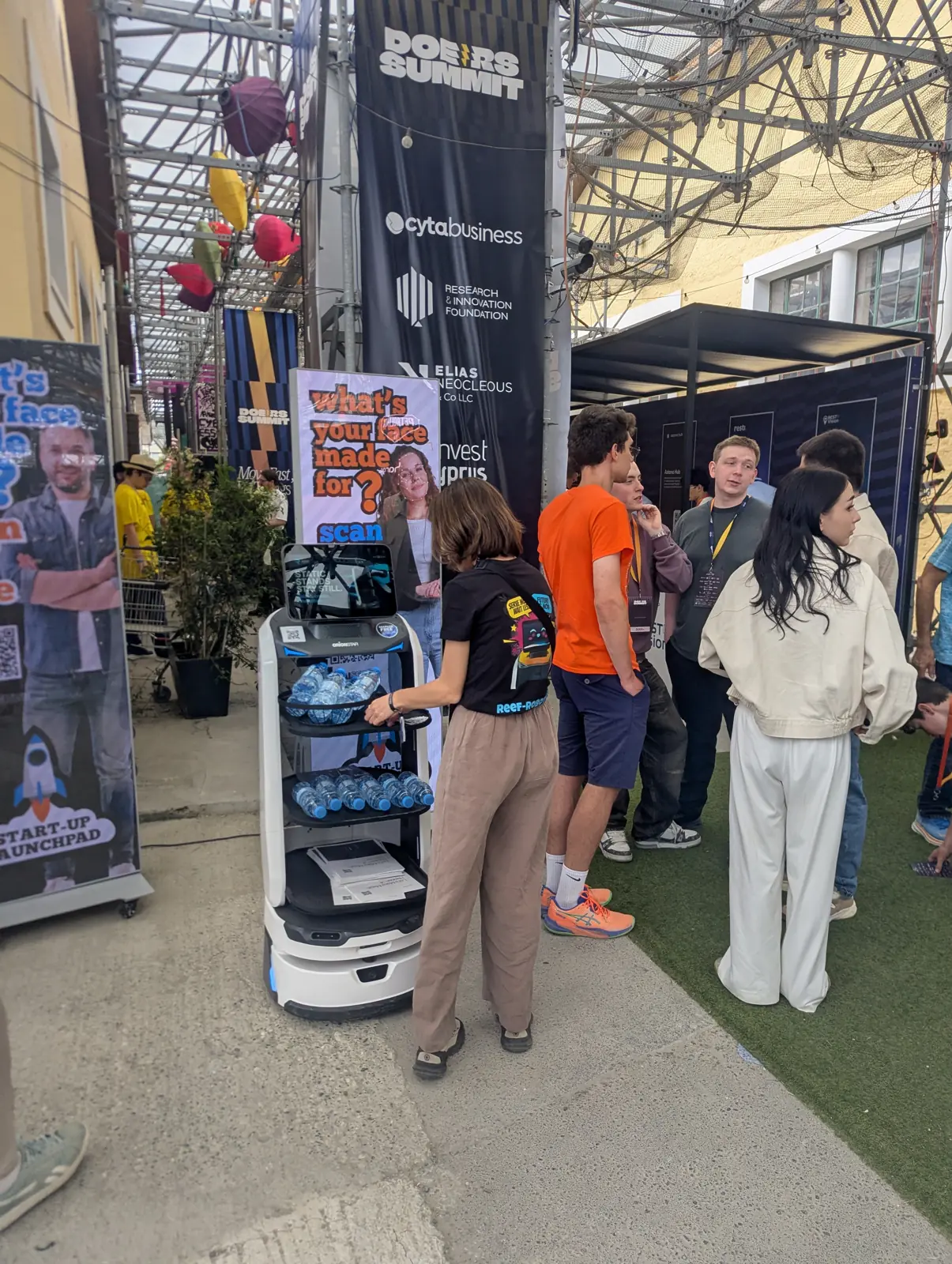
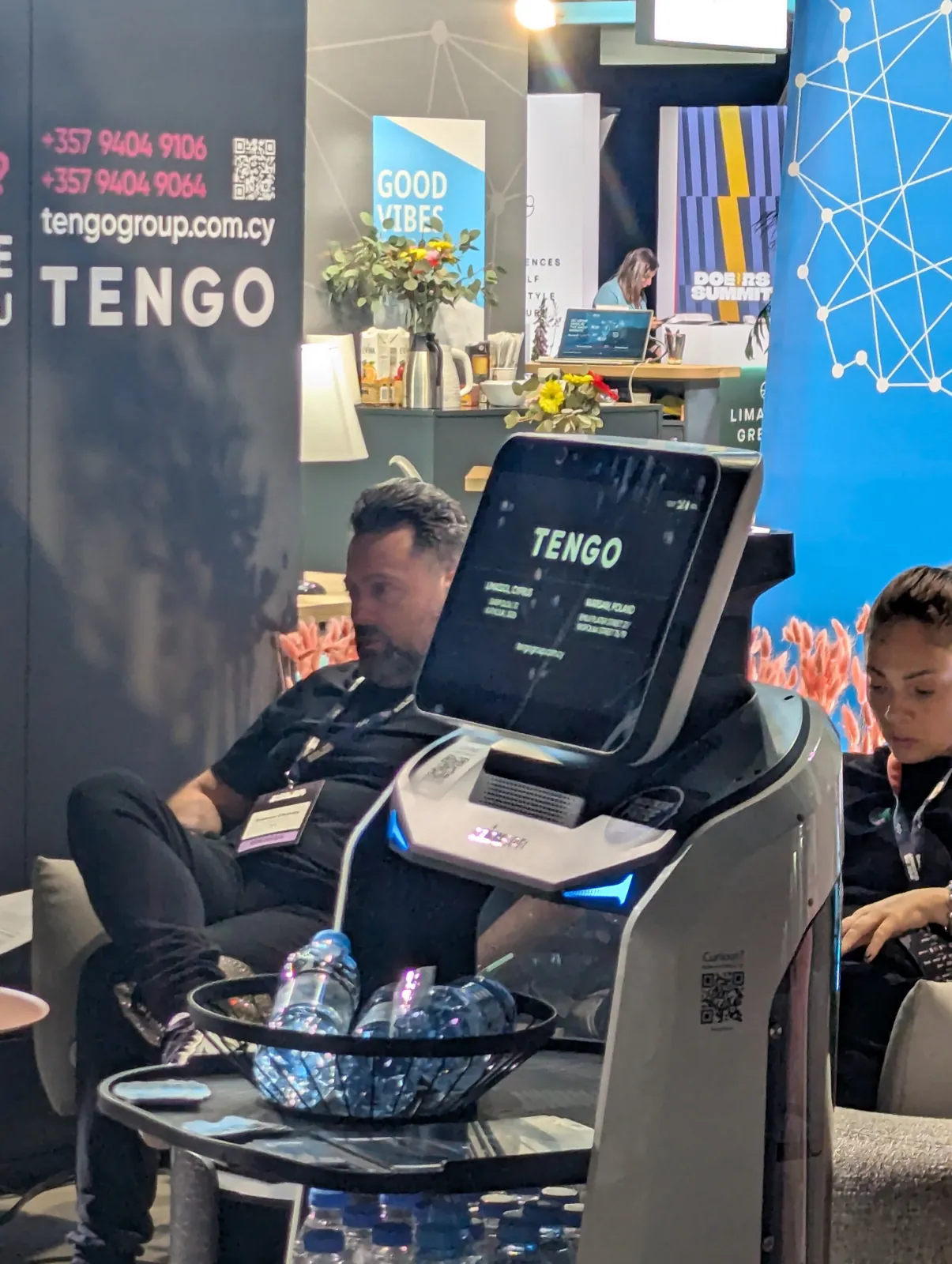
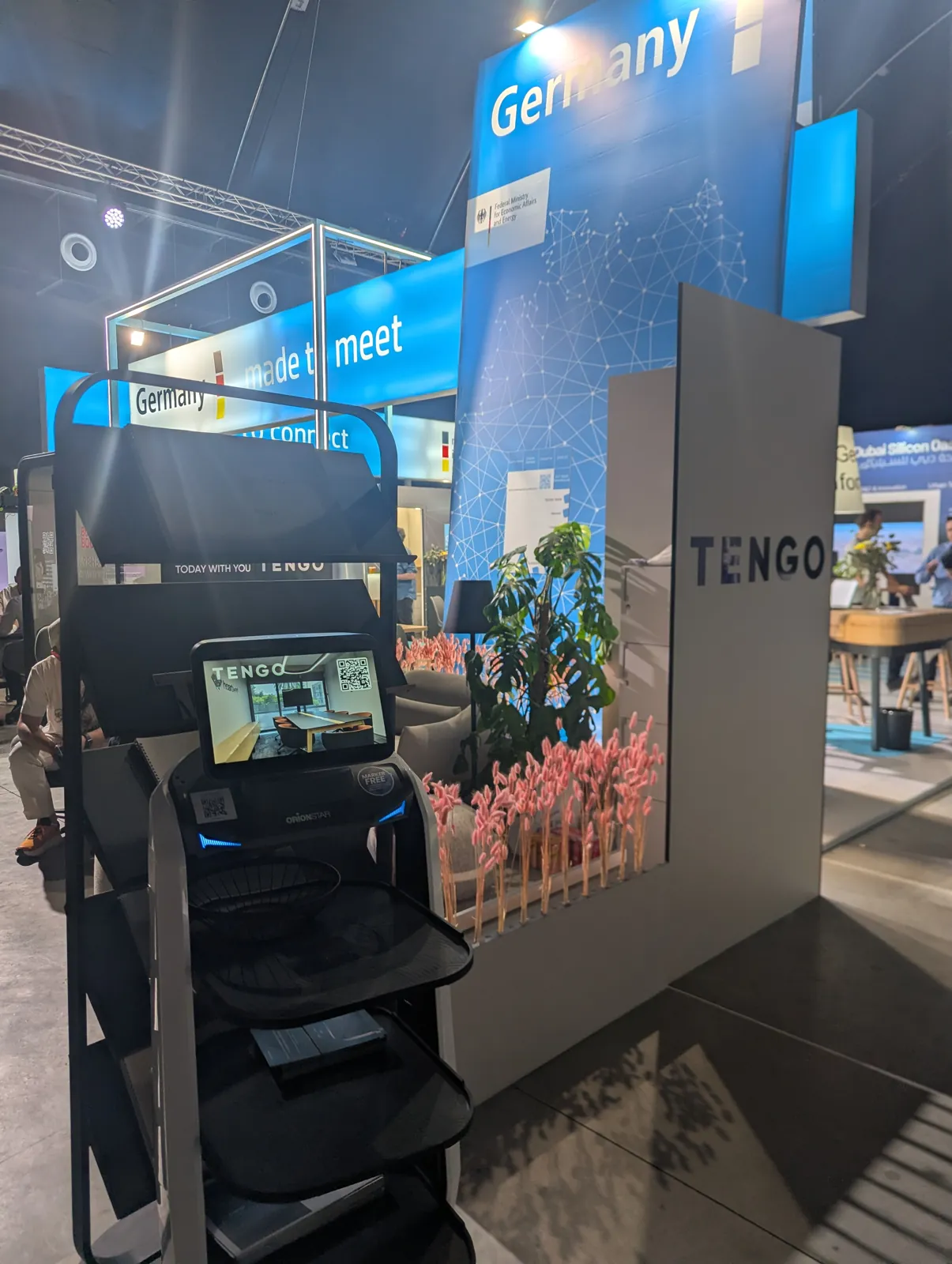
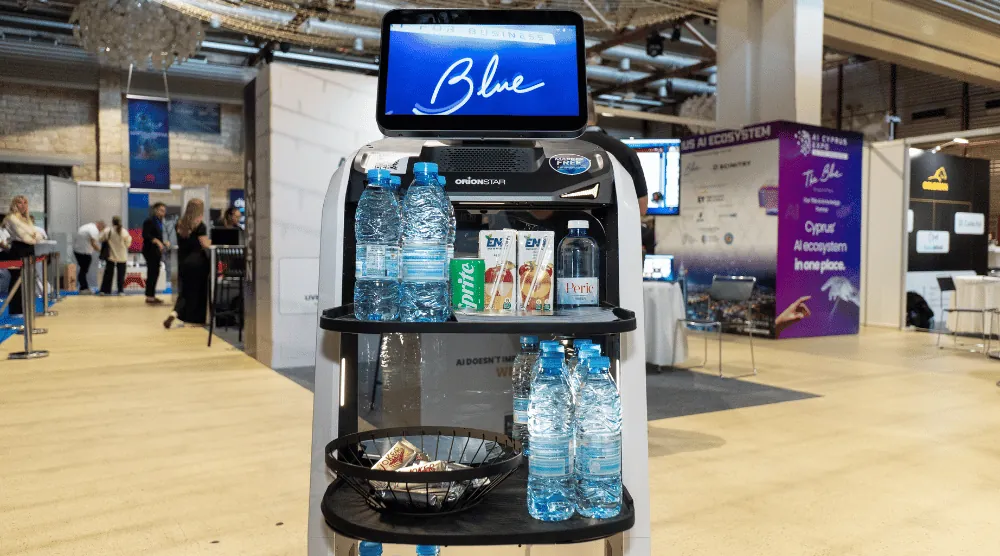
The robot was prepared with trays for bottled water, soft drinks, small snacks, and printed materials. On the screen, the organizer could display event branding, sponsor messages, or a welcome visual. This turned the robot into both a service tool and a moving communication point.
How the Robot Supported the Event
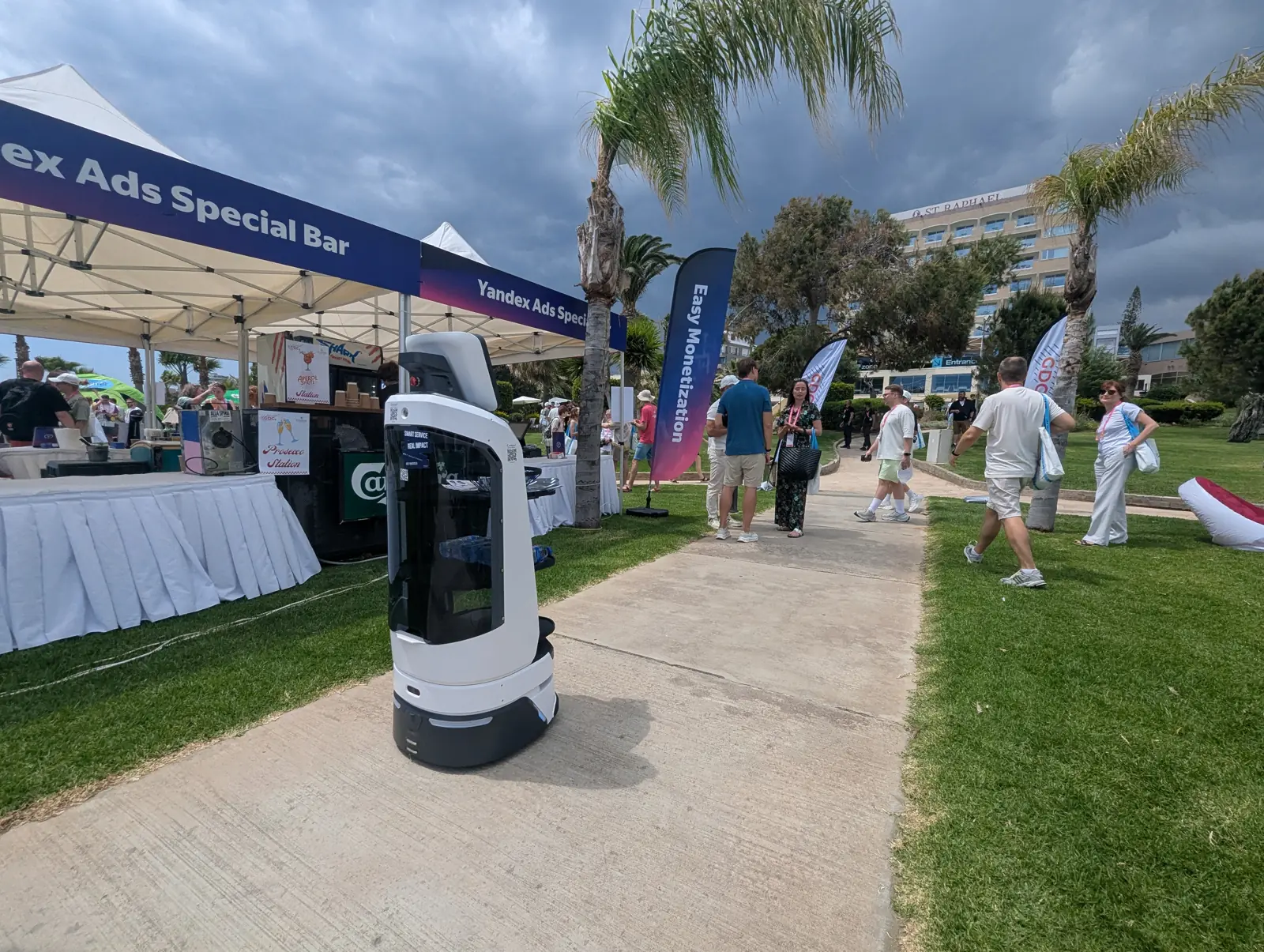
During guest arrival, the robot worked near the reception area, offering water and small refreshments. This created an immediate point of interest. Guests interacted with the robot naturally, and many stopped to take photos or record short videos.
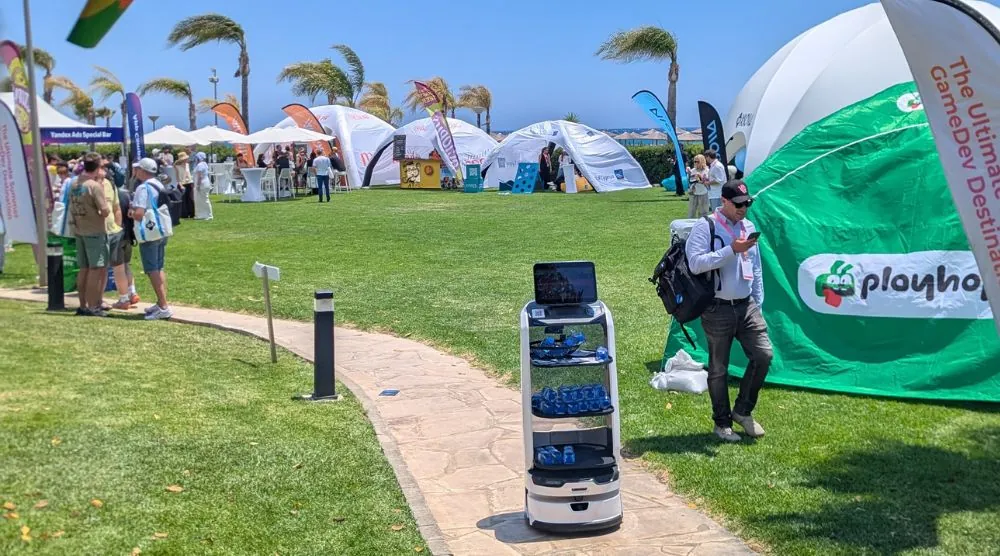
During the main part of the banquet, the service robot supported staff by moving items between preparation and guest areas. It was especially useful for lighter, repeatable tasks that would otherwise require multiple staff trips. For example, it could bring additional drinks to a service station or carry used glasses back toward the collection area.
Later in the event, the robot was used for promotional material distribution. Instead of brochures sitting on a table, they moved through the venue in a way that was more visible and more engaging.
Results
In a 500-guest event, the value of the robot comes from consistency. It keeps moving, does not get tired, and performs the same task repeatedly without interrupting staff.
A realistic outcome for this type of setup may include:
- 40–60 completed transport cycles during the event
- 2–4 hours of staff walking time reduced
- faster replenishment of selected guest areas
- increased attention around the organizer’s brand or sponsor message
The robot also creates a strong content opportunity. Guests often take photos and videos, which gives the event additional organic visibility on social media. For brands, this can be as valuable as the operational support itself.
Lessons Learned
The most important lesson is that a robot works best when its role is clearly defined. It should not be sent everywhere or used for every task. In a crowded event, predictable movement is essential.
The second lesson is that staff briefing matters. Even a short training session before the event makes the workflow much smoother. Staff should know where to load the robot, how to send it, and when it is most useful.
The third lesson is that the robot should support the atmosphere, not dominate it. Used correctly, it becomes a natural part of the event. It adds novelty, but still serves a practical purpose.
Example Client Feedback
“The robot was one of the most talked-about elements of the evening. Guests noticed it immediately, but it was not just for show. It helped our team move items around the venue and gave the event a very modern feeling.”
When This Setup Makes Sense
Robot support works especially well for banquets, exhibitions, conferences, hotel events, product launches, VIP receptions, and corporate gatherings. It is most useful when there are many guests, repeated transport tasks, and a need to create a memorable experience.
For event organizers in Cyprus, short-term robot rental is often the most practical option. It gives you the benefit of automation and visual impact without requiring a long-term purchase.
Discuss Robot Support for Your Event
A service robot can help your event feel smoother, more modern, and more memorable. The key is to plan the setup properly and define the robot’s role before the event begins.
Contact Reef Robotics to discuss robot rental and service robot support for your next event in Cyprus.
