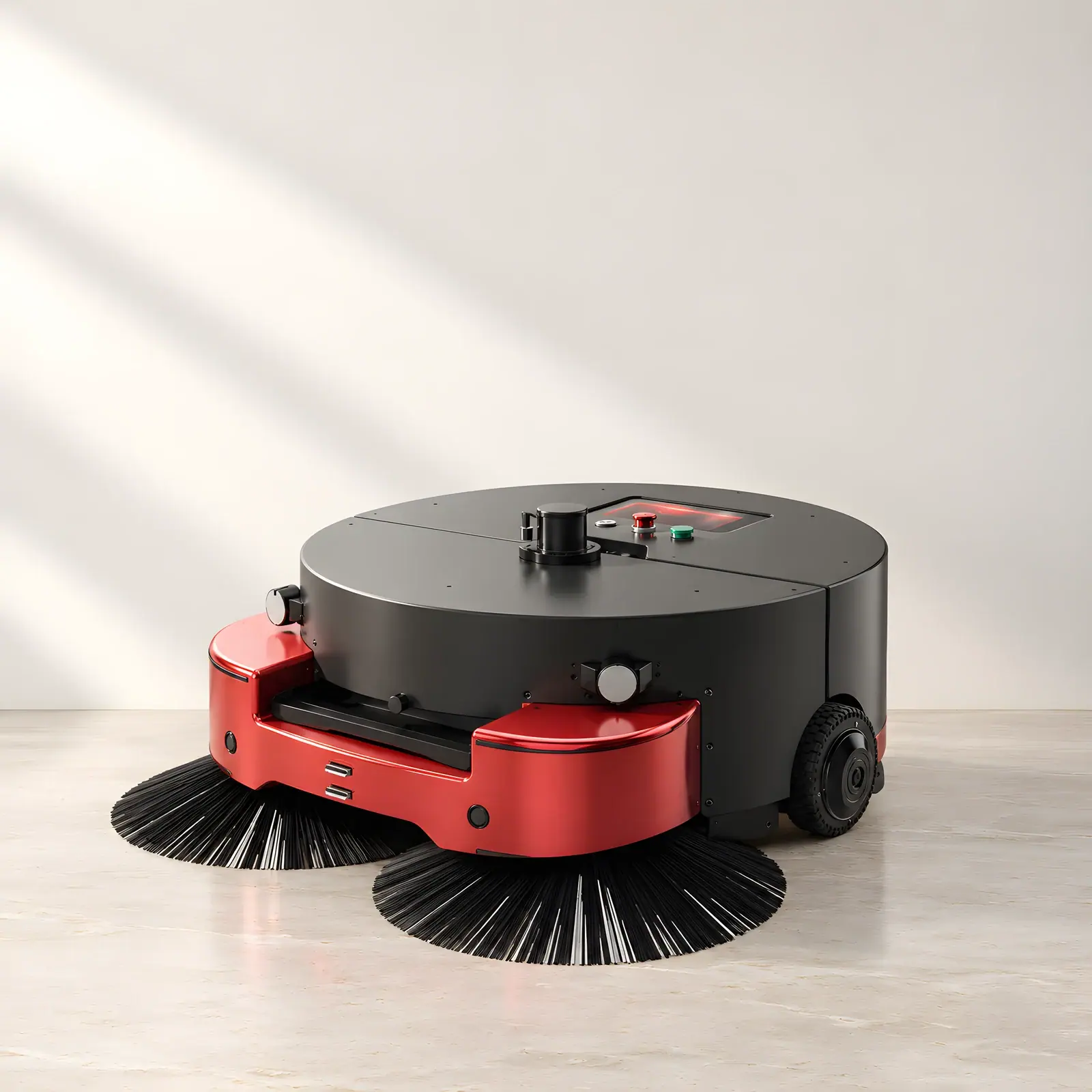
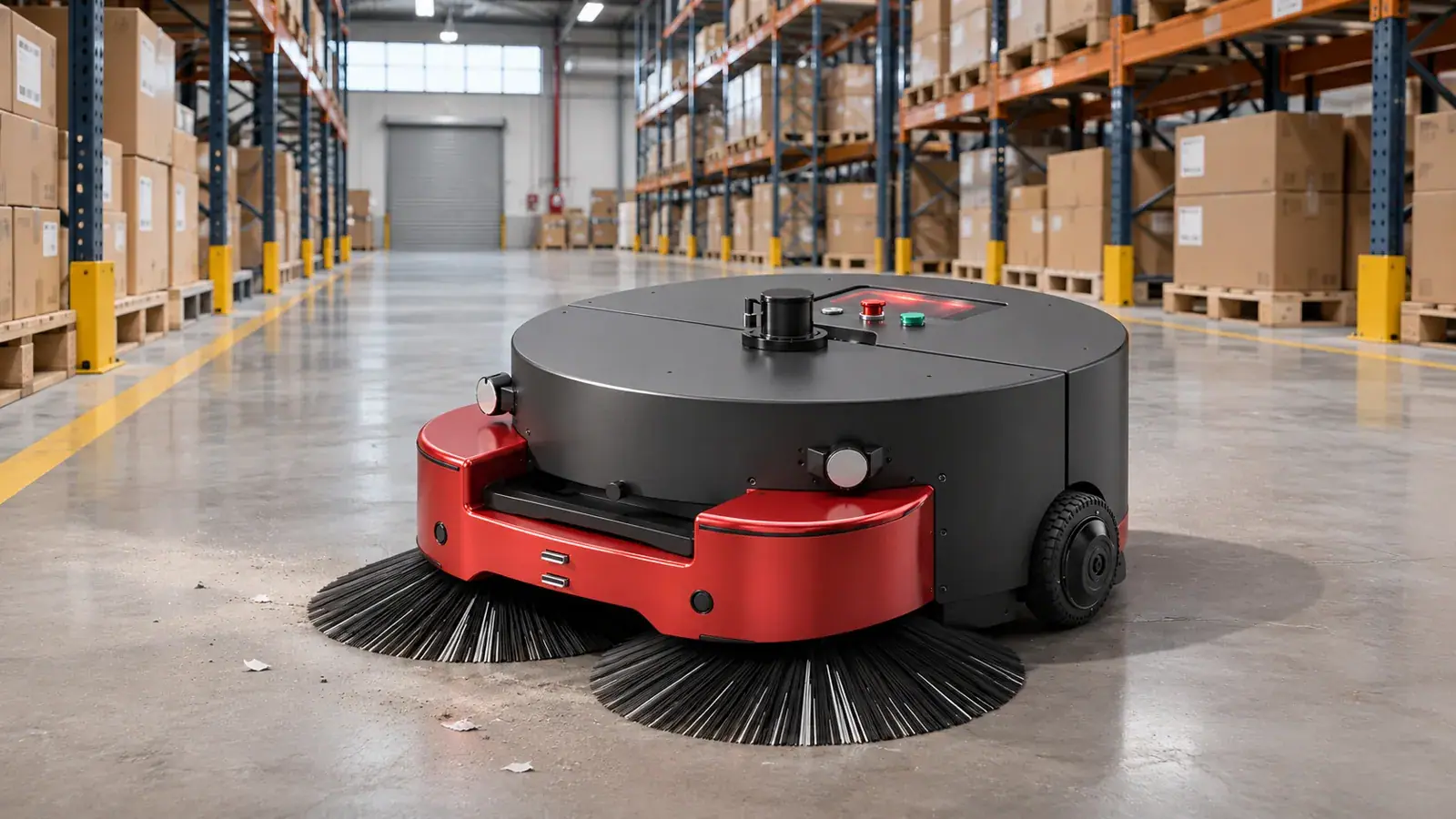
On a large working floor, loose debris can become a cleaning job of its own. Dust and ordinary dry material accumulate across open areas, and a team may spend considerable time repeating the same sweeping routes.
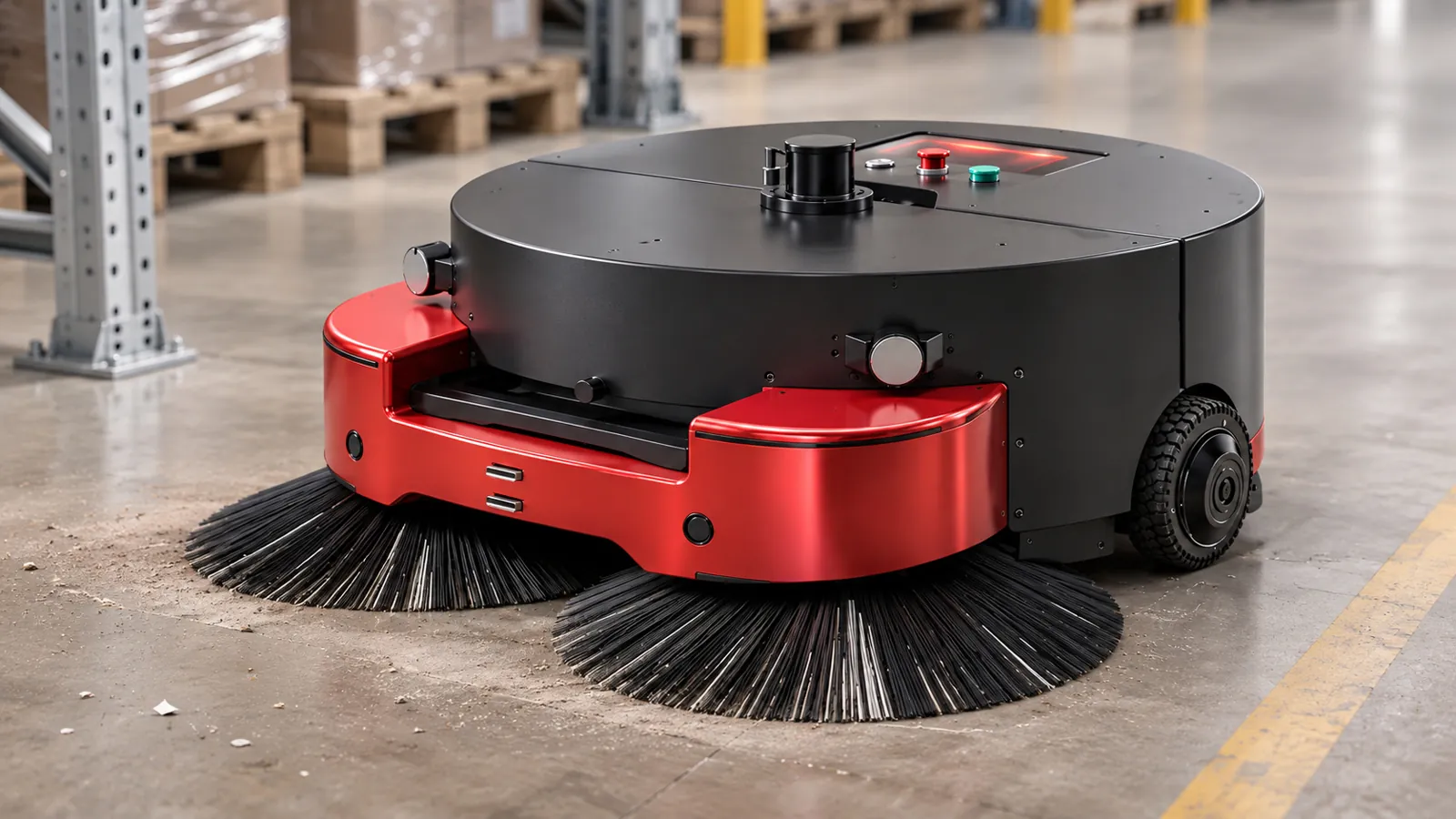
Reeman Monster is designed for that kind of work. It combines autonomous sweeping and vacuuming with a large collection bin, making it relevant to suitable warehouses, logistics facilities and other commercial environments with substantial dry-cleaning requirements.
The Reeman Monster is a specialist choice within the cleaning robot category. Its value is easiest to understand when the floor needs regular collection of loose dirt rather than wet scrubbing.
What makes Reeman Monster different
Monster has an overall cleaning width of up to 890 mm and a 30-litre dust bin. The main double-brush width is 500 mm; the larger overall figure describes the broader cleaning arrangement, rather than a single 890 mm main brush.
A broad collection path can help on accessible floors because the robot addresses more width as it moves along a route. The large bin is useful when the volume of ordinary debris would otherwise require frequent emptying.
Neither feature should be assessed in isolation. A wide cleaning path is less valuable if furniture or stored goods repeatedly block the route, while bin capacity only becomes a real advantage when it matches the material the site produces. The type and quantity of debris belong at the beginning of the selection process.
Sweeping and scrubbing solve different problems
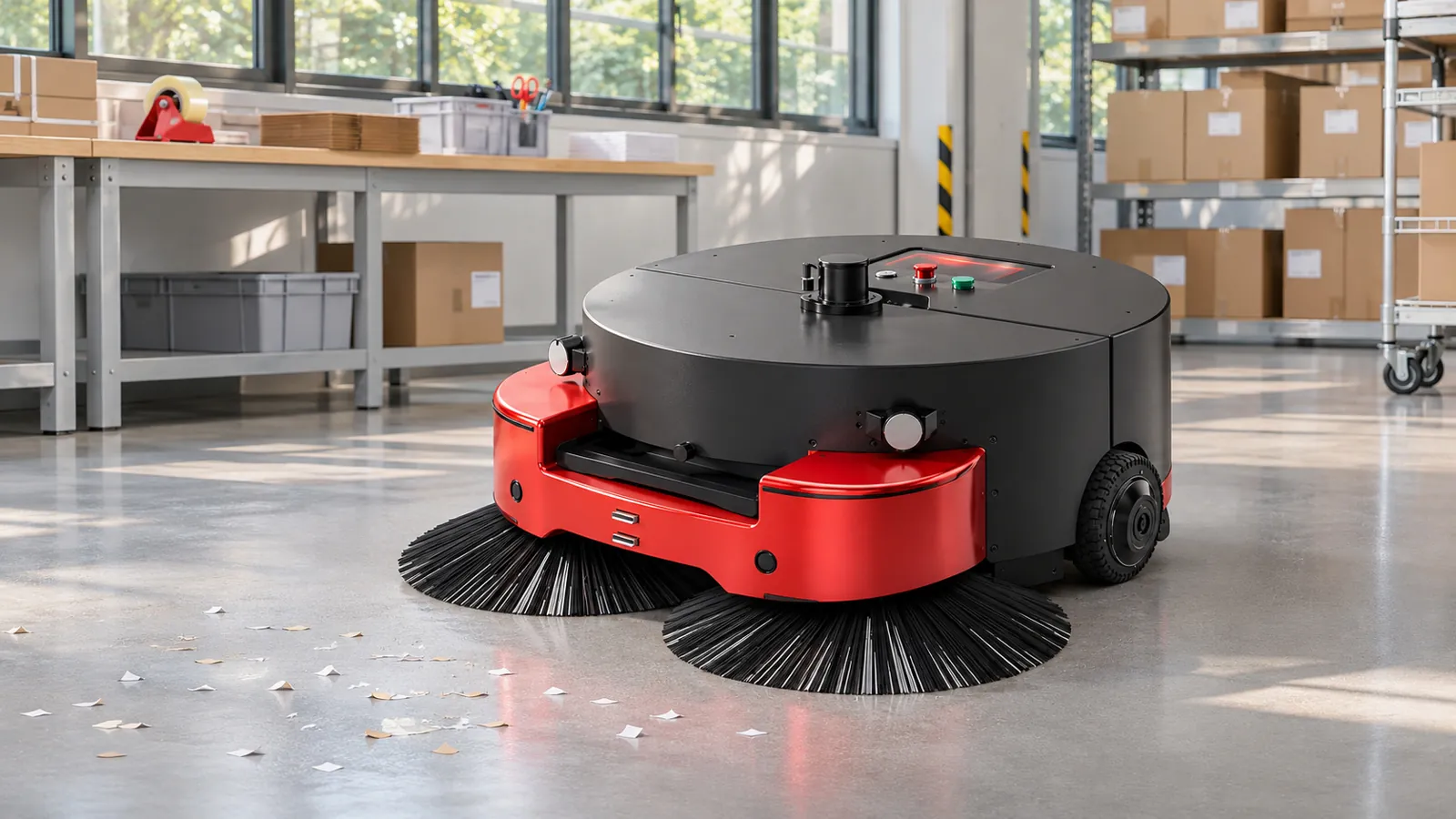
Monster collects dry material. It does not wash away a sticky film or scrub an ingrained stain from the surface. Those tasks require a compatible wet-cleaning method and, in some buildings, a separate scrubber.
This distinction is particularly useful for facilities with mixed dirt. One zone may need frequent sweeping because loose material accumulates throughout the day, while another needs periodic wet cleaning. A clear task split can be more effective than expecting a single machine to perform work outside its design.
Oversized packaging, strapping and unsuitable material should be removed according to the site’s cleaning procedure before a run. An industrial application label also does not establish suitability for every industrial substance. If the site has specialist dust or unusual debris, its compatibility with the machine needs confirmation before purchase.
Autonomous routes across a working site
Monster uses Laser SLAM and LiDAR navigation. Put simply, it uses a map and measurements of its surroundings to locate itself and follow planned routes. It supports custom cleaning areas, scheduled tasks and remote monitoring through a mobile app.
Obstacle avoidance helps the robot respond to objects in its path, but the route still needs to be organised around the site’s operations. Temporary storage, vehicle movements and access restrictions can all change how reliably a cleaning task runs.
The strongest starting point is often a defined, repeatable zone: an accessible aisle, a clear circulation route or an open area with predictable quiet periods. Once that task is working well, the programme can be adjusted using observations from the team.
Understanding coverage and charging
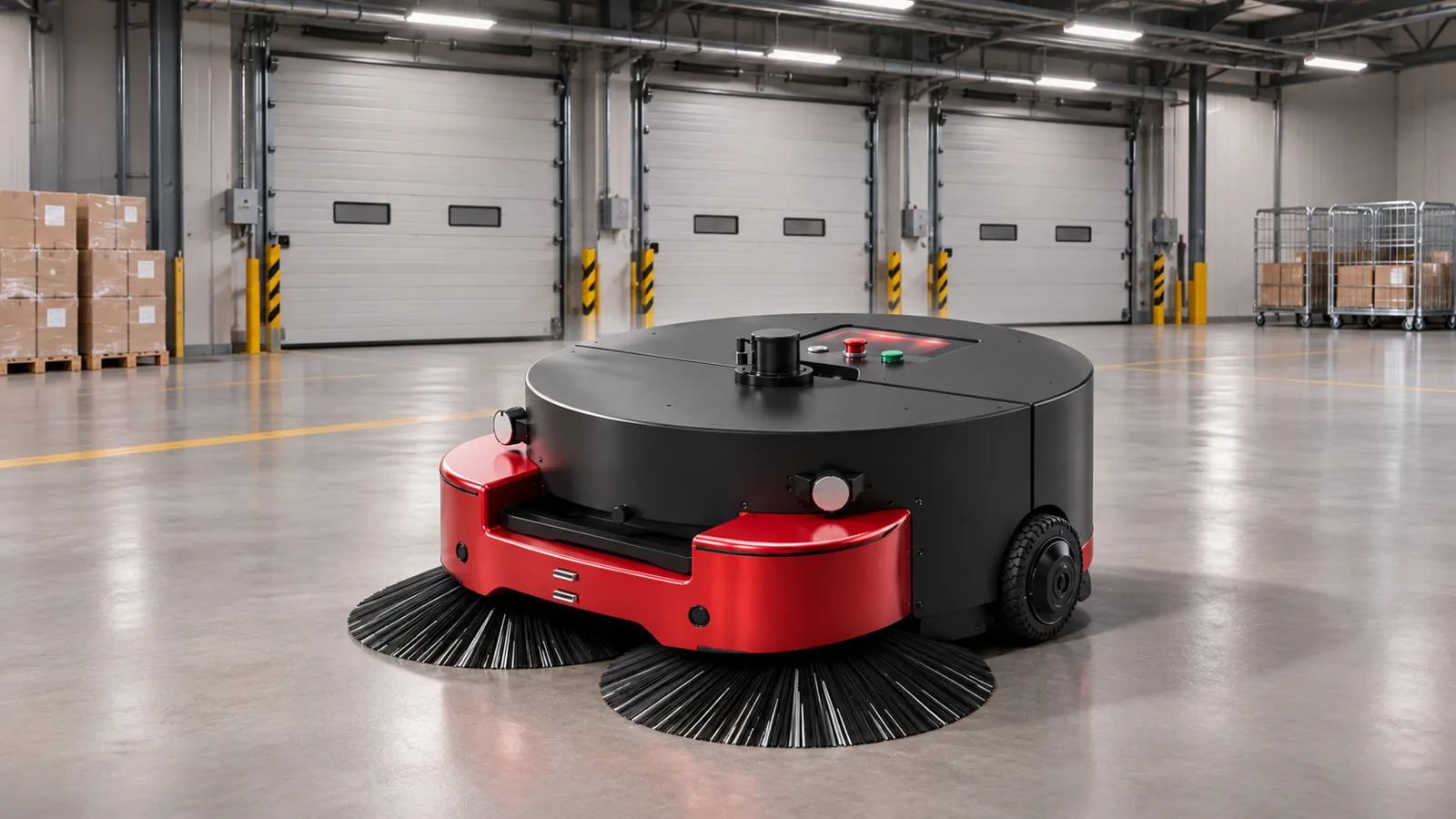
The published specifications list approximately four to five hours of battery life and coverage of more than 5,000 m² per charge under the stated performance claim. This should be treated as a headline capability, with the actual result confirmed against the layout, settings and cleaning load.
Charging takes approximately four hours. Automatic return to charging and the ability to resume from an interrupted point help organise longer cleaning routines, although they do not remove charging time from the working day.
It is also worth separating floor coverage from map capacity when comparing robots. A model that can store a very large map is not necessarily able to clean that entire area before recharging. Like-for-like comparisons prevent impressive but unrelated numbers from driving the decision.
Making the routine easier to manage
Monster’s anti-tangle brush design is intended to reduce material wrapping around the brush, but routine checks remain part of ownership. Staff need to empty the bin, inspect the cleaning components and review the areas the robot has covered.
The benefit is a more consistent way to handle repetitive dry-floor cleaning. Reeman Monster can take on planned sweeping routes while people concentrate on exceptions and tasks that need manual attention.
Reef Robotics can help assess the debris, routes and service needs, then compare Monster with other robots for commercial floor cleaning. For a large site, the right decision starts with the work on the floor and ends with a routine the team can maintain.