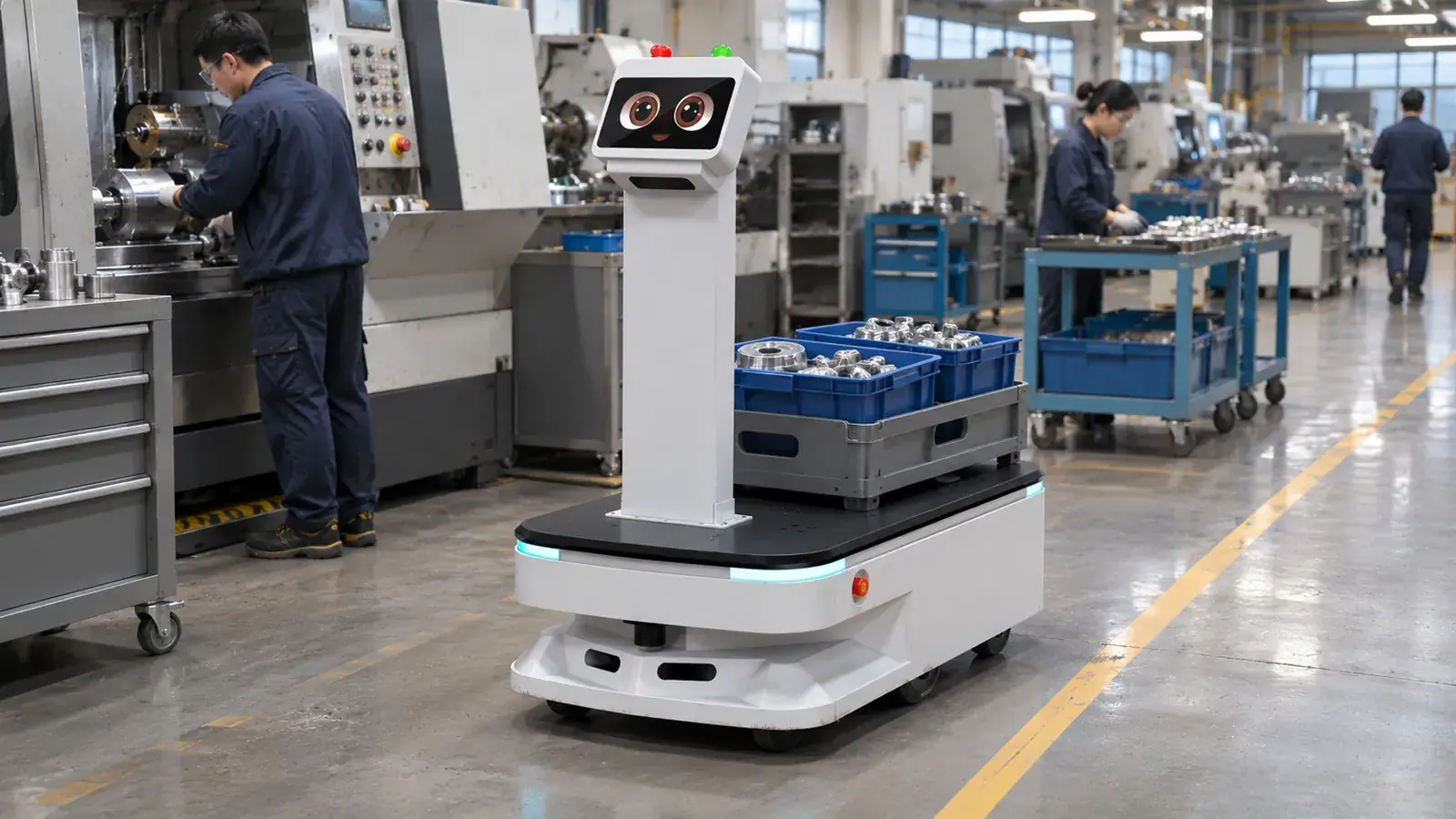
Sometimes the most time-consuming part of an internal delivery is transferring the same goods between different carriers. Components come off a storage rack, go onto a trolley, travel across the building and are arranged again near production. Each transfer adds work and another opportunity for confusion.
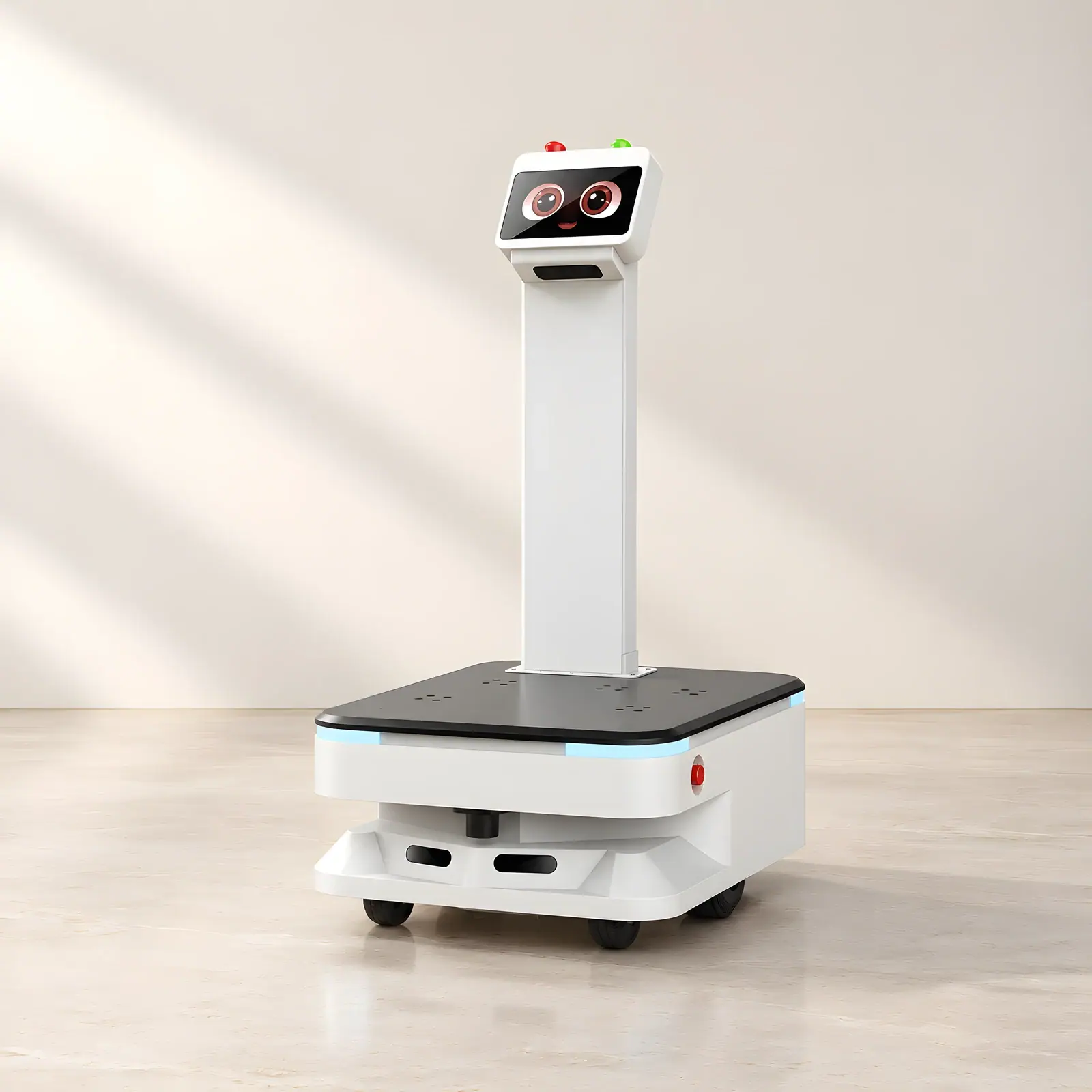
The Reeman FlyBoat offers a different workflow: move a compatible rack together with its contents. The robot drives underneath, lifts the rack clear of the floor and transports it to a designated position. For businesses with repeatable material flows, that can simplify the journey between storage and the point of use.
What Reeman FlyBoat can lift and carry
FlyBoat has a maximum payload of 300 kg and an autonomous lifting movement of up to 100 mm, or 10 cm. The lift is intended to pick up compatible carriers for movement around the facility. It is not a mast for placing pallets on elevated storage levels.
When assessing capacity, include the rack and everything it carries. A 300 kg maximum does not mean 300 kg of products plus an additional heavy steel structure. The carrier's underside clearance, lifting interface, dimensions and load distribution also have to match the robot.
This makes rack selection an important part of the purchase. A robot can be well suited to the weight of a load while still being incompatible with the equipment currently holding it.
A replenishment cycle with fewer transfers
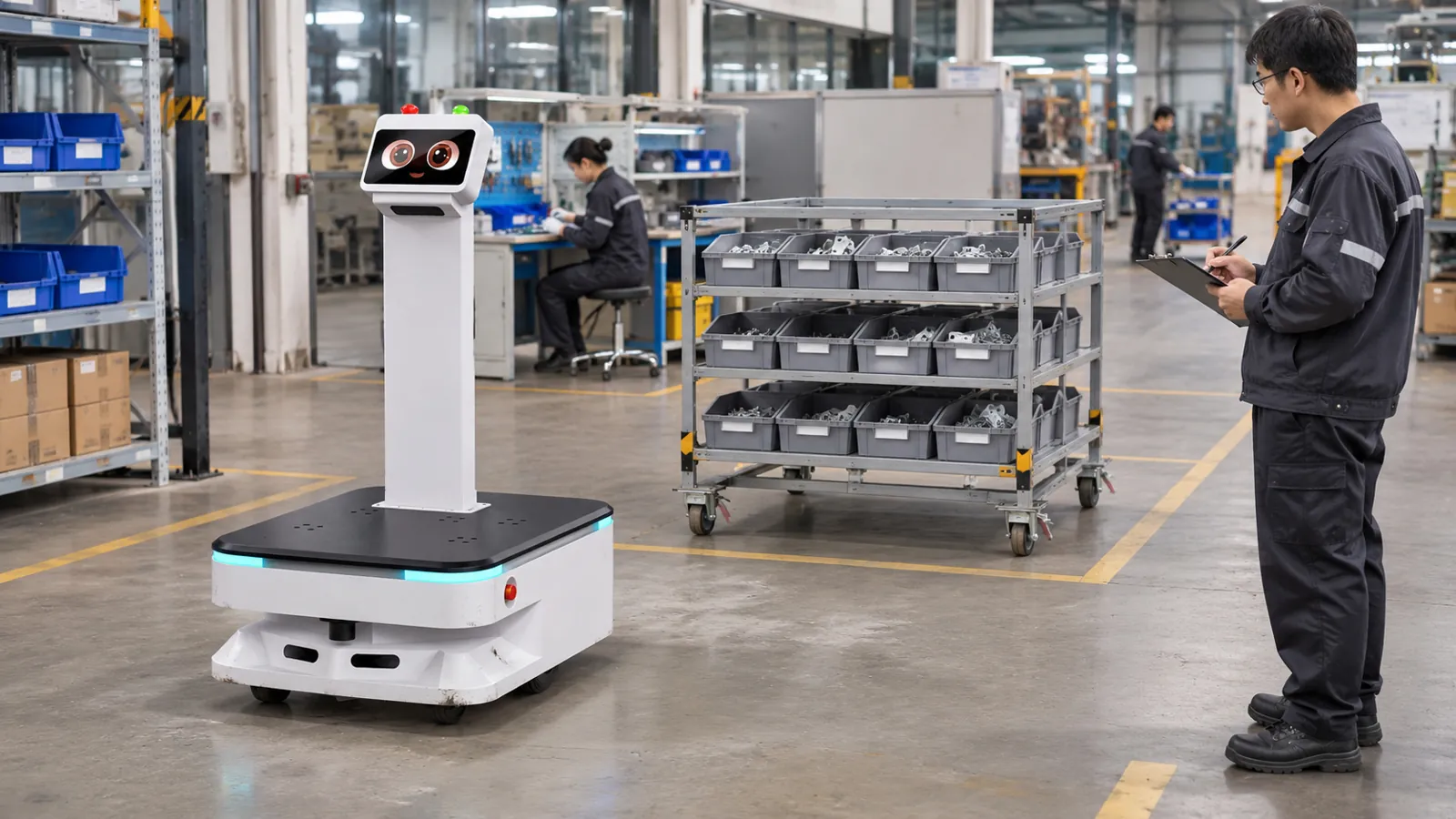
Consider a hypothetical assembly department that consumes small components from mobile racks. The stores team fills a compatible rack in a preparation area. FlyBoat collects it and takes it to an agreed drop-off position near the line. Once the rack is ready for collection, a return task brings it back for replenishment.
Staff still select the right parts, prepare the rack and confirm its readiness. The robot takes responsibility for the transport leg once the task is released. If the carrier can remain at the workstation, the load does not need to be moved onto a second trolley simply to complete the journey.
This arrangement can reduce pushing and walking while keeping production employees near their work. It also encourages a more orderly supply process: full and empty carriers need identified locations, and both teams need a common understanding of when a rack is available.
Make the handover positions part of the design
Reeman FlyBoat works best when the surrounding process is predictable. A designated pickup position prevents employees from leaving a rack wherever space happens to be available. A clear destination avoids a situation in which the robot arrives successfully but cannot put down its load.
Plan the return journey as carefully as the outbound one. A rack that remains occupied for hours changes how many carriers the business needs, even if the robot's travel time is short. Separating carrier availability from robot availability helps avoid buying additional robots to solve a shortage of racks.
Loose packaging, protruding parts and uneven loading can undermine an otherwise sensible route. Trial the loaded carrier through turns and handovers, not just the robot moving by itself.
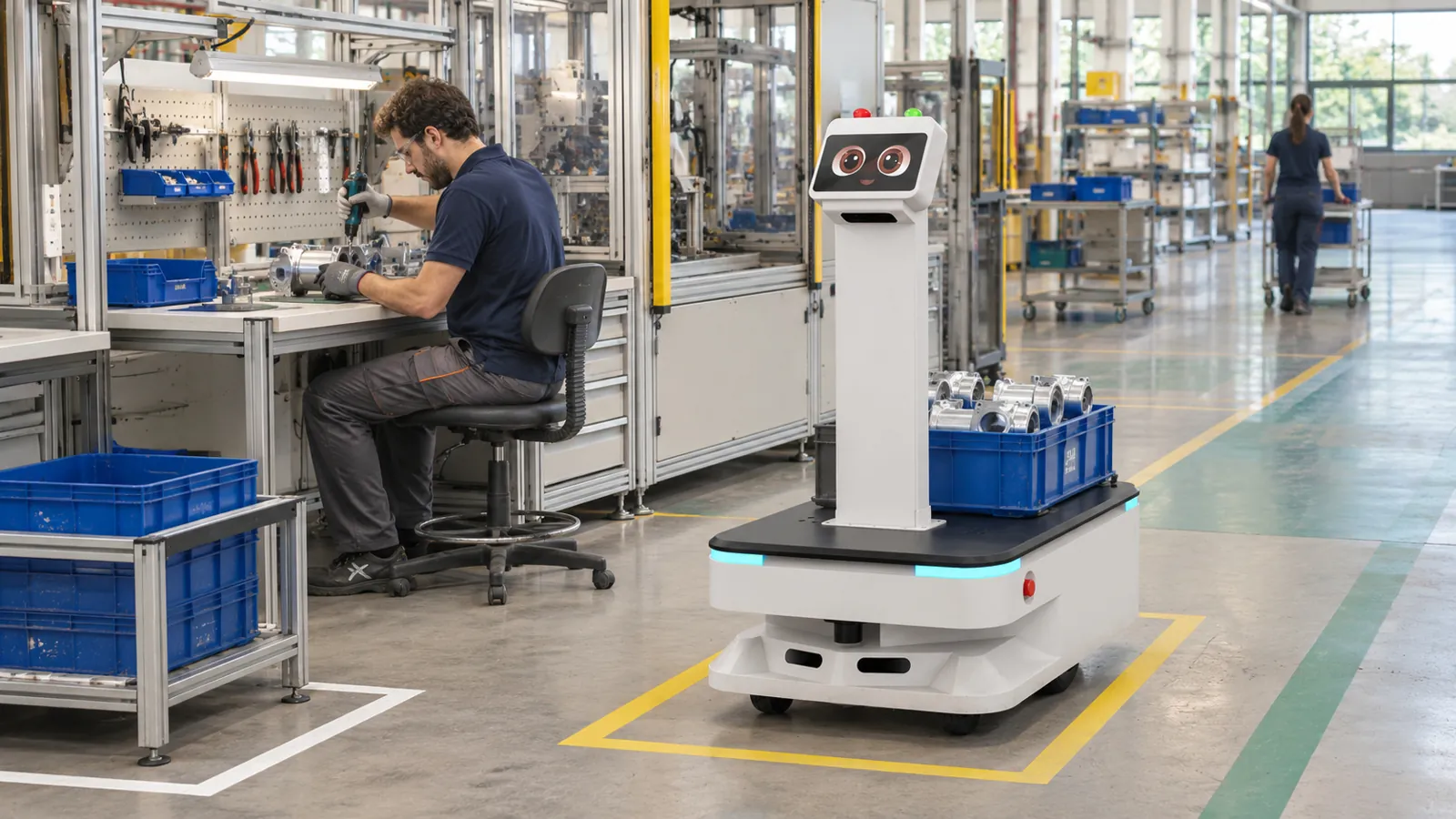
Navigation and the working day
FlyBoat uses LiDAR and dual 3D cameras for navigation and obstacle detection. It supports automatic charging and fleet management, with SDK/API options for connecting tasks to a wider operating system. Elevator and automatic-door integration are supported capabilities that require appropriate site equipment and project configuration.
Battery figures show why operating conditions matter. Reef Robotics lists approximately eight hours at full load and up to 25 hours without load, with charging taking about six hours. For a business moving heavy racks, the no-load figure would be a poor basis for planning a shift.
A useful trial measures completed deliveries during the busiest period, waiting at destinations and the effect of charging. It should also test what happens when a carrier is missing or a passage is temporarily blocked. Those everyday exceptions often reveal more than a demonstration on an empty floor.
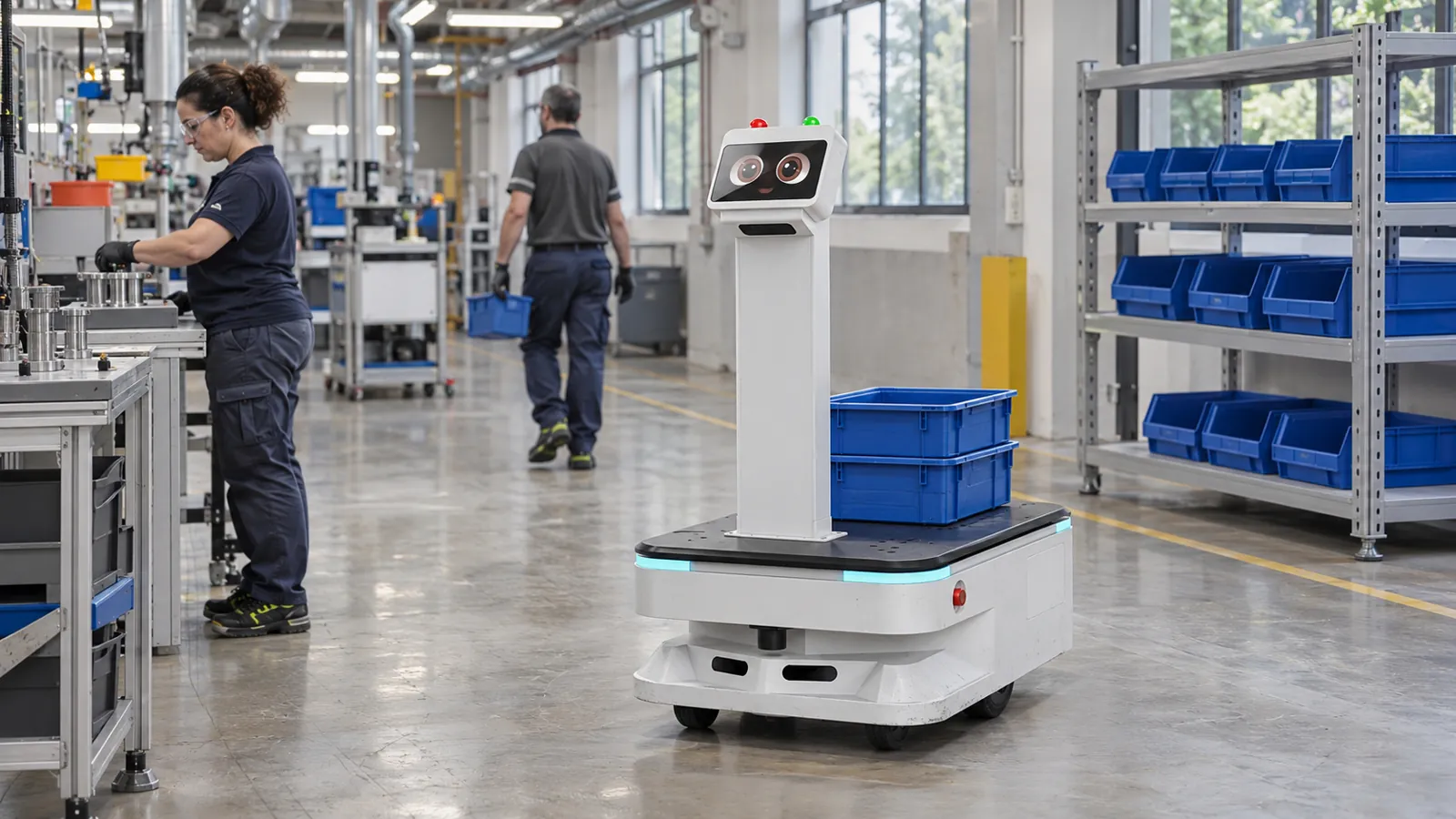
Is FlyBoat the right next step?
Reeman FlyBoat deserves attention when complete racks move repeatedly between preparation, production and storage, and the facility can standardise their pickup and delivery positions. The benefit is less compelling if every load requires extensive rearranging before the robot can approach it.
Pricing is available on request and may change with configuration and project scope. Reef Robotics can help businesses in Cyprus assess the robot, compatible carriers and commissioning requirements together. Explore our robots for internal logistics and contact us with rack dimensions, loaded weight and the proposed movement cycle for an individual recommendation.