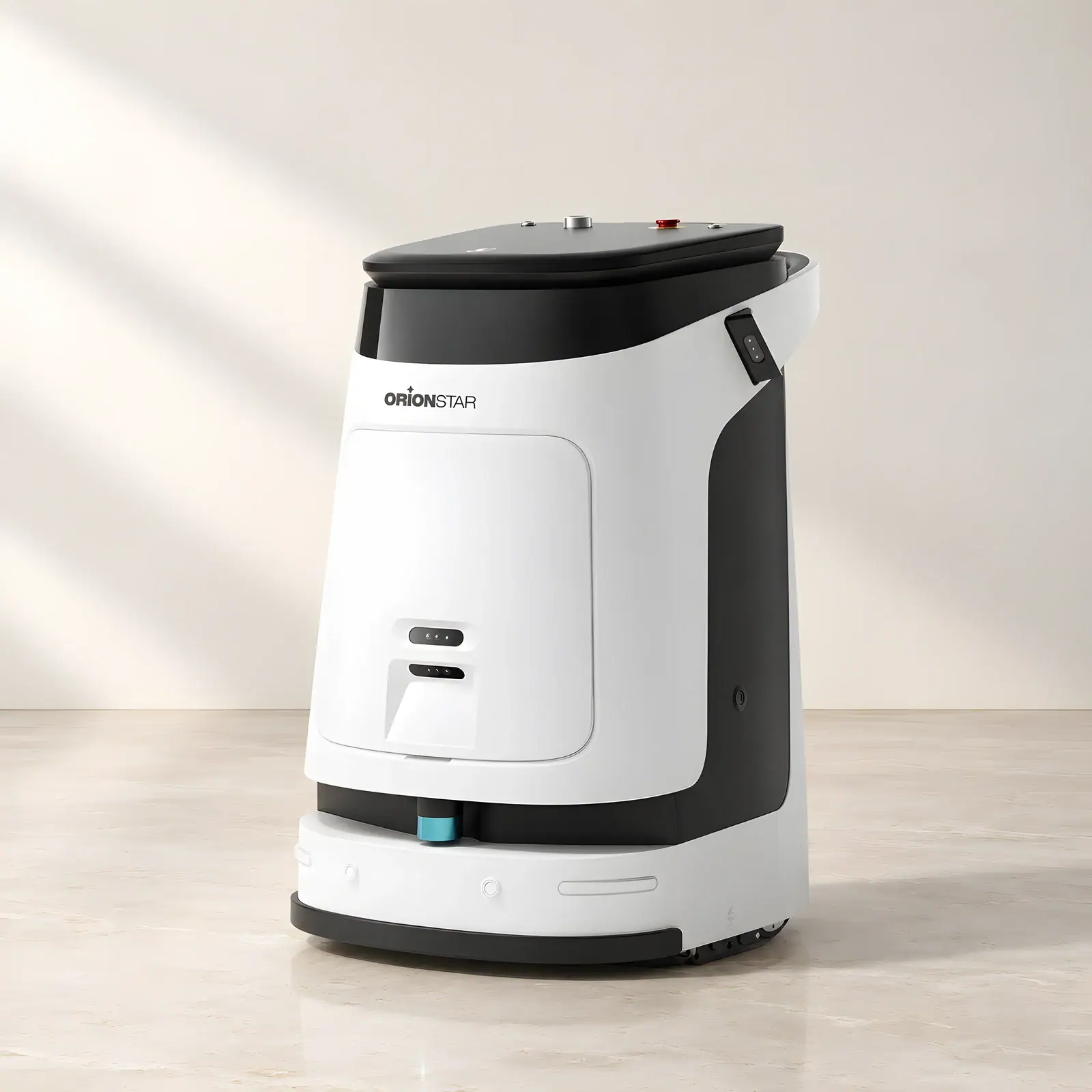
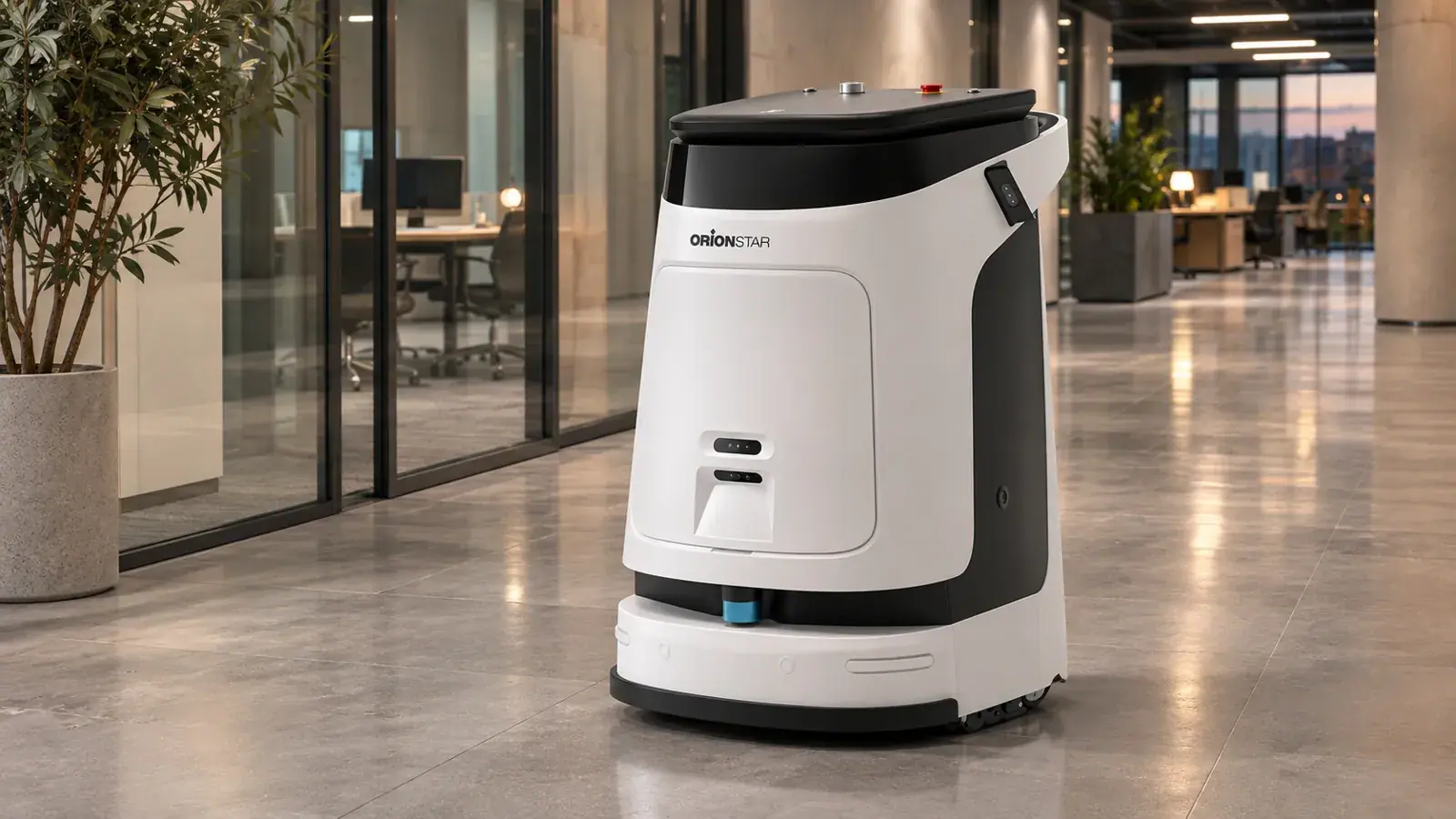
There is more to floor scrubbing than pushing a machine across tiles. Someone has to fill the tank, empty dirty water, charge the battery and make sure the equipment is ready for the next shift. In a busy building, those supporting jobs can interrupt the cleaning routine almost as often as the cleaning itself.
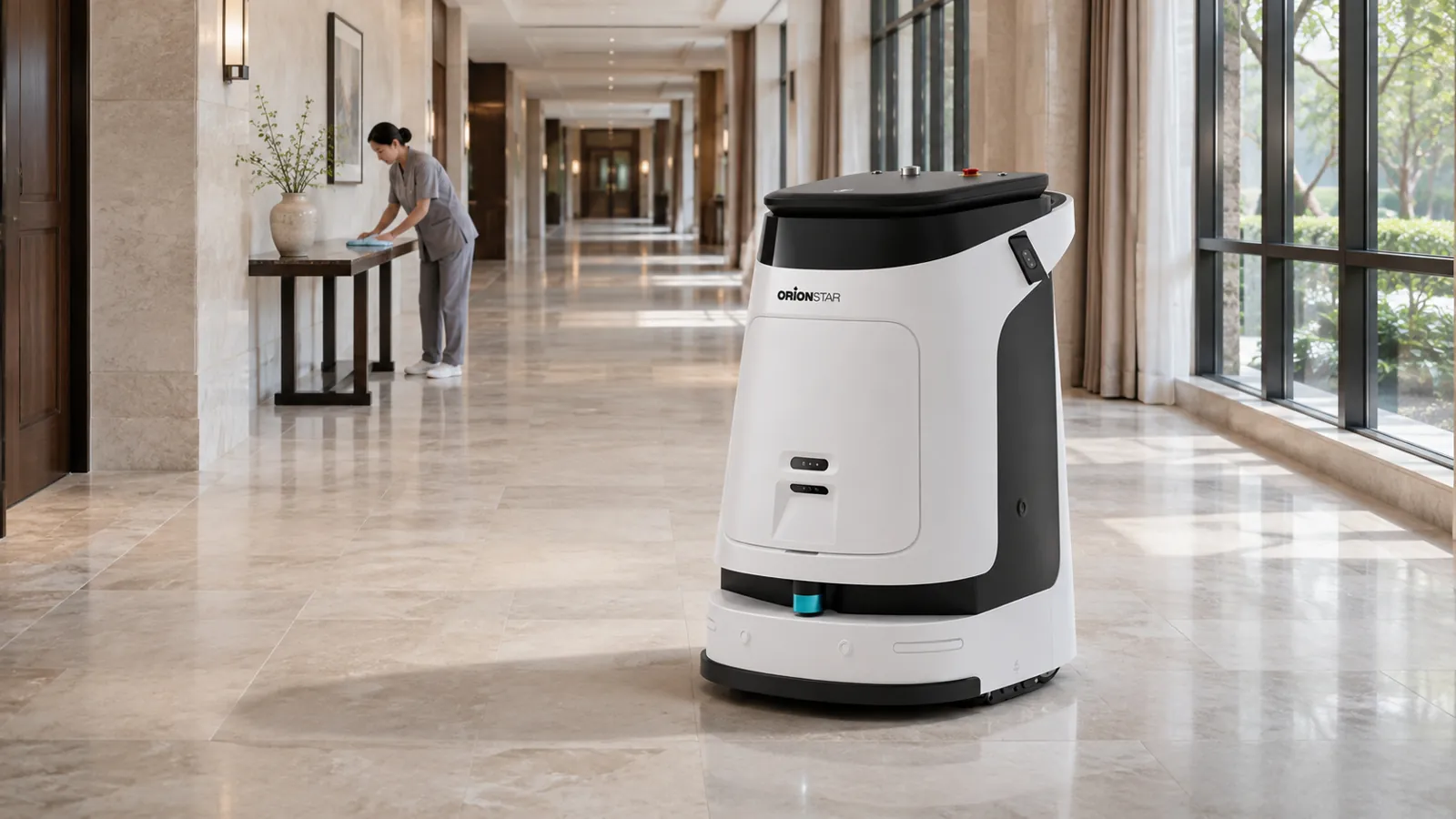
The OrionStar CleaniBot M1 is designed to reduce that repeated intervention. It combines autonomous floor cleaning with support for a dedicated water station, allowing the robot to refill clean water, drain wastewater and recharge as part of its operating cycle.
For businesses with sizeable hard-floor areas, the OrionStar CleaniBot M1 offers a practical route towards more consistent maintenance and fewer manual trips back to the cleaning cupboard.
How the OrionStar CleaniBot M1 cleans
The M1 uses a 500 mm floating dual-roller brush system. In everyday terms, the brushes provide the mechanical action that helps loosen dirt, while the floating design helps maintain contact with the floor.
A 680 mm auto-lifting squeegee collects the water behind the cleaning area. This water-recovery stage matters: wet cleaning is only useful in a working building if the result is suitable for people to walk on. Staff should still inspect the finish and manage access where necessary, especially when commissioning a new route.
The robot also supports dust mopping and water absorption. These functions give the team options for different maintenance tasks, but its main attraction is regular automated care of compatible hard floors. It is not a substitute for a carpet vacuum simply because both machines are called cleaning robots.
The water station changes the daily workflow
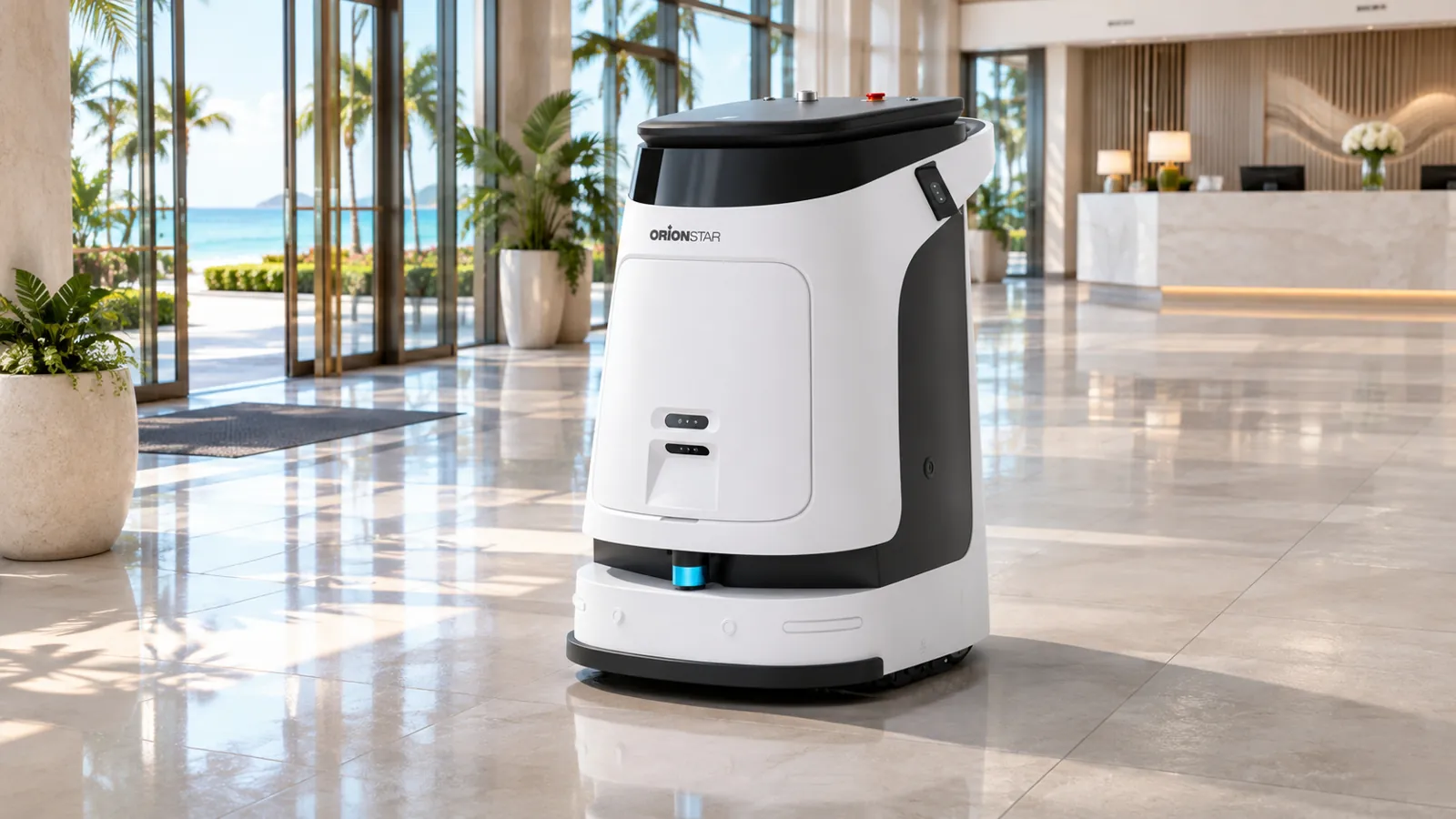
The M1 carries 35 litres of clean water and has a separate 33-litre wastewater tank. Without an agreed replenishment process, even a capable scrubber will eventually need an operator to step in.
With the dedicated station installed and configured, the M1 can return for water refilling, drainage and charging. That reduces routine handling and makes scheduled cleaning more practical across a longer working day.
The station needs to be considered when planning the installation. Its location should give the robot a clear approach, provide the required utilities and avoid obstructing staff or visitors. A convenient location can also reduce unproductive travel between cleaning zones and the service point.
This is one reason to assess the complete installation rather than compare robot prices alone. The right combination of machine, station and layout determines how much daily work is actually automated.
What the capacity figures mean for your building
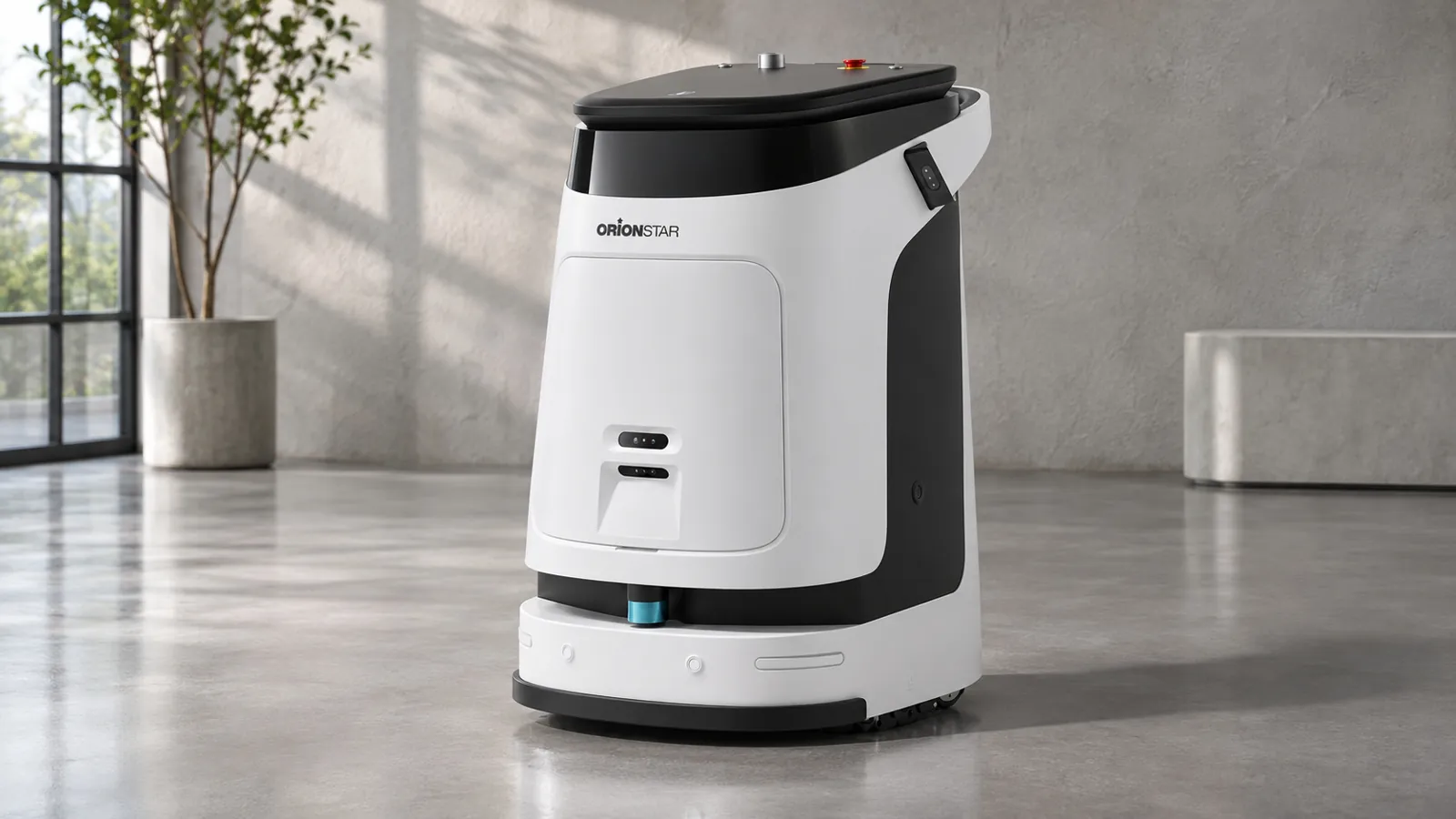
The stated maximum cleaning rate is up to 1,200 m² per hour. In a real facility, usable output will depend on the layout, cleaning settings and interruptions. Repeated turns around furniture take time, while a clear corridor allows more continuous progress.
Runtime is approximately 3.5 hours in scrubbing mode and up to eight hours in dust-mopping mode. Charging takes approximately two hours. These figures describe different operating conditions; eight hours of dust mopping does not mean eight hours of wet scrubbing.
Access deserves the same attention as capacity. The published minimum passing width is 780 mm, and the robot weighs approximately 121.7 kg without a load. It is equipment to deploy thoughtfully on a suitable floor, rather than something staff should plan to carry between levels.
A better division of work for the cleaning team
An office building offers a straightforward example. The M1 could follow a scheduled route through compatible circulation areas while cleaners concentrate on washrooms, touchpoints and detailed work around furniture. Scheduled tasks and digital reports help the supervisor organise that division and check whether the expected areas were covered.
People still need to inspect brushes, maintain the squeegee, review alerts and check cleaning quality. The benefit is fewer repetitive operating tasks, allowing staff to give more attention to the parts of the building that need judgement and hands-on care.
The OrionStar CleaniBot M1 is particularly worth assessing when regular scrubbing and routine water handling consume a meaningful part of the team’s day. Reef Robotics can help compare it with other autonomous cleaning robots, plan the installation and train the team to run it confidently. The goal is a machine that fits the existing operation and makes that operation easier to manage.