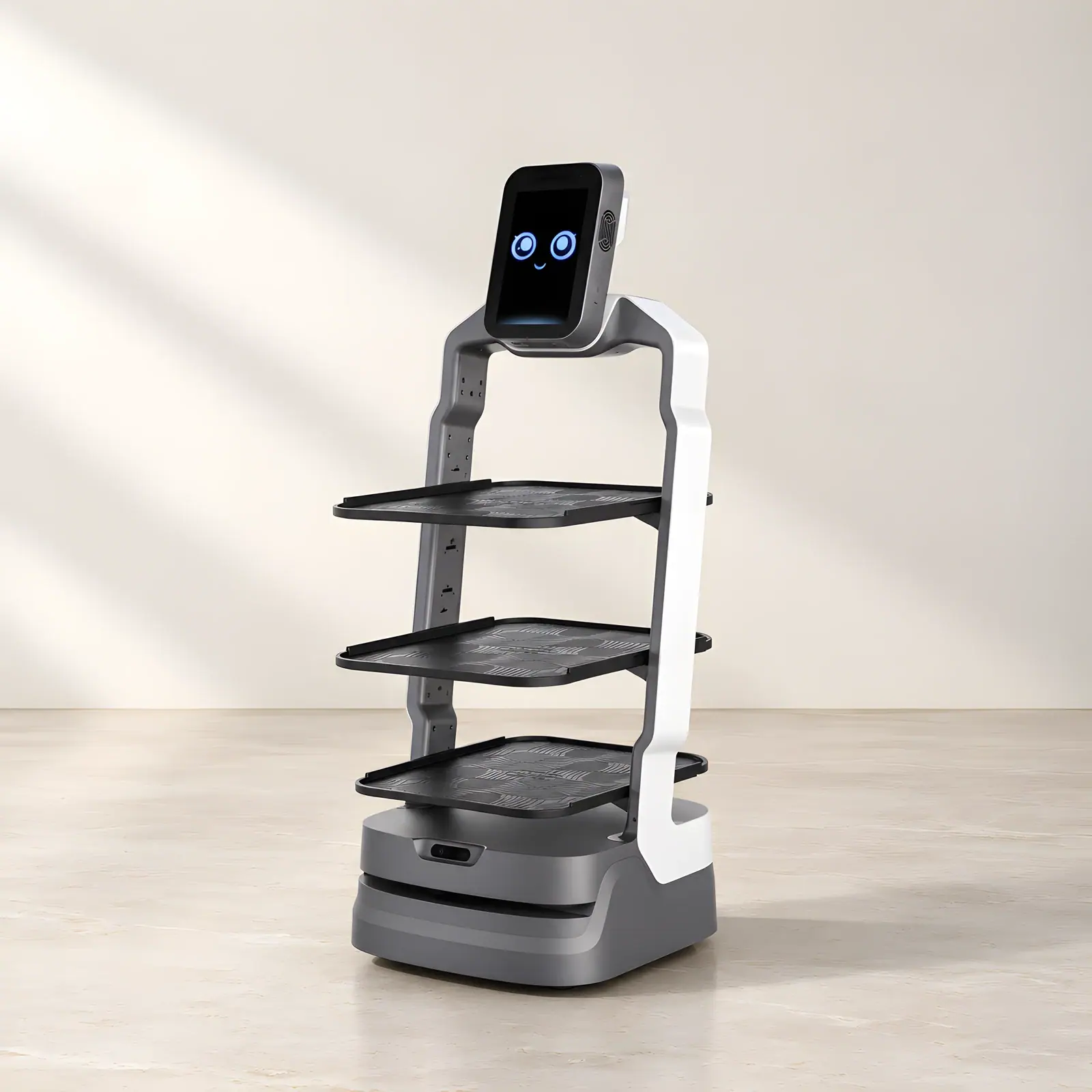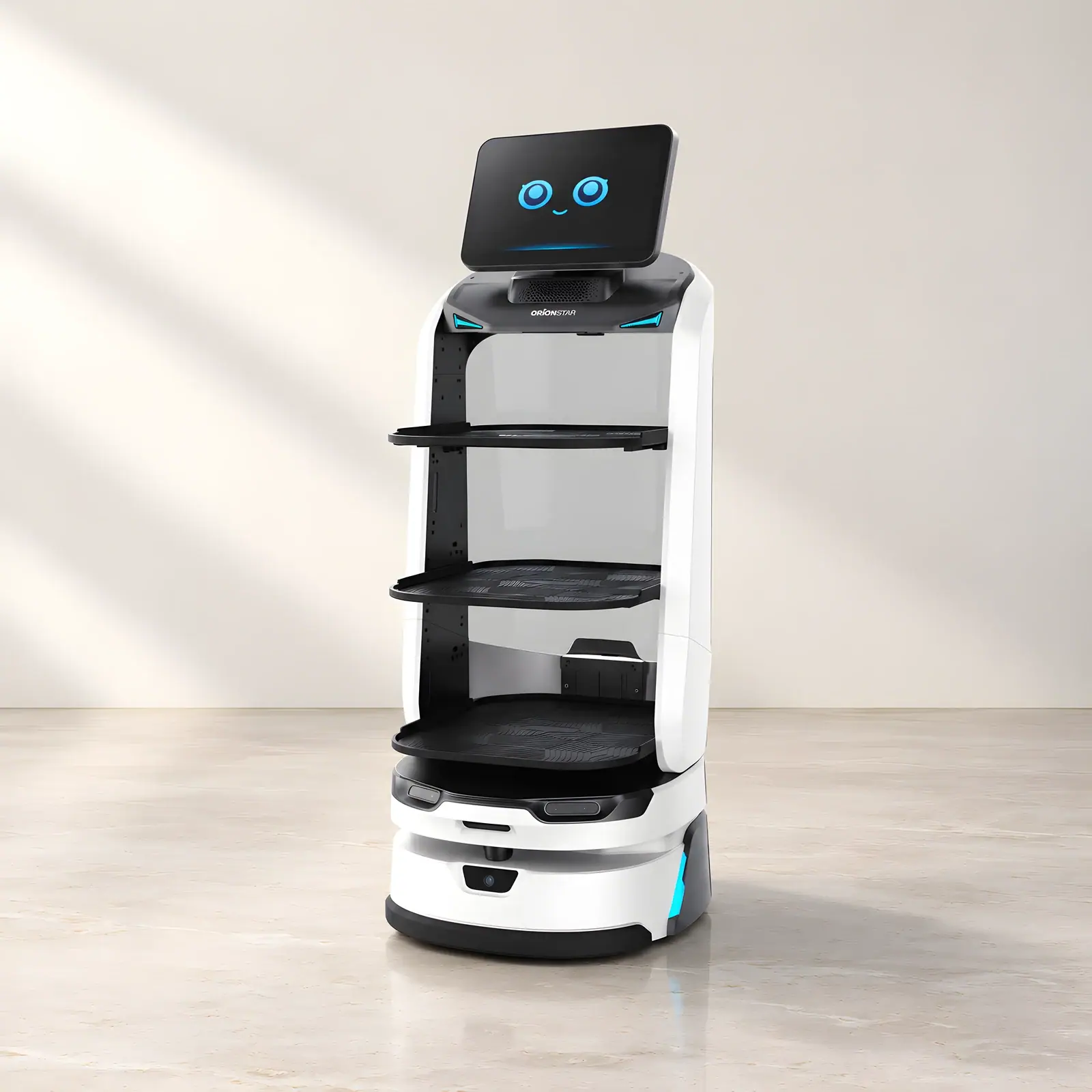
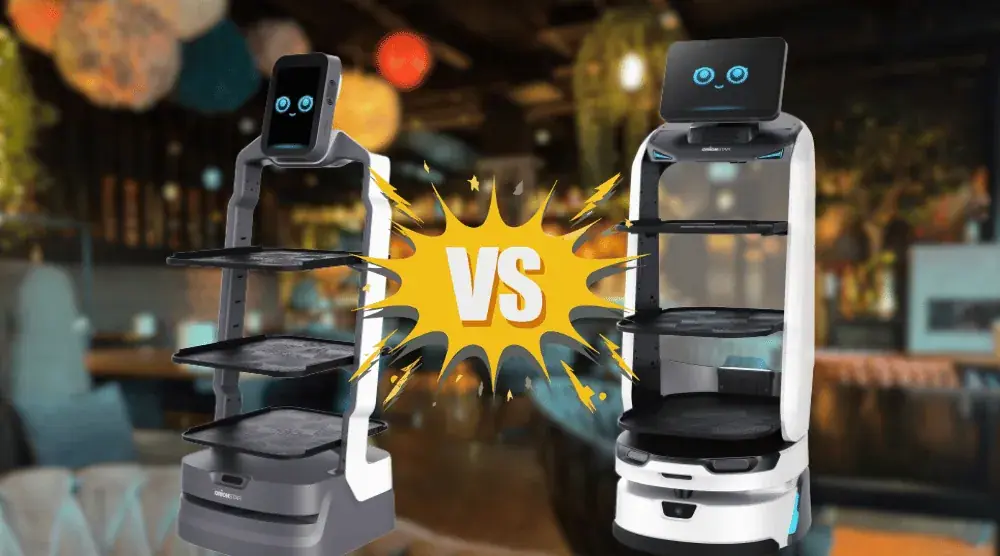
When venues in Cyprus consider automation, one of the first questions is: Which restaurant robot model fits our needs? Reef Robotics offers two strong contenders from the OrionStar lineup — LuckiBot and LuckiBot Pro. Both are reliable service robots, but choosing the right one depends on your volume, layout, and service demands.
This comparison helps you decide which model works best for your venue.
Quick Comparison Table
| Feature | LuckiBot | LuckiBot Pro |
|---|---|---|
| Screen size | 10-inch touchscreen | 14-inch touchscreen |
| Tray capacity | Up to 40 kg (up to 4 trays × 10 kg) | Up to 60 kg (up to 4 trays × 15 kg) |
| Battery life | ~10 hours | ~12+ hours |
| Auto charging | No | Yes |
| LiDAR coverage | Standard | 240° field of view |
| Suspension system | Standard | Advanced, smoother motion |
| Obstacle detection | Yes | Yes |
| Adjustable speed | Yes | Yes (0.5–1.2 m/s, zoning) |
| Best for | Small to mid-size venues | Mid to high-volume venues |
Both models share a durable platform, reliable navigation, and intuitive controls. But there are key differences that make one a better match depending on how you want to use the service robot in your restaurant or hotel.
LuckiBot – Smart Choice for Standard Service
LuckiBot is the base restaurant robot model. It is designed to handle core service tasks without complexity.
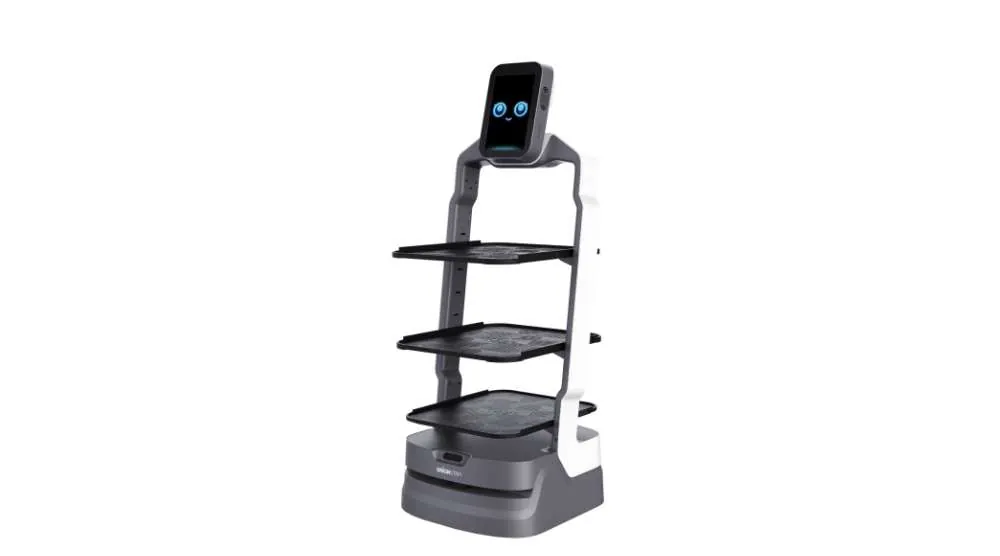
Why Choose LuckiBot?
- Simplicity: Easy to use right out of the box.
- Strong performance: Carries up to 40 kg across four trays.
- Long battery life: Lasts around 10 hours, enough for most shifts.
- Flexible control: Operated via touchscreen, mobile app, or web platform.
Best Use Cases
Small to medium-sized restaurants. If you run a 30–60 seat restaurant with straightforward service patterns, LuckiBot handles food delivery, plate returns, and basic drink runs effectively. It minimizes staff walking and helps maintain steady service.
Hotel breakfast and lunch areas. For buffet or light service periods, LuckiBot smooths delivery and collection without overwhelming your team with complex configuration.
Casual venues with predictable flow. Places with consistent traffic and simple routing benefit from LuckiBot’s balance of capability and simplicity.
Pros and Cons
Pros:
- Affordable entry point
- Easy setup and operation
- Long battery life
- Reliable in standard layouts
- Easy to use with mobile app
Cons:
- No automatic return to charging base
- Less sophisticated obstacle scanning
- Smaller screen
If your operations are predictable and your layout is straightforward, LuckiBot is a solid restaurant robot choice.
LuckiBot Pro – High Performance for Busy Venues
LuckiBot Pro builds on the standard model with performance features designed for higher operational demands.
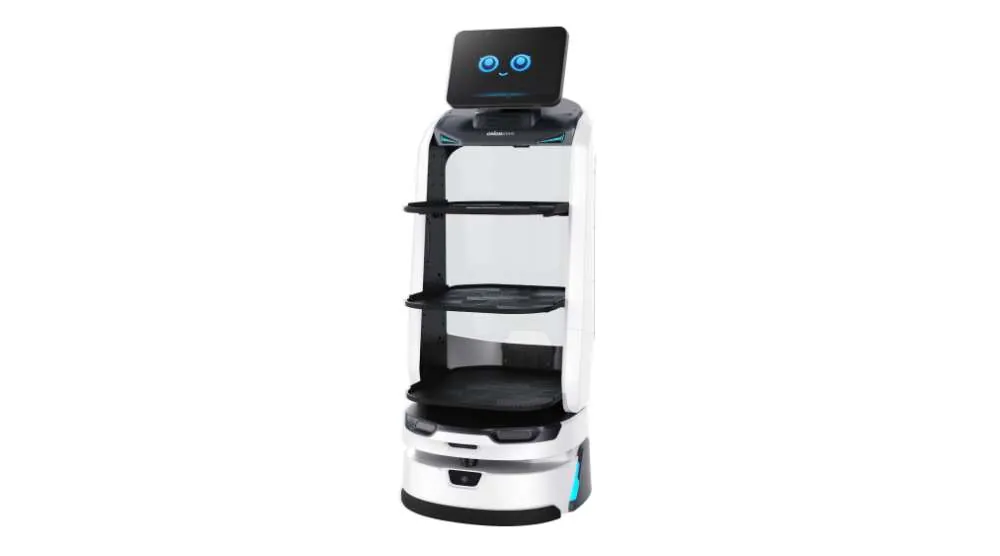
Key Enhancements
- Longer battery life: Over 12 hours with smart power management.
- Automatic charging: Robot returns to the dock without human intervention.
- Bigger screen: 14-inch display for clearer controls and messaging.
- Advanced suspension: Smoother movement with delicate items.
- Enhanced LiDAR & detection: 240° view with camera checks for tray pickup.
- Adjustable speed & zoning: Tailor speed based on area (slow near bar, faster in corridors).
Best Use Cases
High-volume restaurants. Venues with heavy dinner service or large party bookings get reliable performance even under continuous operation.
Hotels with extended service hours. When breakfast, lunch, dinner, and room service all demand support, LuckiBot Pro’s longer battery and auto charging keep it active throughout the day.
Complex layouts. If your venue has multiple zones, corridors, or outdoor areas, Pro’s advanced sensors and adjustable routing help navigate without disruptions.
Mixed delivery needs. For places that handle drinks, soups, and delicate plates routinely, the smoother suspension and intelligent speed control make a noticeable difference.
Pros and Cons
Pros
- Longer autonomous operation
- Automatic return for charging
- Better obstacle awareness
- Speed control and zoning
- Enhanced attitude and handling
- Easy to use with mobile app
Cons
- Higher upfront cost
LuckiBot Pro is ideal when operational demands are high and consistency matters most.
Decision Rules: Which Fits Your Venue?
To simplify the choice, consider these rules of thumb:
Venue Size & Traffic
- Small to mid-size (30–60 seats): LuckiBot usually covers needs.
- Larger or high turnover (60+ seats): LuckiBot Pro delivers extra reliability.
Service Intensity
- Standard lunch/dinner flow: LuckiBot streamlines deliveries.
- Extended or continuous service (hotel all-day, banquet events): Pro’s longer life and auto charging keep it working without gaps.
Layout Complexity
- Simple floor plan: LuckiBot moves easily.
- Multiple zones, terraces, narrow passageways: Pro’s advanced navigation handles complexity better.
Service Types
- Food only and plate returns: LuckiBot is efficient.
- Drink runs, delicate items, mixed orders: Pro’s suspension and speed control reduce spills and delays.
Example Use Scenarios
Restaurant A – Casual Mediterranean Bistro
- 40 seats
- Standard lunch and dinner flows
- Straightforward floor plan with one dining area
Recommended: LuckiBot
This robot meets service needs, reduces staff walking, and improves consistency without unnecessary complexity.
Hotel B – Boutique Hotel with Room Service
- Breakfast buffet area
- A-la-carte lunch and dinner
- Room service in evening
Recommended: LuckiBot Pro
Extended hours, multiple service zones, and mixed delivery types make Pro the better fit.
Restaurant C – Large Terrace and Indoor Hybrid
- 80 seats
- Terrace plus indoor zones
- Seasonal rush and event bookings
Recommended: LuckiBot Pro
Advanced sensors and zoning help Pro manage mixed environments smoothly.
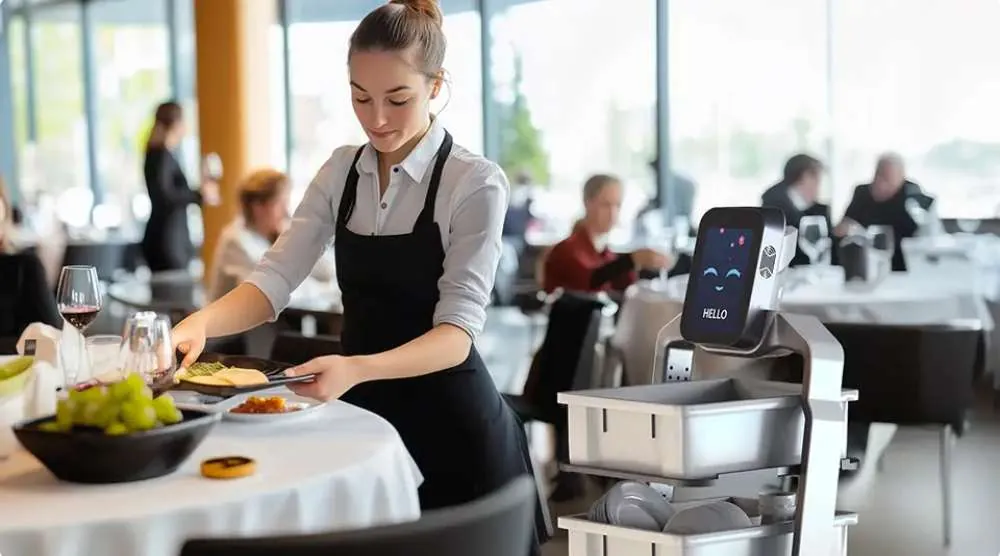
Smart Service Robots
Both LuckiBot and LuckiBot Pro are strong restaurant robot options. The right model depends on your venue’s size, complexity, and service intensity.
- Choose LuckiBot for straightforward, efficient, and reliable support in standard service environments.
- Choose LuckiBot Pro when your operations demand extended uptime, advanced navigation, and fine-tuned control.
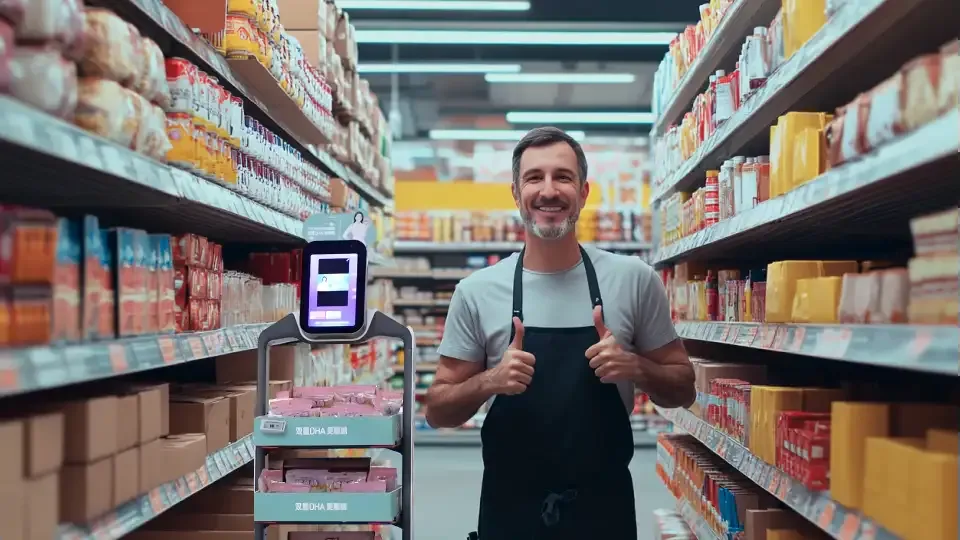
Each model reduces staff strain and enhances operational flow — letting your team focus on guests while the robot handles logistics.
Request a live demo to see how each model performs inside your venue and get tailored recommendations.