
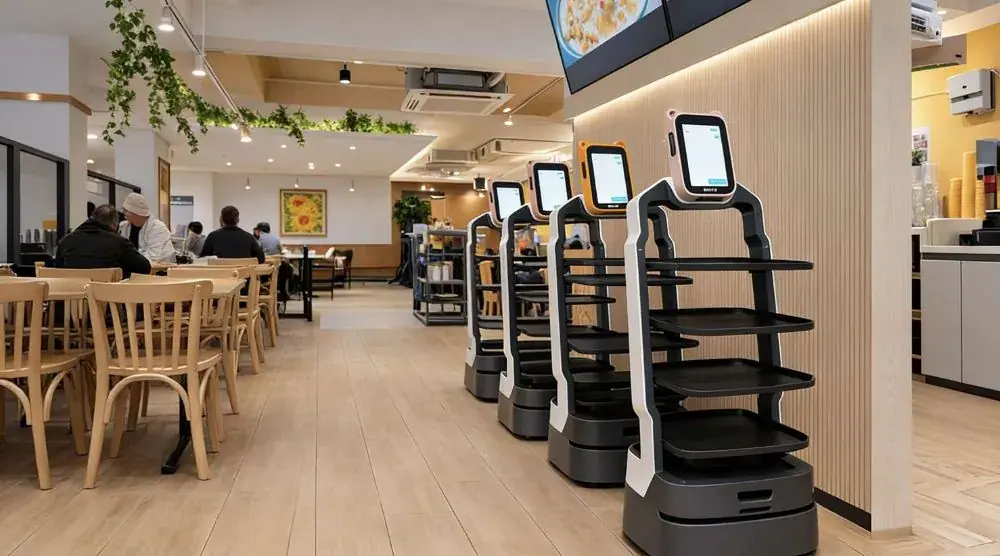
Lunch service is often the most intense part of the day for many restaurants. Guests arrive quickly, tables turn fast, and the kitchen pushes out dishes continuously. During these busy hours, even small delays can affect service quality.
This is where a restaurant robot can make a visible difference. Instead of replacing staff, a service robot supports the team by handling repetitive movement between the kitchen and tables. Below is a realistic example of how a lunch shift might work in a mid-size restaurant using a restaurant robot.
11:15 – Pre-Service Preparation
Before lunch service begins, the team performs basic setup. The restaurant robot is taken from its charging station and activated. The map of the restaurant is already stored in the system, so no new setup is required. The robot automatically recognizes key points such as:
- the kitchen pass
- table zones
- the dish return area
- the charging station
Staff run a quick test delivery to confirm everything is working properly. The robot moves from the kitchen to a test table and returns smoothly.
This short preparation usually takes less than two minutes. Meanwhile, the waitstaff focus on preparing the dining room, checking reservations, and organizing menus.
12:00 – First Guests Arrive
Lunch service begins gradually. The first tables are seated and orders start reaching the kitchen. Once the first dishes are ready, the kitchen places them on the robot’s trays. The service robot can carry multiple plates at the same time, allowing one trip to serve several tables.
A waiter walks alongside the robot during the first delivery to greet guests and place dishes on the table. This keeps the service personal while reducing unnecessary walking. Instead of making multiple trips from the kitchen, the waiter handles several tables in a single movement.
12:30 – The Lunch Rush Begins
By 12:30 the restaurant is nearly full. Orders are arriving quickly and the kitchen is operating at full pace. This is where the restaurant robot becomes especially useful.
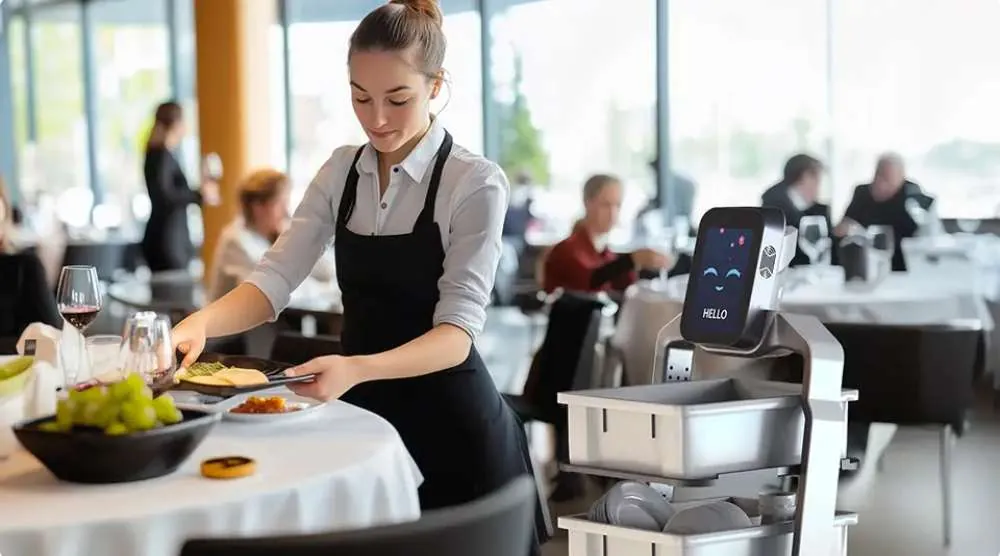
The robot begins making continuous delivery loops:
- The kitchen loads several plates onto the trays.
- The robot travels to the dining area.
- Staff remove dishes and serve guests.
- The robot returns to the kitchen for the next delivery.
Because the robot follows optimized routes, it moves efficiently through the restaurant without blocking staff pathways. During this period, the robot might complete 10-15 delivery cycles per hour. Without the robot, these tasks would require a waiter constantly walking between kitchen and dining room.
13:00 – Plate Returns and Clearing Tables
As guests finish their meals, another repetitive task appears: returning used plates to the dishwashing area. Instead of carrying stacks of dishes by hand, staff place them onto the robot trays. The service robot then transports them directly to the dishwashing station.
This reduces physical strain on staff and keeps the dining room organized. It also saves time. Waiters can immediately return to guests instead of walking long distances to the kitchen.
13:30 – Peak Service Coordination
At the height of lunch service, the restaurant team works like a coordinated system. The robot handles logistics while staff focus on guests.
Typical division of tasks looks like this:
Restaurant robot
- food delivery from kitchen to tables
- returning plates to dishwashing
- transporting drinks or supplies
Restaurant staff
- greeting and seating guests
- taking orders
- explaining dishes
- handling payments
- solving guest requests
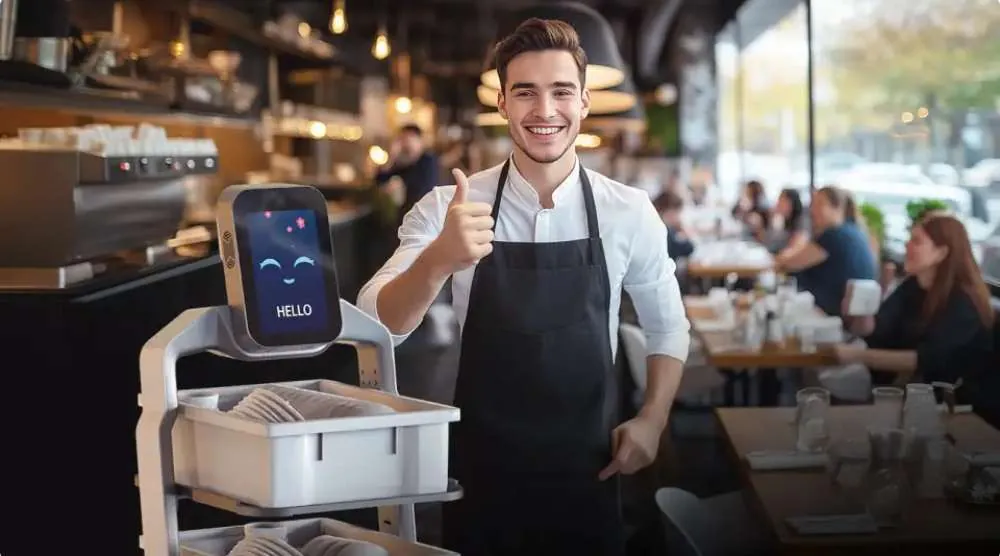
This combination improves service flow. Staff spend more time interacting with guests rather than walking back and forth.
14:00 – Service Stabilizes
As the lunch rush slows down, the robot continues helping with table clearing and final deliveries. By this point, the team can clearly feel the operational benefits.
In a typical lunch shift, the robot may handle dozens of delivery and return trips. This can easily save around four hours of staff walking time per day in a busy restaurant. That time is not lost. Instead, it is redirected toward guest service and smoother operations.
14:30 – End of Lunch Service
When lunch service ends, the robot returns to its charging station. Staff complete normal closing tasks: cleaning tables, resetting the dining room, and preparing for the evening shift.
Because the robot handled much of the transport work during the rush, the team finishes the shift with less fatigue.
Why This Workflow Matters
A restaurant robot does not replace human hospitality. Guests still expect interaction, recommendations, and a friendly atmosphere. What the service robot does is remove repetitive movement from the workflow. By handling deliveries and returns, it allows staff to focus on the parts of service that truly matter.
For many restaurants, this results in:
- faster service during peak hours
- reduced staff strain
- more consistent delivery between kitchen and tables
- better overall guest experience
See It in Action
Every restaurant layout is different, and the best way to understand the value of a robot is to see how it works in a real environment.
Contact Reef Robotics to schedule a demonstration and explore how a restaurant robot could support your lunch service.
