

Introducing a service robot into a hospitality environment can significantly improve efficiency, but only when the deployment is handled correctly. Many venues expect immediate results and underestimate how operational decisions impact performance. In practice, most issues are not caused by the robot itself, but by how it is implemented, configured, and integrated into daily workflows. Understanding common deployment mistakes helps avoid downtime, frustration, and underutilization, ensuring the robot delivers its intended value from day one.
1. Poor Environment Mapping
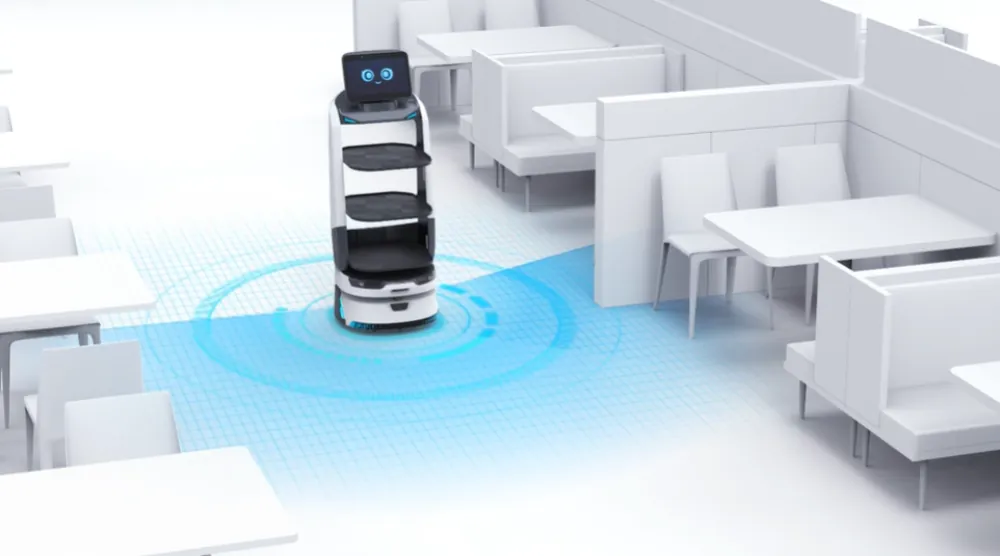
One of the most frequent mistakes is rushing through the mapping phase. A robot relies on accurate spatial data to navigate safely and efficiently. If the map is incomplete, outdated, or created under suboptimal conditions, the robot may struggle with route planning, obstacle avoidance, or docking.
Mitigation starts with taking the mapping process seriously. The environment should be prepared in advance, with clear pathways, minimal temporary obstacles, and consistent layout conditions. It is also important to revisit and update the map when furniture is rearranged or service areas change. A well-mapped environment allows the service robot to operate smoothly and predictably.
2. Lack of Staff Buy-In
Even the most advanced system will underperform if the team is not aligned. When staff view the robot as a complication rather than a tool, adoption slows down. In some cases, it may even be ignored during service.
The solution is early involvement. Staff should be introduced to the robot before it is deployed, with clear explanations of its role and benefits. Demonstrations, hands-on sessions, and open discussion help build familiarity and reduce uncertainty. When the team understands that the robot is there to support them, not replace them, adoption improves significantly.
3. No Defined Use Cases
Another common issue is deploying the robot without clearly defining when and how it should be used. Without guidelines, the robot may be used inconsistently or only in limited situations, reducing its impact.
A structured approach is necessary. Define specific tasks such as food delivery, plate return, or internal logistics, and assign them to the robot. Establish when it should be used during peak hours versus quieter periods. Clear use cases ensure that the service robot becomes an active part of operations rather than an occasional tool.

4. Ignoring Workflow Integration
A robot does not operate in isolation. It needs to fit into existing workflows, including kitchen processes, service routes, and communication between staff. One of the most overlooked deployment mistakes is treating the robot as an add-on rather than integrating it into the operational flow.
Mitigation involves analyzing how tasks currently move through the venue and identifying where the robot can naturally take over repetitive movement. Routes should be aligned with staff behavior, not forced into existing processes without adjustment. When integration is done properly, the robot enhances workflow instead of disrupting it.
5. No Maintenance or Monitoring Plan
A service robot is reliable, but like any equipment, it requires routine care. Without a maintenance plan, small issues can accumulate over time, eventually leading to performance degradation or unexpected downtime.
To avoid this, establish a simple maintenance routine that includes daily checks, periodic cleaning, battery monitoring, and software updates. Assign responsibility within the team or work with a support provider that offers ongoing monitoring. Regular maintenance ensures consistent performance and extends the lifespan of the robot.
6. Overloading the Robot Beyond Its Role
Expecting the robot to handle tasks outside its intended scope is another common mistake. While a service robot can assist with transportation and repetitive tasks, it is not designed to replace human judgment or handle complex interactions.
Clear boundaries should be defined from the beginning. Use the robot for what it does best — consistent movement and delivery – and allow staff to manage guest interaction, decision-making, and exceptions. When roles are respected, both the robot and the team perform at their best.
7. Lack of Performance Tracking
Without monitoring, it is difficult to understand whether the robot is delivering value. Some venues deploy a robot but never measure its impact on operations, which makes optimization impossible.
Basic metrics such as number of deliveries, distance covered, time saved, or table turnover improvements can provide valuable insights. Tracking performance allows managers to refine usage patterns and identify opportunities for improvement. A data-driven approach ensures that the service robot continues to contribute effectively over time.
Quick Recovery Checklist
If a robot is already deployed but not performing as expected, a structured review can help identify and resolve issues quickly. Start by verifying that the map reflects the current layout of the venue. Check whether staff are actively using the robot during appropriate tasks and whether they have been properly trained. Review workflows to ensure the robot is integrated into daily operations rather than operating separately.
It is also important to confirm that maintenance routines are being followed and that the robot’s software is up to date. Finally, evaluate whether usage is aligned with the robot’s intended role. In many cases, small adjustments in these areas can significantly improve performance without requiring major changes.
Reef Robotics – Your Robot Partner in Cyprus
Deploying a service robot successfully is less about the technology itself and more about preparation, alignment, and ongoing management. Most deployment mistakes stem from gaps in planning or communication rather than limitations of the system.
When mapping is accurate, staff are engaged, workflows are aligned, and maintenance is consistent, the robot becomes a reliable part of daily operations. Avoiding these common pitfalls ensures that the investment translates into measurable improvements in efficiency and service quality.
Contact Reef Robotics to review your deployment setup and ensure your service robot operates at its full potential.