
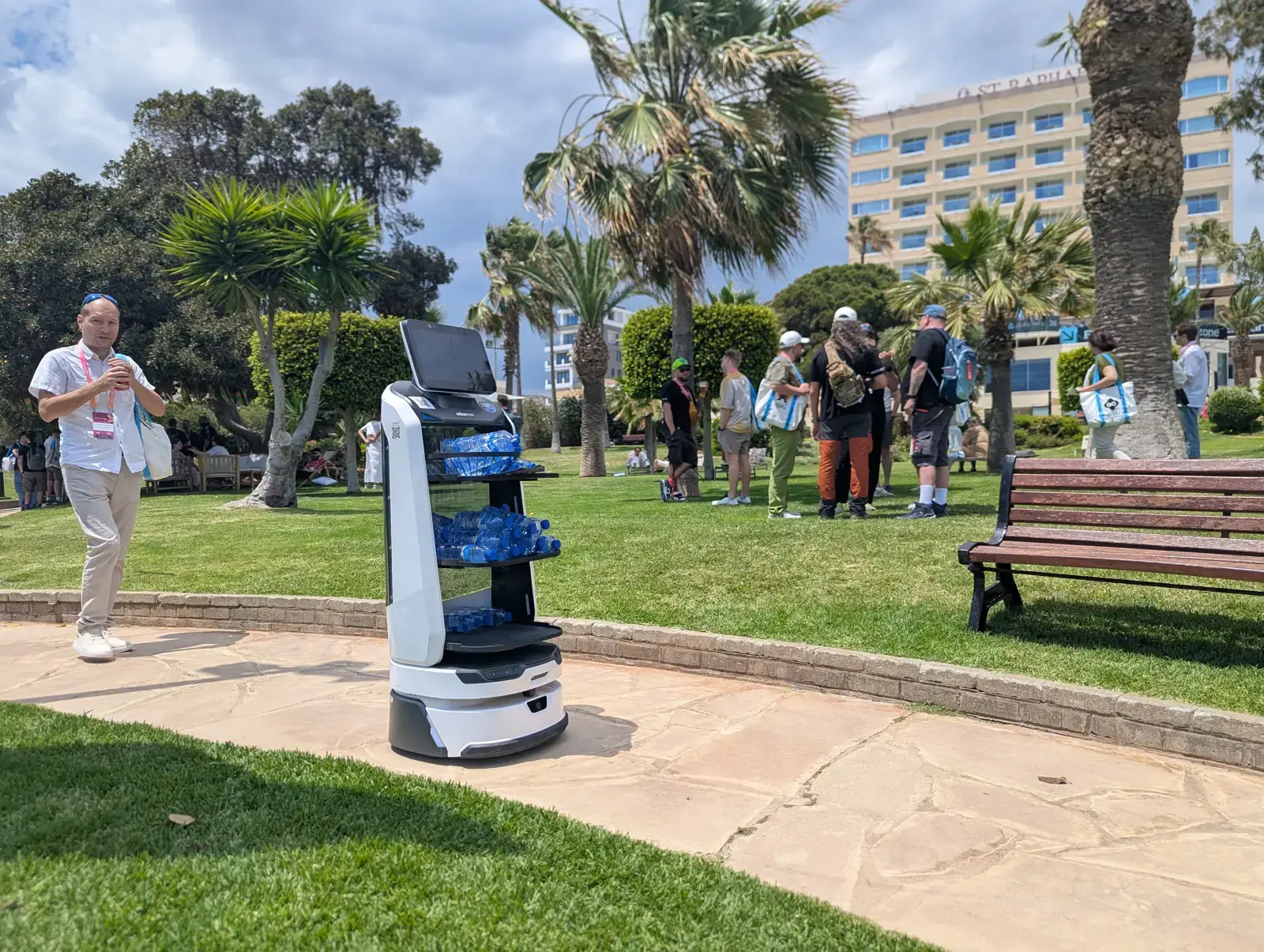
A restaurant robot is only useful when it is ready exactly when your team needs it. During lunch rush, evening service, hotel events, or long exhibition days, battery performance becomes part of the operation. Good battery management is not complicated, but it directly affects reliability, uptime, and staff confidence.
A well-managed robot should not surprise the team. It should work through the shift, return to charge when needed, and stay available for the next service window. This is especially important in venues that use a restaurant robot for many hours at a time, such as hotels, busy restaurants, and event spaces in Cyprus.
Why Battery Management Matters
Most professional service robots are designed for long operating hours. But real performance depends on usage. A robot carrying heavy loads, moving constantly, or operating in a large venue will use more energy than one working shorter routes in a compact space.

This is why battery management should be planned as part of daily workflow. The goal is not to think about the battery all day. The goal is to build a routine that keeps the robot ready without interrupting service. When the team understands charging habits, battery cycles, and auto-return features, the robot becomes much easier to trust during long shifts.
Battery Cycles and Daily Use
A battery cycle refers to the process of discharging and charging the robot’s battery. Like any battery-powered device, long-term health improves when the robot is charged in a stable, consistent way. It is usually better to avoid fully draining the battery every day unless operationally necessary.
For restaurants and hotels, the best approach is to charge during natural downtime. This may be between lunch and dinner service, overnight, or during quieter periods. In event use, the robot should start the day fully charged and return to the dock whenever there is a break in activity.
Good battery care is not about treating the robot delicately. It is about creating predictable routines.
Charging Routines and Auto-Return
Many modern service robots can return automatically to the charging station. This feature is extremely useful during long shifts, because the robot can recharge without staff needing to manually move it.
For best results, the charging station should be placed in a location that is accessible but not disruptive. It should not block staff movement, guest areas, or main service routes. In restaurants, a back-of-house area is often ideal. At events, the dock should be positioned somewhere discreet but easy to reach.
Auto-return works best when the map is clean and routes are properly defined. If the robot can reliably return to base, your team spends less time managing it and more time using it.
Monitoring During Long Shifts
Battery monitoring should become a simple part of shift management. Staff do not need to check it constantly, but someone should know how to read the robot’s battery level, charging status, and basic usage statistics.
This is especially useful during events. If the robot is being used to serve drinks, carry promotional materials, or attract visitors, the team should know when it needs a short charging break. With good planning, this does not reduce impact. It simply keeps the robot working throughout the day.
Battery Care Checklist
- Start every long shift with a full charge.
- Place the charging dock in a clear and accessible area.
- Use natural breaks for top-up charging.
- Avoid regular full battery depletion if not required.
- Keep docking routes clear and tested.
- Monitor battery level during peak use.
- Schedule support if charging becomes slower or inconsistent.
See Robots Working in Real Events
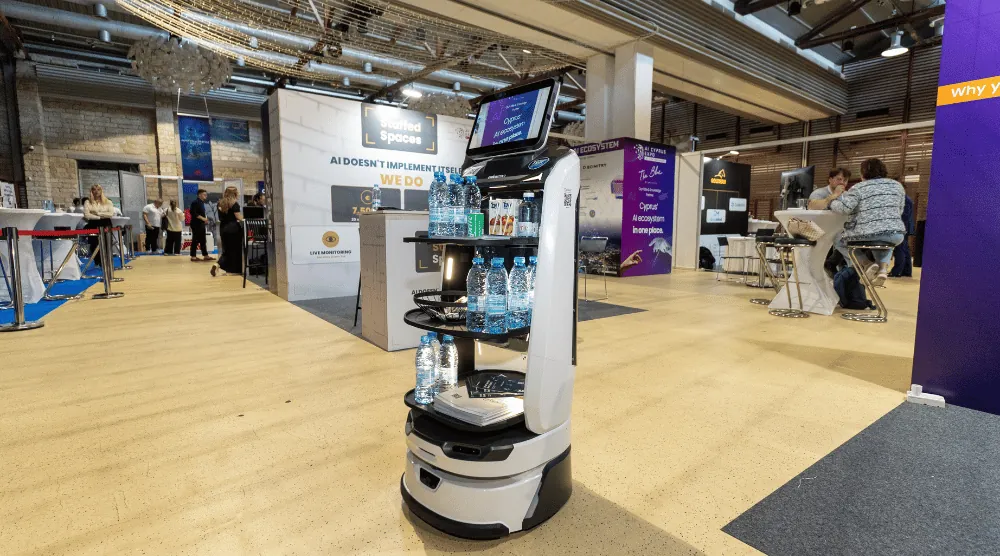
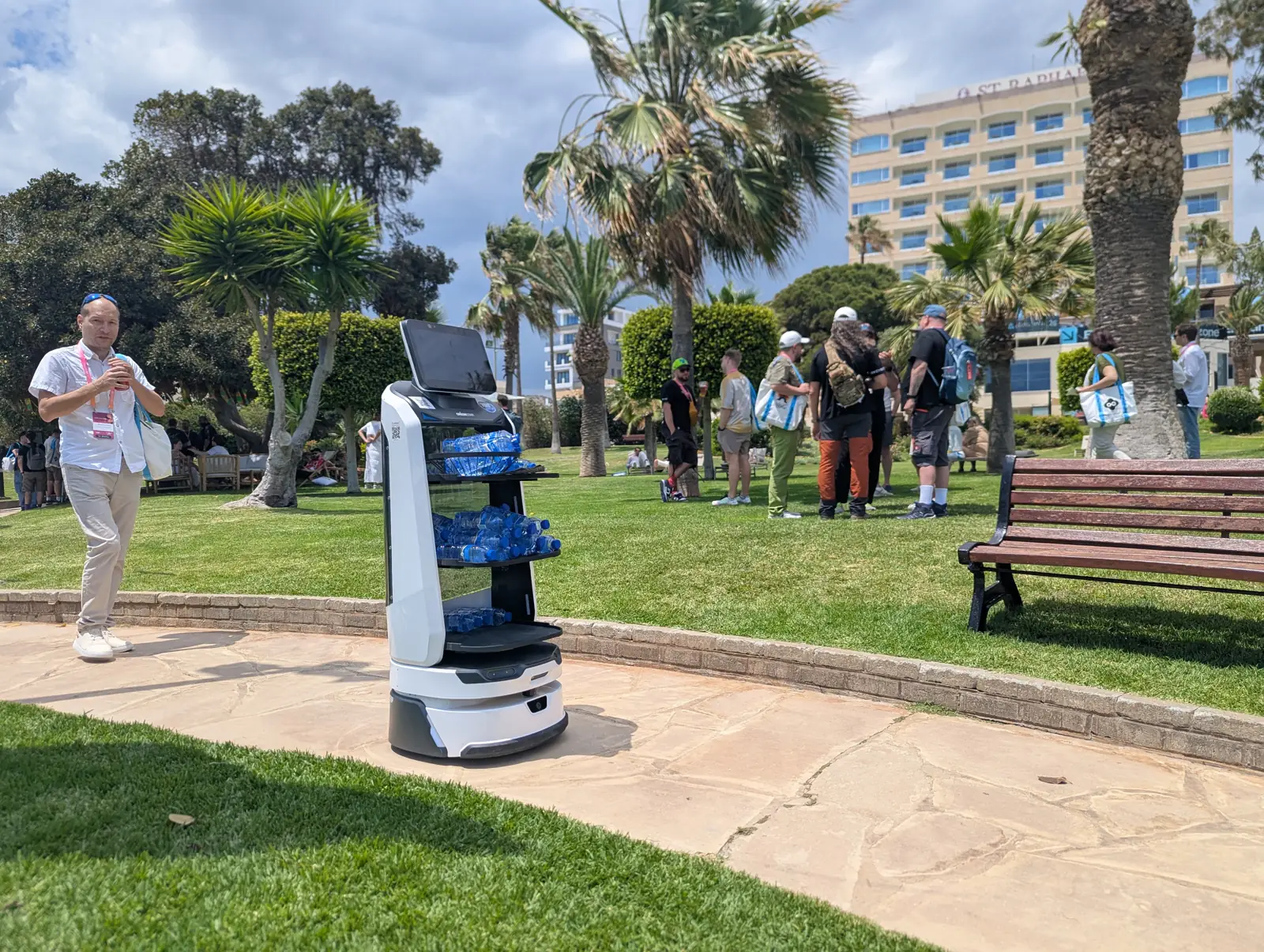
Battery performance matters most when the robot is working in real conditions. You can see examples from our event portfolio here: Doers Summit — robot at a business event, AI Cyprus Expo — LuckiBot Pro in Limassol, and GDCy Fest 2026 — service robot at a tech event.
Keep the Robot Ready When Service Gets Busy
Good battery management is not a technical detail. It is part of making the restaurant robot reliable. With the right charging routine, clear docking setup, and simple monitoring habits, your robot can support long shifts without becoming another thing the team has to worry about.
Contact Reef Robotics for service support, battery guidance, and long-shift setup for your restaurant robot or event robot in Cyprus.
