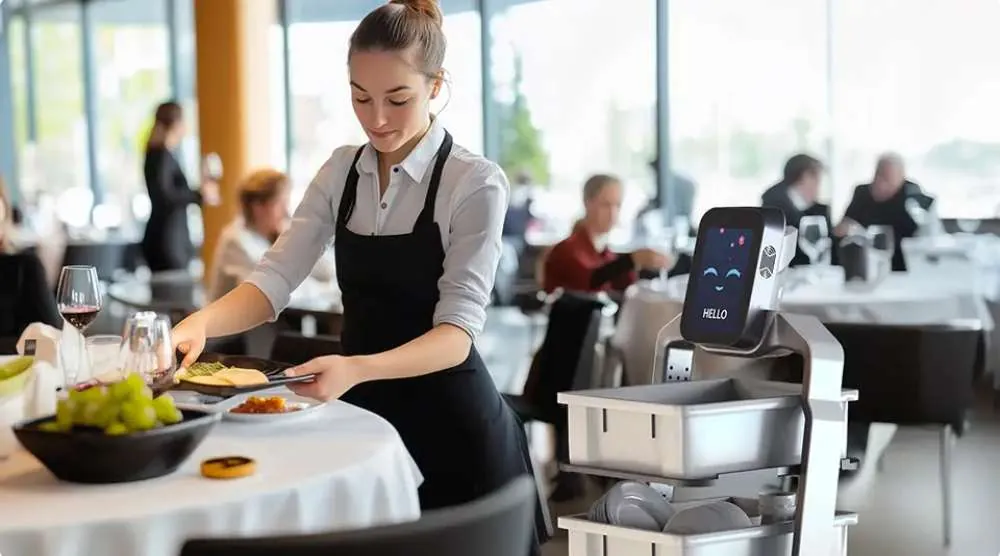

A restaurant robot works best when the food is prepared not only for the guest, but also for transport. This does not mean changing your menu. It means making small adjustments that help dishes arrive safely, cleanly, and consistently.
Robot Delivery – Menu and Plate Design Tips
The first rule is stability. Plates should sit flat on the tray and should not slide easily. For soups, sauces, drinks, or desserts, it is better to use containers with a stable base and enough edge protection. A restaurant robot moves smoothly, but good plate design still matters, especially during busy service.
Tray layout is also important. Heavy items should be placed lower or closer to the center. If one robot carries several orders, each tray should have a clear purpose: one table, one order group, or one service zone. This makes unloading faster and reduces mistakes.
Labeling helps during peak hours. Simple table numbers, order tags, or color-coded notes can make a big difference when staff are handling multiple deliveries at once.
Quick dos and don’ts:
- Do use stable plates and containers.
- Do group orders logically by table or zone.
- Don’t overload trays with unstable items.
- Don’t mix too many tables on one tray without clear labeling.
The goal is simple: let the robot handle movement while your team keeps full control over presentation and guest experience.
Contact Reef Robotics to see how robot delivery works with your menu and plate setup.