
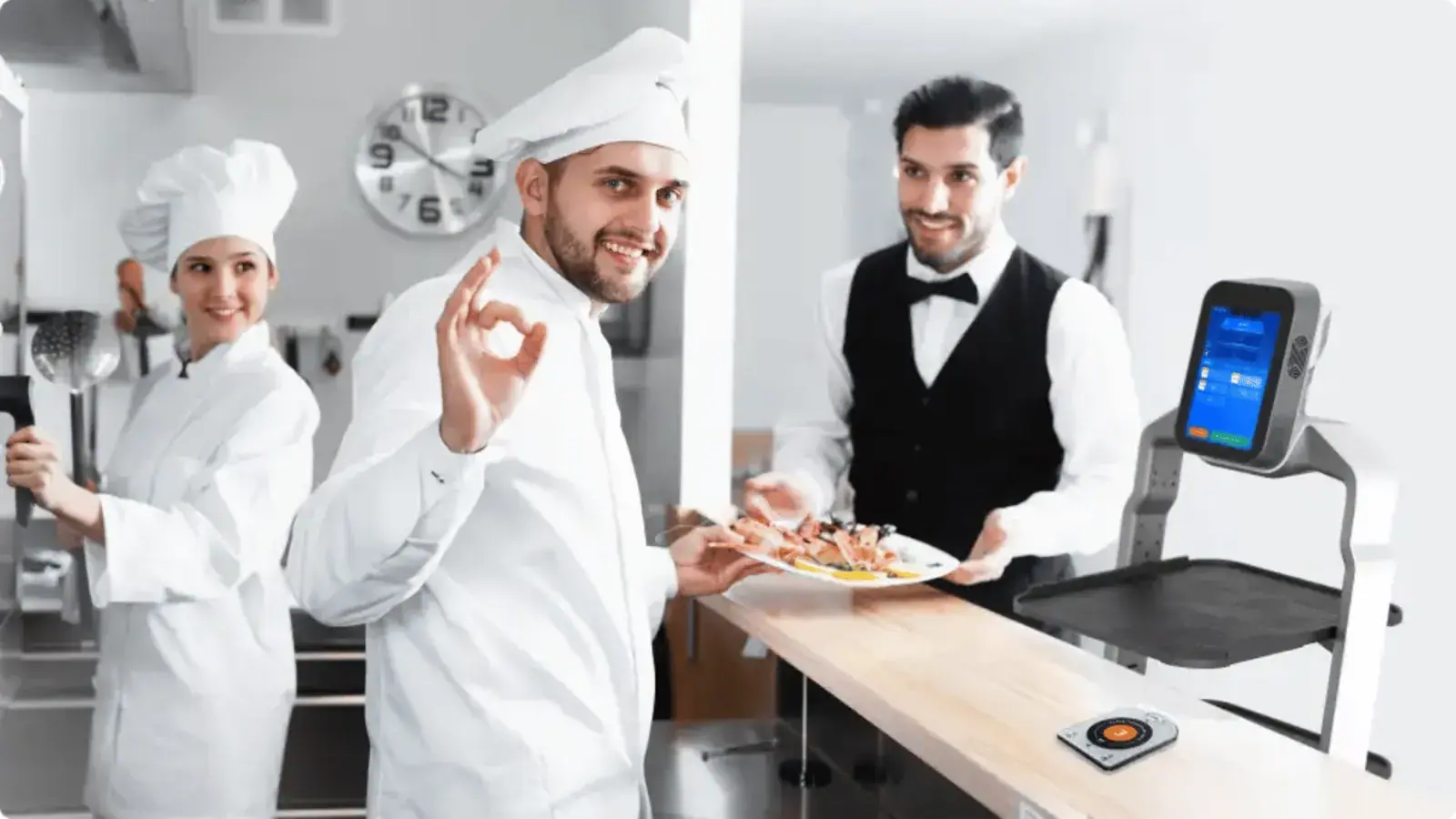
Introducing a restaurant robot does not have to be a big, risky decision. In fact, the smartest way to start is often with a short pilot program. A pilot allows you to test the robot in real service conditions, observe your team’s reaction, measure results, and decide what makes sense before committing to a long-term investment.
A well-planned pilot program robot test is not about “trying something futuristic”. It is about answering one practical question: can a service robot improve the way your venue operates?
Define the Objective First
Before the robot arrives, decide what you want to test. This sounds obvious, but it is where many pilots fail. If the goal is unclear, the result will also be unclear.
For a restaurant, the objective may be reducing staff walking time between kitchen and tables. For a hotel, it may be supporting room service, internal delivery, or guest amenity transport. For an event venue, the goal may be visibility, visitor engagement, or support with drinks and materials.
The best objectives are specific. Instead of saying “we want to improve efficiency”, define something measurable: reduce delivery trips by staff, speed up plate returns, support peak service, or test guest reaction to the robot.
Set the Pilot Duration
A pilot should be long enough to show real patterns, but short enough to stay low-risk. For most restaurants or hotels, a period of one to four weeks is enough to understand how the robot fits into daily operations.
A one-day demo is useful, but it only shows first impressions. A proper pilot gives the team time to adapt. It also allows you to test the robot during quiet hours, peak hours, weekends, and different shift teams.
For seasonal venues in Cyprus, a pilot during a busy period is especially valuable. That is when a restaurant robot can show its real operational impact.
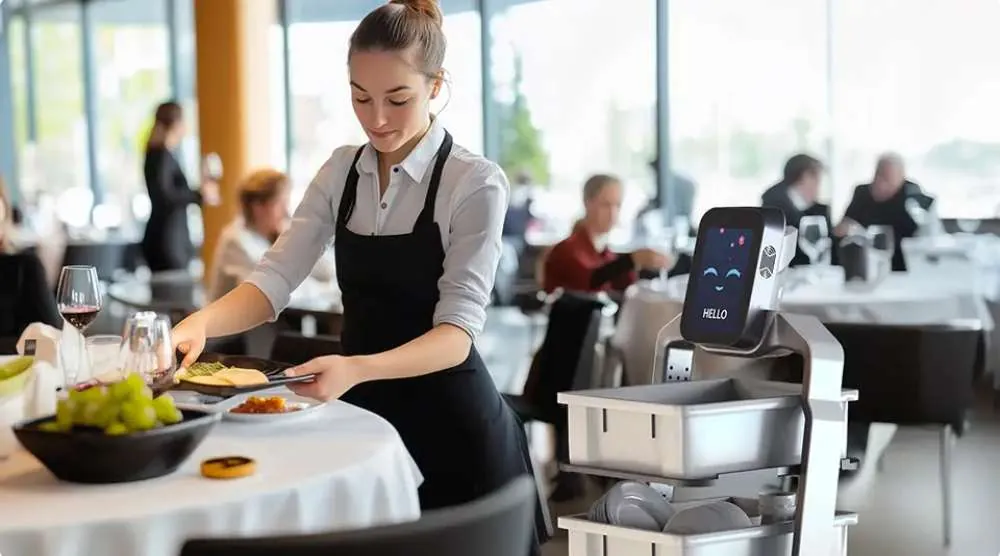
Establish a KPI Baseline
Before starting, record simple baseline data. You do not need complex analytics. You just need enough information to compare before and after.
Useful KPIs include staff walking time, average delivery time from kitchen to table, number of trips between kitchen and dining area, table clearing speed, and robot trips per shift.
Even basic observation can help. For example, you may measure how many times staff walk from the kitchen to the terrace during one lunch shift. After the robot is introduced, you compare the difference.
This is what turns the pilot from a subjective test into a business evaluation.
Assign Staff Roles
A service robot works best when the team knows how to use it. During the pilot, roles should be simple and clear. One person should be responsible for loading the robot. Another should monitor how it is used during service. Waiters should understand when to meet the robot and when to let it return automatically.
This does not need to be complicated. The goal is to avoid confusion. If everyone assumes someone else will use the robot, it may sit idle. If the workflow is clear, the robot becomes part of the service rhythm very quickly.
Evaluate the Results Honestly
At the end of the pilot, look at both numbers and experience. Did the robot reduce unnecessary movement? Did staff use it naturally? Did guests react positively? Did it help during peak hours? Were there any layout issues or workflow problems?
A good pilot does not need to be perfect. In fact, small issues are useful because they show what needs to be adjusted before long-term use. Routes can be improved, stop points can be changed, and staff procedures can be refined.
Simple Pilot Template
Use this structure for a low-risk pilot:
- Goal: define one main operational problem to test
- Duration: 1–4 weeks
- Main tasks: food delivery, plate return, hotel delivery, event support, or guest engagement
- KPIs: delivery time, robot trips, walking time saved, table turnover, guest reaction
- Review: compare results, collect staff feedback, decide whether to continue, rent longer, or buy
This simple framework keeps the pilot focused and easy to evaluate.
A Practical First Step
A pilot program robot test is the safest way to understand whether automation fits your venue. It removes guesswork and replaces it with real observation.
For many businesses, the pilot also helps staff become comfortable with the technology before a long-term decision is made. That alone can make future implementation much smoother.
Contact Reef Robotics to schedule a service robot pilot program and test how a restaurant robot could work in your venue.
