
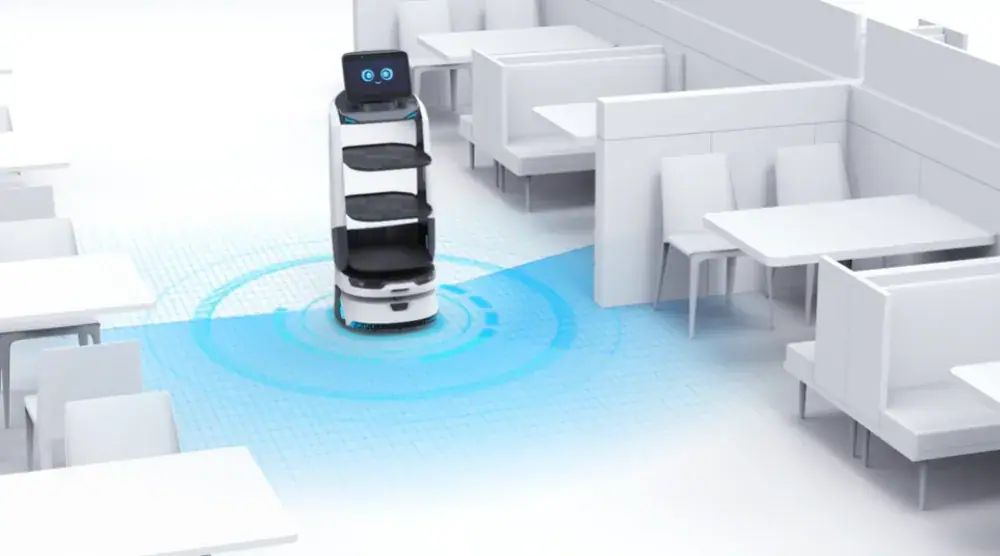
At first glance, a restaurant robot looks simple. It moves, stops, avoids people, and delivers items. But behind that smooth behavior is a combination of advanced systems working together in real time. Understanding the core robot technology helps explain why modern service robots are reliable and safe to use in busy environments like restaurants, hotels, or warehouses.
LiDAR – How Robots “See” Space
LiDAR is the foundation of navigation in most service robots. It works by sending out laser beams and measuring how long it takes for them to return after hitting an object. Based on this, the robot builds a precise map of its surroundings.
In practice, this allows a restaurant robot to understand:
- where walls are
- where open paths exist
- how far objects are at any moment
Unlike simple sensors, LiDAR creates a detailed, real-time view of the environment. This is why robots can move smoothly even in complex layouts with narrow passages or multiple zones.
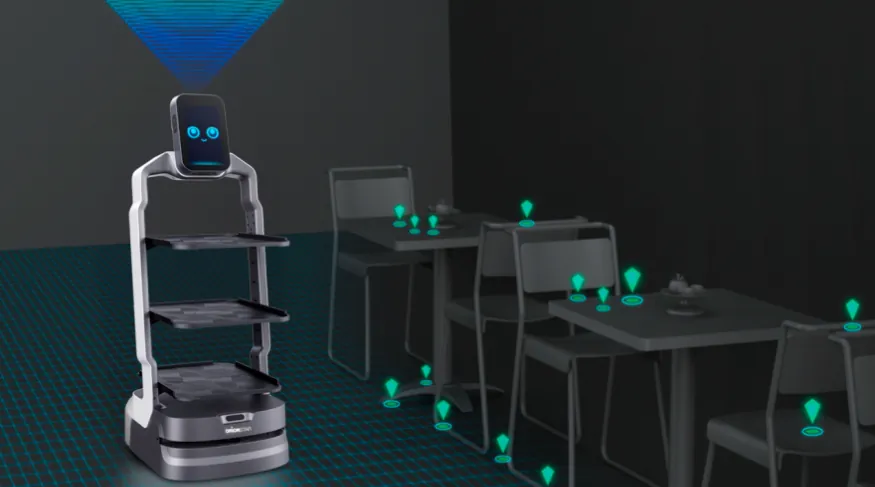
Cameras Adding Context and Awareness
While LiDAR handles spatial mapping, cameras provide additional context. Cameras help the robot interpret what is happening around it, not just where things are.
For example, cameras can support:
- detecting moving objects more precisely
- recognizing when someone interacts with the robot
- confirming whether items have been removed from trays
In some models, cameras are used to verify that a delivery has been completed. This adds an extra layer of control, especially in environments where accuracy matters.
Radar and Ultrasonic Sensors – Close-Range Safety
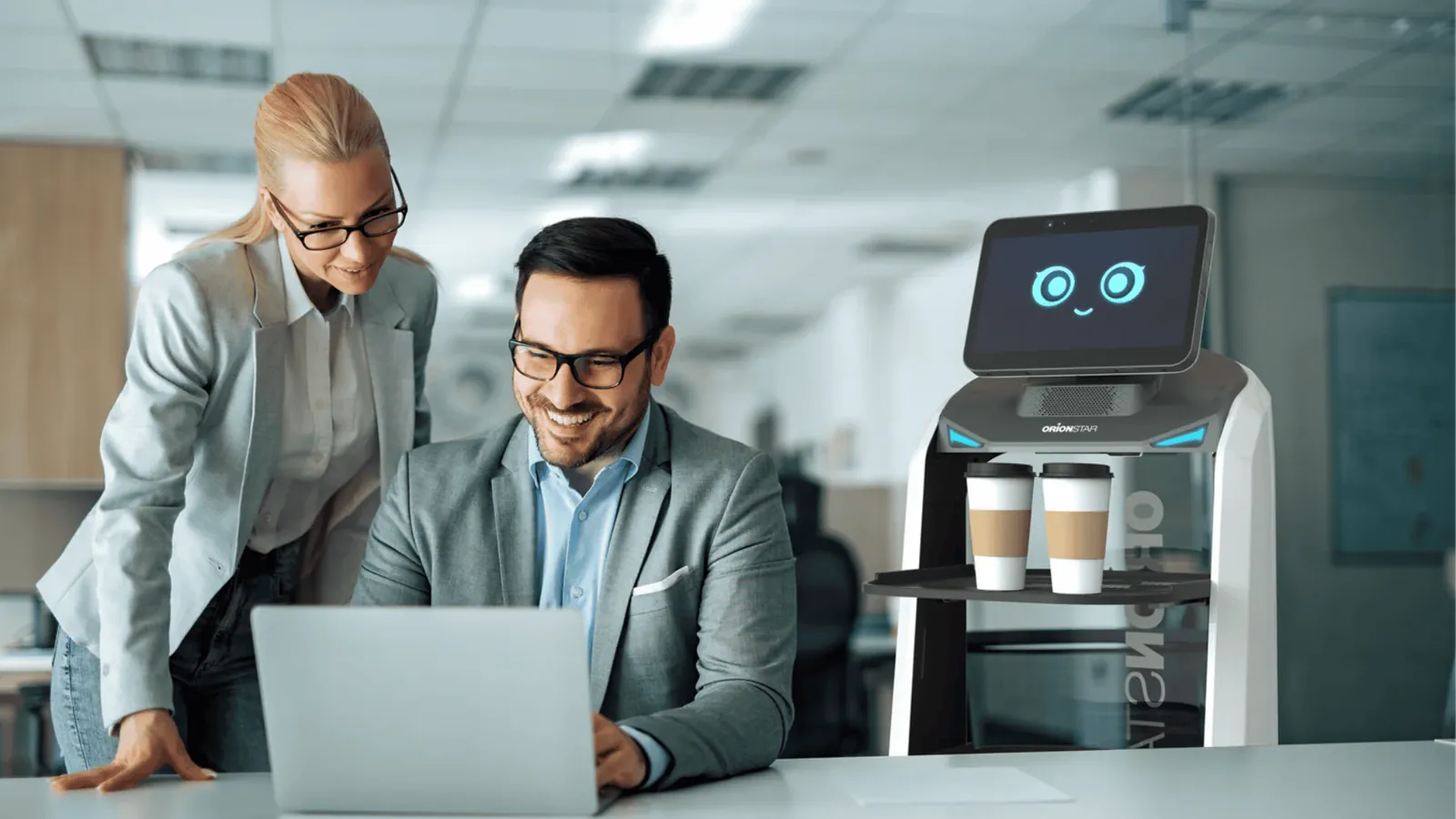
In addition to LiDAR and cameras, many robots use radar and ultrasonic sensors. These sensors are responsible for short-distance detection and immediate reactions.
They work continuously to monitor the area directly around the robot. If something suddenly appears in its path – a guest stepping forward, a chair being moved – these sensors trigger an instant response.
The robot may slow down, stop, or adjust its route within fractions of a second. This is particularly important in dynamic environments like restaurants, where movement is unpredictable.
Mapping and SLAM – How Robots Learn the Space
Before a robot starts working, it needs to understand the layout of the venue. This is done through a process called mapping, supported by SLAM (Simultaneous Localization and Mapping).
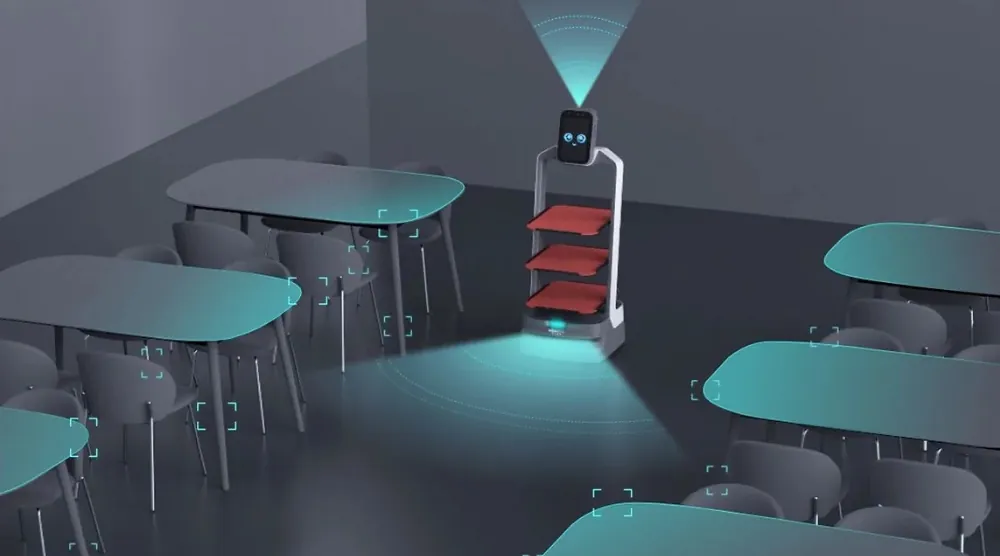
SLAM allows the robot to build a map and know its position within that map at the same time.
During setup, the robot is guided through the space. It records walls, corridors, and key points such as tables or service areas. Once this map is saved, the robot can navigate autonomously.
As it moves, it continuously updates its position relative to the map. This ensures accuracy even if the environment changes slightly.
Fail-Safes and Redundancy
Safety is not based on a single system. It comes from combining multiple technologies. Service robots use layered fail-safes to ensure reliable operation.
If one sensor detects an obstacle, others confirm it. If the robot encounters an unexpected situation, it can stop immediately. Emergency stop functions are always available for manual control.
This redundancy is what allows a restaurant robot to operate safely in public spaces with guests and staff moving around.
Why This Matters in Daily Use
All of these systems work together in the background. For the user, the experience is simple: the robot moves where it should, avoids obstacles, and completes tasks consistently.
But the reason it feels simple is because the underlying robot technology is advanced and well-integrated.
The combination of LiDAR, cameras, and sensors ensures that the robot is not just autonomous, but also predictable and safe.
FAQ
Do service robots rely only on LiDAR? No. LiDAR is the main navigation tool, but it works together with cameras and other sensors to ensure accuracy and safety.
Can robots work in crowded environments? Yes. Thanks to real-time detection and route adjustment, a restaurant robot can operate even during peak service.
What happens if something blocks the robot? The robot will slow down, stop, or find an alternative path depending on the situation.
Conclusion: The Tech Behind Service Robots
Modern service robots are not simple machines following fixed paths. They are dynamic systems that constantly analyze their surroundings and adjust their behavior.
This is what makes them suitable for real-world environments like restaurants, hotels, and warehouses.
If you want to see how this technology works in practice:
Contact Reef Robotics to request a live tech demo and explore how a restaurant robot operates in real conditions.
