

A service robot is built to work every day, often for long hours and in demanding environments. Restaurants get busy, hotels run continuously, and logistics never really stop. In this context, reliability is not optional – it’s the baseline.
The good news is that maintaining a robot is not complicated. It’s structured, predictable, and much easier to manage than most traditional equipment. The key is consistency. Small, regular checks make a bigger difference than occasional deep fixes.
What Daily and Weekly Checks Actually Look Like
Most issues can be avoided with very simple routines. A quick visual inspection at the start or end of a shift is usually enough to catch early signs of wear or obstruction. Wheels should be clean, sensors unobstructed, and trays properly secured. In environments like restaurants, where spills happen, even a small buildup of dirt can affect performance over time.
Weekly checks go a bit further. This is the moment to verify that navigation remains smooth, that docking works correctly, and that the robot responds consistently to commands. You’re not looking for problems – you’re confirming that everything still works exactly as expected.
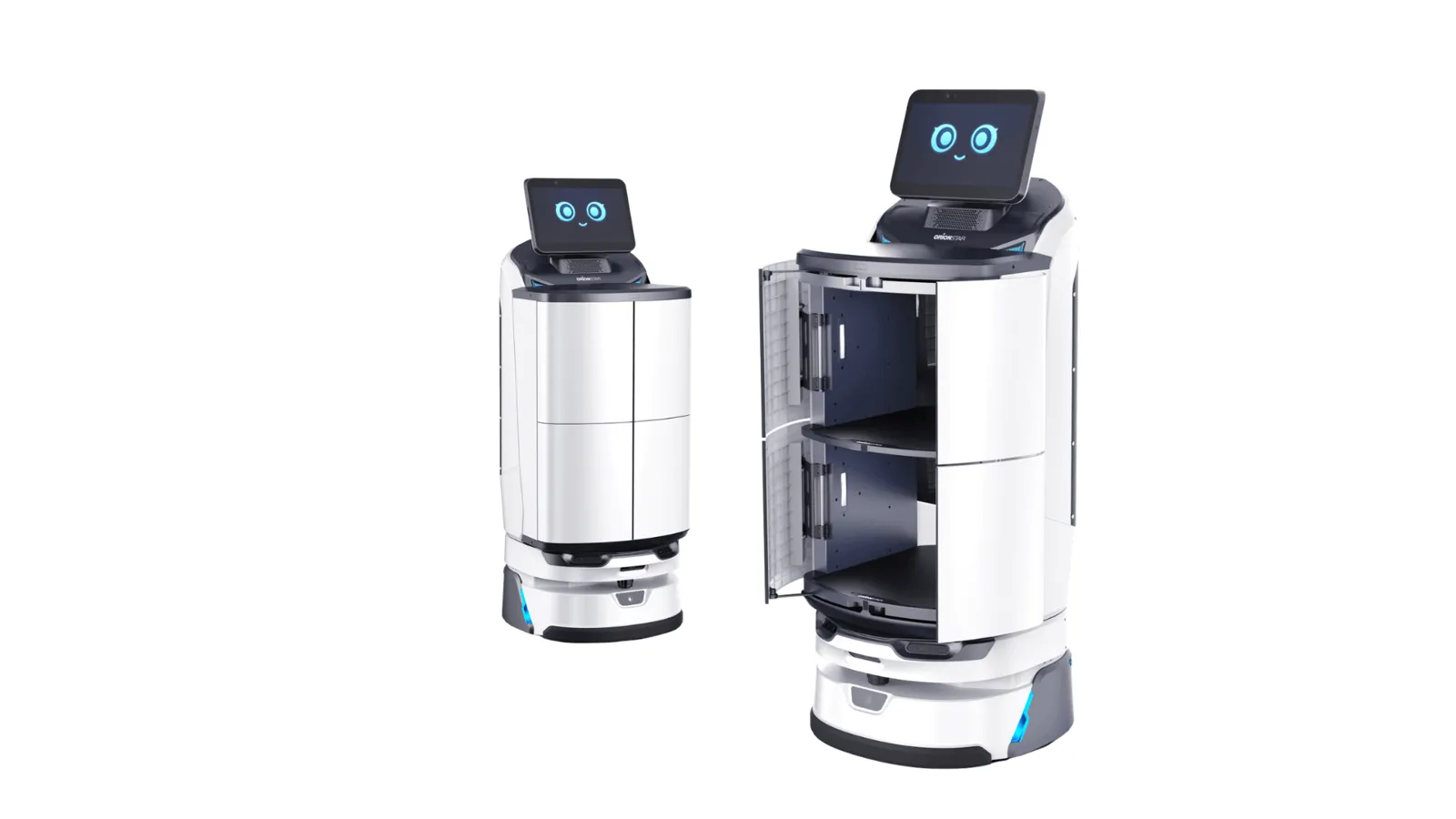
What’s important here is not technical complexity, but discipline. A service robot rewards consistent handling.
Battery Care – The Foundation of Uptime
If there’s one component that directly affects reliability, it’s the battery. Modern robots are designed for long operating hours, but like any battery-powered system, they perform best when used correctly. Avoid running the robot to complete depletion on a regular basis. Instead, let it follow its natural charging cycle. Many models are equipped with automatic return-to-charge functions, which should be treated as part of normal operation, not as a backup.
Temperature also plays a role. In Cyprus, where ambient temperatures can be high, it’s important to ensure that charging stations are placed in suitable conditions. Consistent charging habits translate directly into longer battery life and fewer interruptions during service.
Firmware Updates – Small Changes, Real Impact
Software is what makes a robot truly autonomous. Navigation, obstacle avoidance, route optimization – all of this is controlled by firmware.
From time to time, updates become available. These updates may improve performance, refine navigation accuracy, or enhance safety features. They are not disruptive, but they are important.
Keeping your service robot updated ensures that it continues to operate at its best. It also helps prevent compatibility issues, especially if your setup evolves over time. In most cases, updates are straightforward and supported by your provider.
Spare Parts and Wear Components
Even though robots are robust, some components naturally wear over time. Wheels, certain mechanical parts, and occasionally sensors may need replacement after extended use.
The key here is availability. Having access to spare parts locally makes a significant difference. Instead of long downtimes or complex logistics, issues can be resolved quickly and efficiently.
This is one of the practical advantages of working with a local partner. A service robot is only as reliable as the support system behind it.
Why Local Support Matters
No matter how reliable the technology is, support remains essential. In real operations, questions come up. Adjustments are needed. Sometimes a small issue appears that requires quick intervention. This is where a local support structure becomes critical.
A clear service level agreement (SLA) defines response times, support scope, and escalation paths. It ensures that if something goes wrong, you are not left figuring it out on your own.
For businesses in Cyprus, having access to local expertise means faster resolution, better communication, and minimal disruption to daily operations. It turns the robot from a standalone tool into a fully supported part of your workflow.
A Simple Maintenance Rhythm
You don’t need a complex system to keep your robot in top condition. A simple structure is enough:
- Daily: quick visual check, basic cleaning if needed
- Weekly: verify navigation, docking, and task execution
- Monthly: review performance, check wear components
- Periodically: apply firmware updates and review battery health
This rhythm keeps everything predictable. It also prevents small issues from becoming operational problems.
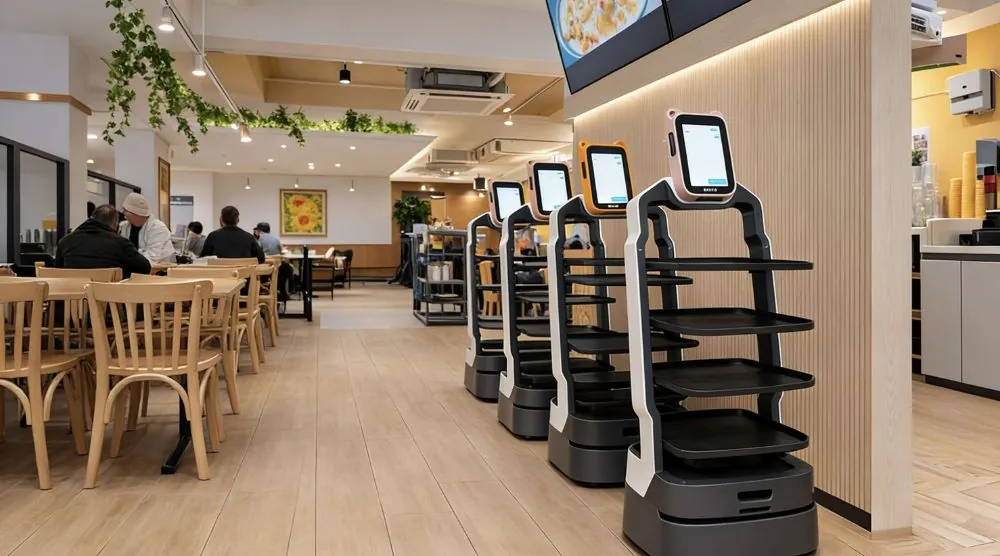
Reliability Is a Process, Not a Feature
A service robot is designed to be reliable, but long-term performance depends on how it is used and maintained. The technology does its part. The rest comes down to routine and support.
What makes the difference in real environments is not complexity, but consistency. When the robot is treated as part of the operational system – not just an add-on – it delivers stable, predictable results.
Keeping Operations Smooth Over Time
Over weeks and months of use, the value of proper maintenance becomes clear. The robot continues to perform at the same level, staff trust it, and it integrates naturally into daily operations. There are no surprises, no unexpected breakdowns, and no disruption during critical service periods.
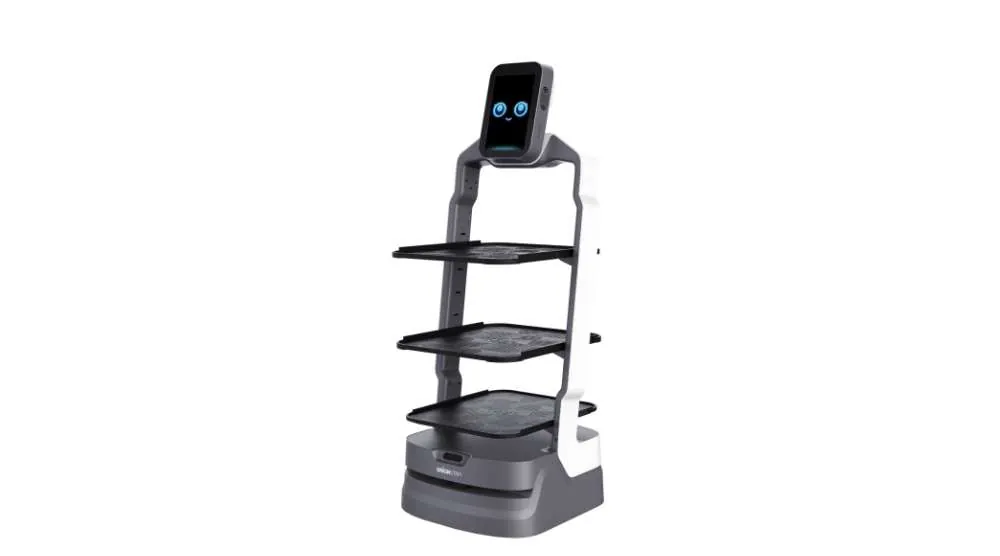
That’s ultimately the goal. Not just to have a robot, but to have one that works reliably every single day.
Contact Reef Robotics to learn more about maintenance plans and support contracts for your service robot.
