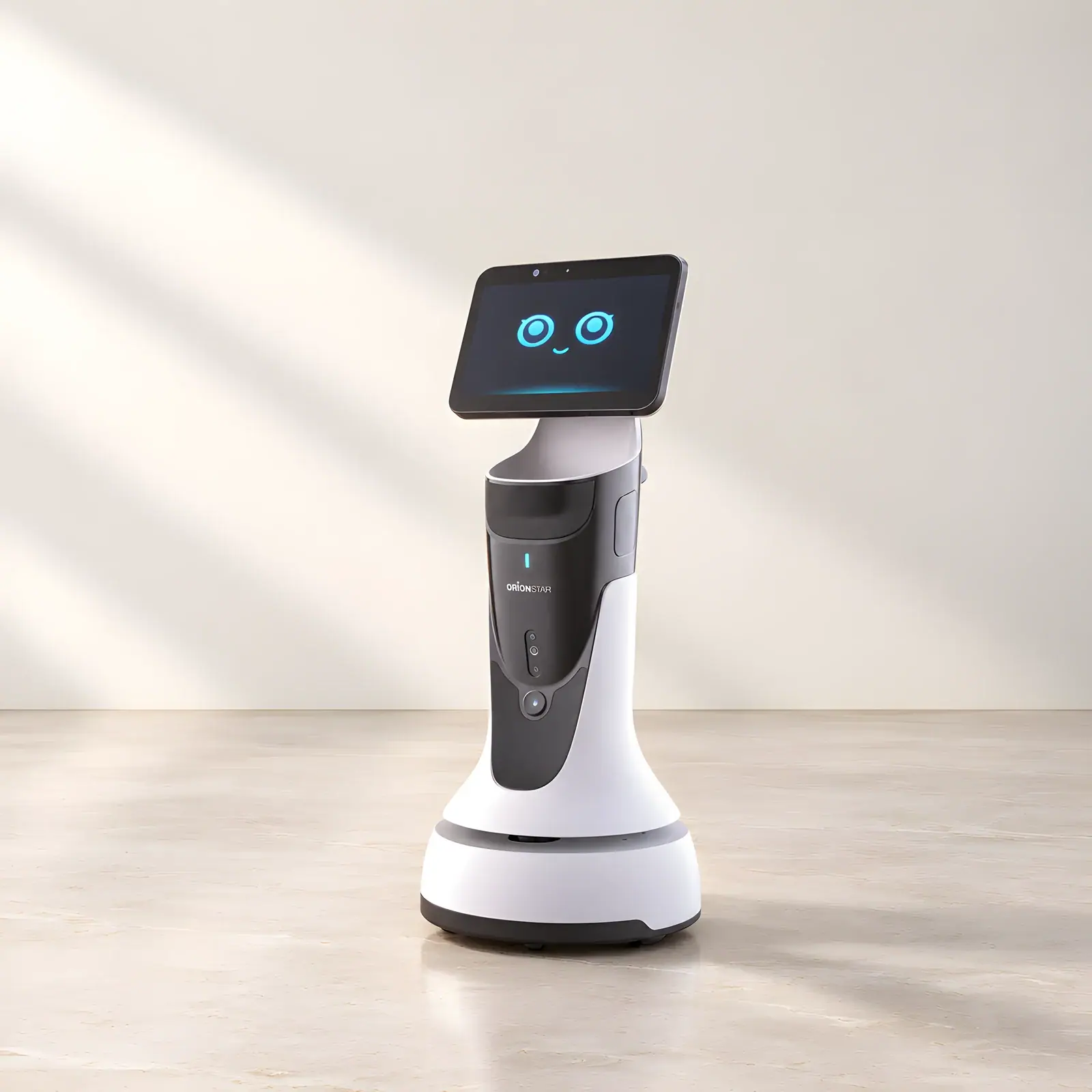
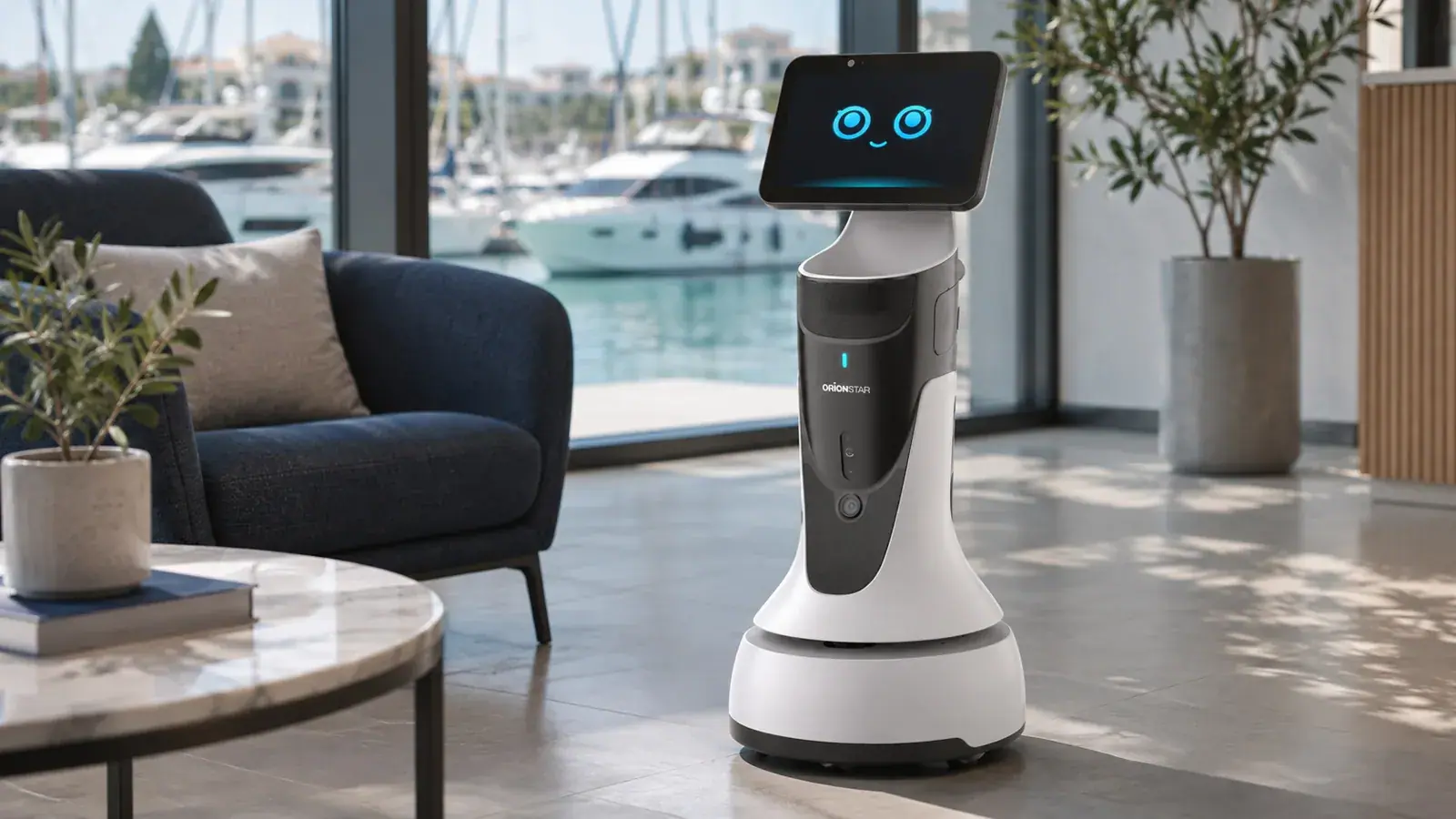
A reception robot does not need to dominate a lobby to be useful. Often, the better fit is a machine that can stand comfortably beside the welcome desk, hold a straightforward conversation and guide a visitor without occupying too much floor space. That is the appeal of OrionStar GreetingBot Mini.
The OrionStar GreetingBot Mini is a compact reception and guidance robot with a 14-inch Full HD screen, support for more than 30 languages and autonomous indoor navigation. Reef Robotics currently lists it at €10,000 + VAT. Its strongest argument is the combination of visitor interaction and a relatively small body.
Where OrionStar GreetingBot Mini fits
At 410 × 410 × 1,000 mm and 21 kg, Mini is a useful candidate for reception areas where every piece of equipment must earn its space. Its published minimum passable width is 55 cm. That figure describes a technical capability, not a recommended width for a busy public walkway: people, luggage and furniture still need room around the robot.
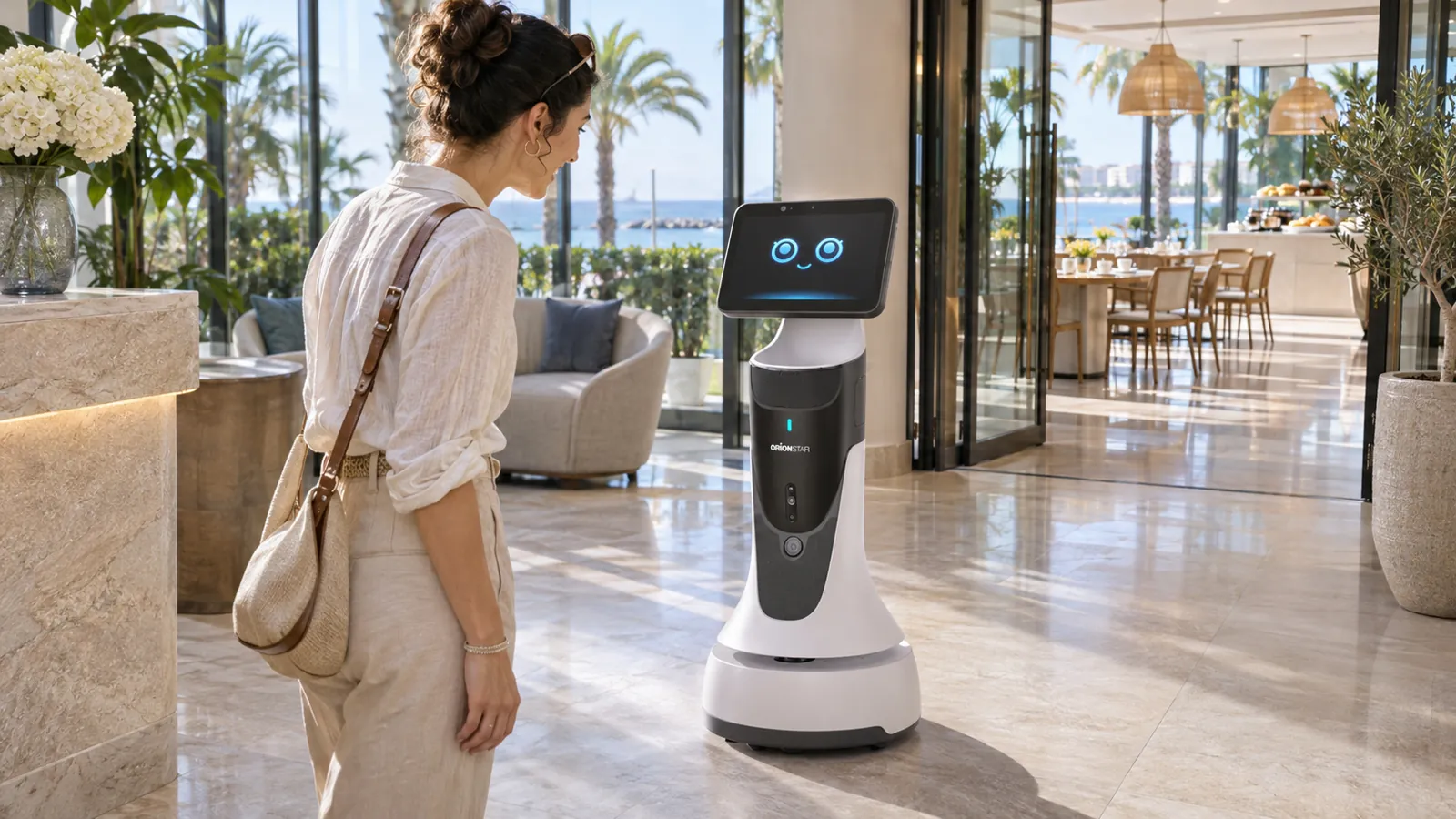
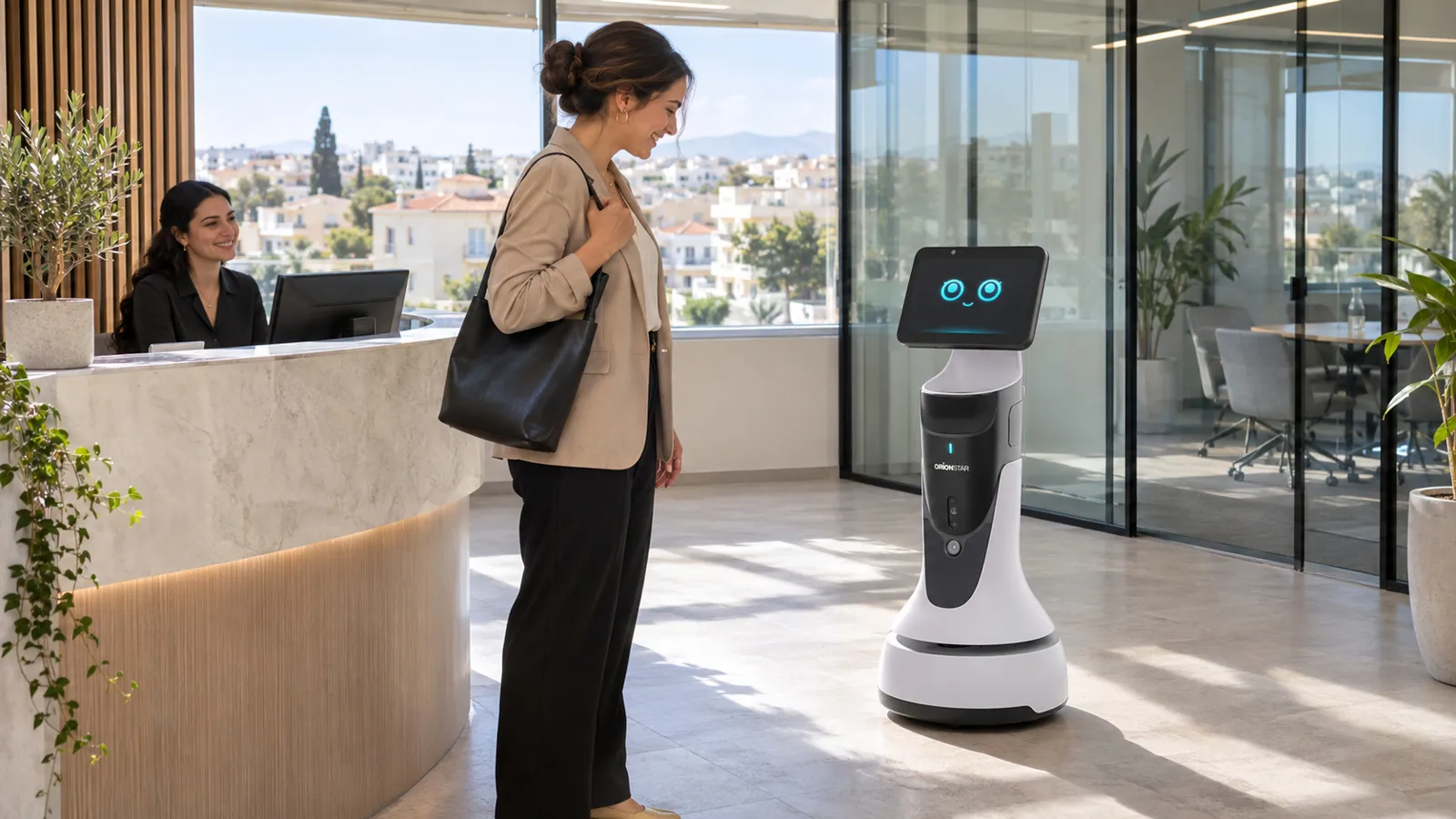
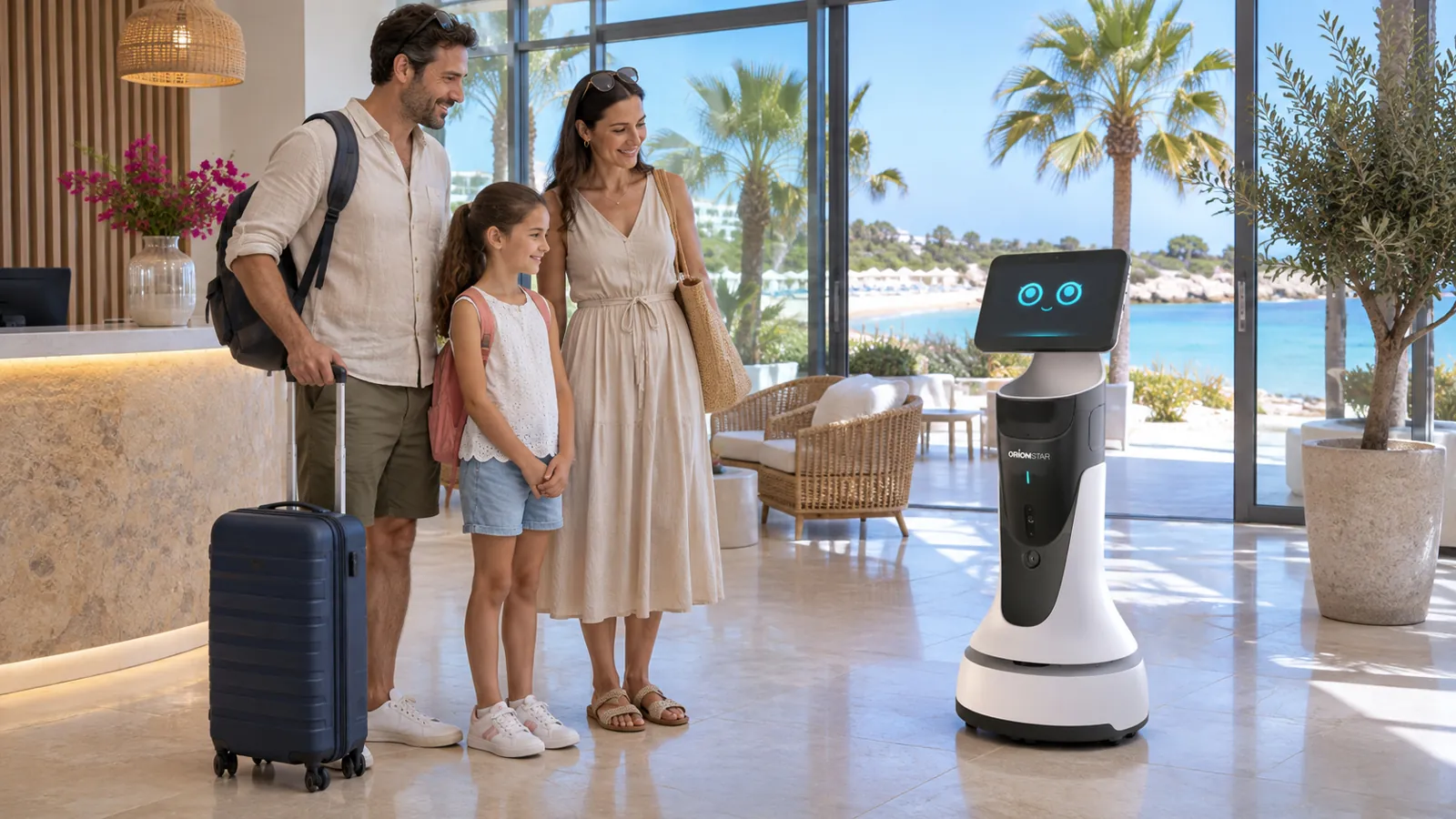
Think of a hotel lobby with a reception desk, a café entrance and several meeting rooms. Visitors frequently ask for the same directions. Mini can provide a spoken answer, show information and, where the route is suitable and configured, accompany them to a selected destination.
In an office showroom, it could introduce the company before directing a visitor to a demonstration area. In a restaurant, it could explain opening hours and point guests towards the host. The useful role depends on what the business actually needs visitors to understand or do.
Conversation with a visual fallback
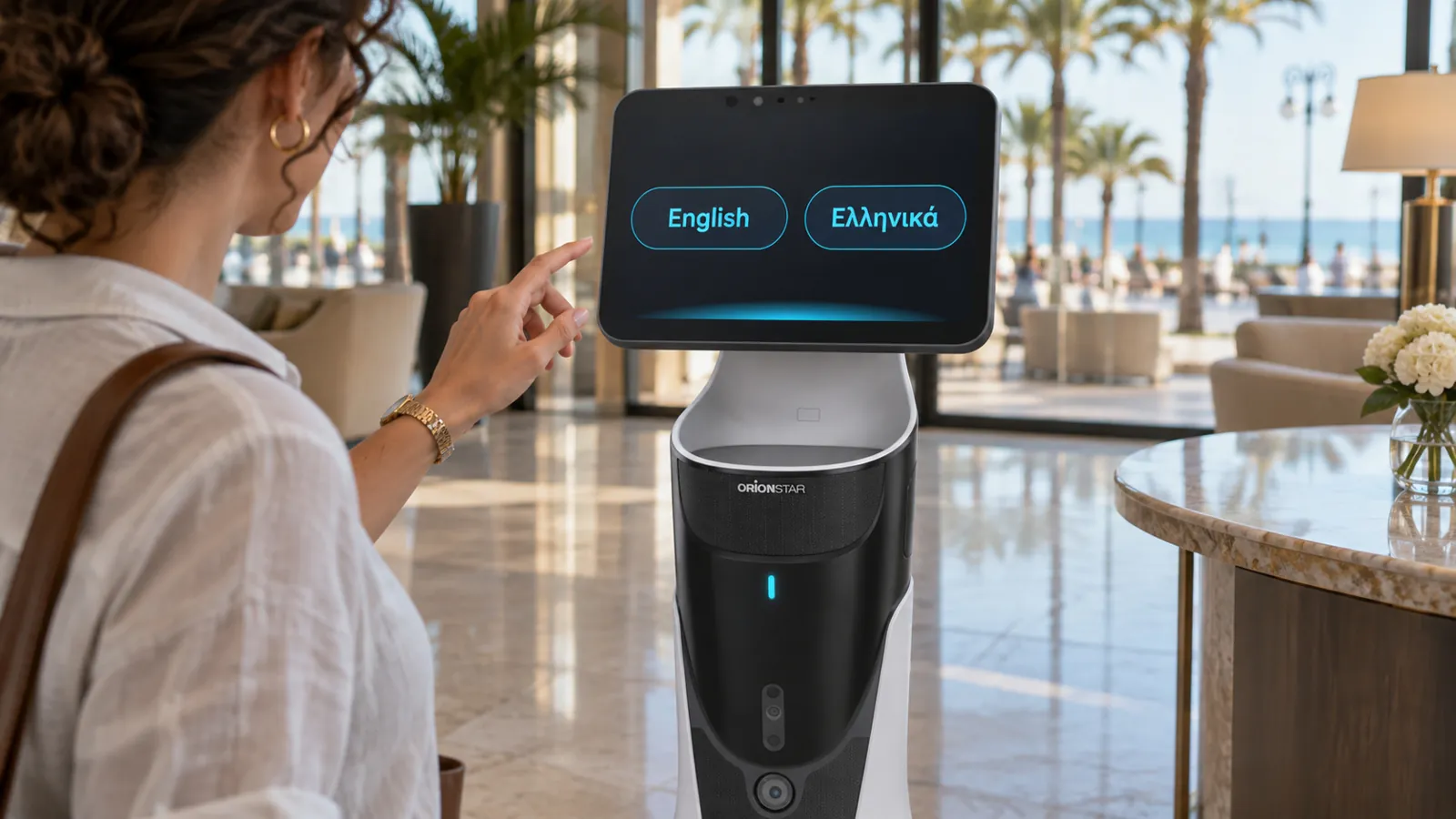
OrionStar GreetingBot Mini supports more than 30 languages, making it relevant to businesses serving international guests. The six-microphone array helps locate the speaker, while the screen gives visitors another way to access information.
There is a practical reason to offer both. Some people prefer to speak; others want to tap a clearly labelled option. A family arriving with luggage may appreciate a short on-screen instruction more than a long spoken introduction. Good content makes either approach easy.
Language support should be checked against your specific requirements. Ask to test the languages your customers use, including place names, menu terms and typical questions. Hardware capability is only one part of a useful multilingual service; the answers also need to be accurate and maintained.
Movement that supports the conversation
Mini combines LiDAR with a depth camera for navigation. LiDAR measures distances using laser light, while the depth camera adds information about the surrounding space. Together, they help the robot follow mapped routes and react to obstacles.
Its guidance function is particularly useful when directions are harder to explain than to demonstrate. A visitor can follow the robot to a configured point instead of trying to remember several turns. During setup, destinations should have clear names and safe stopping positions.
For promotion, Mini can operate from a fixed position or move through an approved area. Its screen can present your services or an event programme. Movement should serve a purpose: a useful position near an information gap may deliver more value than roaming continually.
Customisation and daily operation
OrionStar offers a development platform for deeper changes to voice, visual and movement functions. This creates possibilities for tailored interactions, but it does not make every requested integration a standard feature. Connecting Mini to booking software, a visitor management platform or another live system may involve additional paid development.
Start with a small set of well-written answers and destinations, then expand after observing real use. Staff should know how to restart an interaction, pause the robot and help someone who would rather speak to a person.
The published runtime is up to 12 hours in typical cruising conditions. Mini returns to charge when its battery falls below 10%; the listed charging time is no more than 4.5 hours when powered off. Your actual schedule should allow for charging and the demands of your deployment.
Is Mini worth the investment?
The current advertised price is €10,000 + VAT. Prices can change, and configuration, installation and any custom software should be confirmed in an individual proposal. Contact Reef Robotics for a quotation covering your intended use in Cyprus.
When comparing compact reception robots for guest services, OrionStar GreetingBot Mini deserves attention if your priorities are multilingual interaction, visitor guidance and a small footprint. The best demonstration is a simple one: give it the questions your team hears every day and see how comfortably your guests can get an answer.